AI Agent Development Services
With 15+ years of experience in AI and software engineering, we develop enterprise AI agents that reason through complex tasks, plan the next steps, and act with the best output your business requires. Our AI agent development services make it easier for you to get agents that work with your system, data, and workflow to execute tasks with controlled autonomy. Our team, equipped with 300+ software engineers and dedicated AI specialists, has delivered 40+ AI deployments across SMEs, government, and established enterprises.
Industry Verticals Deployed
Average ROI Improvement
Global Clientele Network
Client Retention Rate


- Human-in-the-Loop Controls
- Context-Aware Memory
- Autonomous Task Execution
- Tool & API Integration
- Continuous Agent Monitoring


Move From Generic AI Responses to Autonomous Task Execution
A prompt-response model answers one question at a time, while an AI agent goes beyond it. An AI agent breaks a task into steps, decides what to do next, chooses wisely and uses the right tools, and continues until the task is completed.
01
Manage Multi-Step Tasks Without Human Orchestration
AI agents plan and execute multi-step tasks, adapting to real-time conditions. Unlike traditional RPA development, which automates predefined tasks, AI agents can reason via variations and choose their next actions.
02
Let AI Agent Choose the Right Tool for the Job
At every step, AI agents make different tool selections. This is what allows it to use relevant APIs, calculators, databases, and search functions.
03
Maintain Task Context Across Extended Workflows
Memory architecture (backed by Data Platform solutions) is used by AI agents to retrieve task details and context across successive steps.
04
Adapt to Changing Conditions in Real Time
When conditions change, like new information, constraints, or outcomes that require a different approach, the AI agent evaluates each result and adjusts its next action.
05
Work Across Existing ERP, CRM, And Business Systems
By connecting with databases, APIs, SaaS platforms, and enterprise platforms, AI agents coordinate information and action within the workflows your teams already use.
06
Measure What the AI Agent Gets Delivered
Agents get evaluated with different business metrics like task completion, cost, latency, and accuracy. This is to identify improvement opportunities.
Put Human Approval for High-Impact Actions
We configure approval steps and guardrails so agents pause for human approval before proceeding with execution.

Coordinate Multiple Agents to Work on Complex Tasks
Specialized agents are there to manage separate parts of a task while a supervisor/worker coordinates their work and combines results.

Evaluate AI Agent Performance Before Deployment
Our team measures end-to-end task success along with inspecting agent trajectories rather than relying on spot checks of individual responses.

AI Agent Development Services for End-to-End Autonomous Workflows
AI agents are engineered to plan, coordinate, and execute with controlled autonomy. Our team supports agentic AI development at scale; we design, develop, and test the reasoning systems, AI agent orchestration, tools, and control that support reliable performance.
AI Agent Architecture Design
We match the AI agent’s reasoning approach. This includes what context it retains, what tools it uses, and where its autonomy stops.
Custom Single-Agent Development
For clearly defined tasks, we engineer single-purpose AI agents using Plan-and-Execute, ReAct, or Reflexion patterns to guide their reasoning & execution.
Multi-Agent Workflow Orchestration
Structure hierarchical and supervisor/worker workflows where agents execute specialized tasks and manage how their results come together.
AI Agent Tools Integration & APIs
Define & expose required systems and APIs for agent use via OpenAPI, MCP servers, or function calling. The scope of AI integration is agreed upon in the engagement.
Guardrails & Human Approval Design
What we do is that we configure clear autonomy limits with approval gates, sandboxing, restricted action lists, and execution rate controls.
Agent Evaluation & Performance Testing
Our team then assesses how AI agents use tools, execute tasks, and reach outcomes via end-to-end scenario testing.
AI Agent Development Backed by Full-Stack Engineering Expertise
AI agents are autonomous systems that require the right data, tools, and systems to work reliably and accurately. As a top-notch AI agent development company, we draw on experience across software, AI, data, cloud, and enterprise integration to support reliable execution within business operations.
Clutch Global Ranking — IT Services
Digital & Software Projects Delivered
Years of Engineering Expertise
Countries with Global Client Presence
Top AI Development Company (United States 2024)
Top Clutch Machine Learning Company Salt Lake City 2026
Top Clutch AWS Company United States 2026
Top Clutch Azure Company United States 2026
Top Clutch Google Cloud Company United States 2026
Top Clutch Systems Integration Company Dubai 2026
Why AI Agents Don’t Perform as Expected in Production
An agent can look impressive in a demo and still fail when deployed to production with real tools, business constraints, and unexpected conditions. We address the engineering gaps that cause agents to loop, misuse tools, exceed their autonomy, consume unnecessary resources, or fail without visibility into why.
| Challenge | Why It’s Hard | EWW’s Approach | ||
|---|---|---|---|---|
|
Agents Get Stuck in Execution Loops
|
Why It’s Hard | Without clear stopping conditions, an agent may repeat failed steps indefinitely, wasting time and compute. | EWW’s Approach | We build termination rules, fallback paths, and step limits into the agent’s reasoning loop from the start. |
|
Agents Hallucinate Tool Parameters
|
Why It’s Hard | Ambiguous inputs can lead an LLM to generate plausible-looking tool calls with incorrect parameters. | EWW’s Approach | We validate tool-call schemas and check parameters before execution. |
|
Too Much Autonomy Leads to Unsafe Actions
|
Why It’s Hard | When autonomy boundaries are unclear, agents may take actions that exceed their intended authority. | EWW’s Approach | We apply approval requirements to high-impact actions as part of the agent’s control architecture. |
|
Multi-Agent Workflow Loses Coordination
|
Why It’s Hard | Ad hoc agent communication can lead to duplicated tasks, conflicting decisions, and incomplete handoffs. | EWW’s Approach | We define supervisor/worker or hierarchical patterns with clear responsibilities and message contracts. |
|
Complex Reasoning Increases Cost & Latency
|
Why It’s Hard | Without step-level visibility, unnecessary model calls can quietly increase cost and latency. | EWW’s Approach | We design for the minimum reasoning depth needed per task and track step count, latency, and cost. |
|
Measuring AI Agent Performance is Hard to Track
|
Why It’s Hard | Spot-checking responses can miss failures in the agent’s full execution path. | EWW’s Approach | We evaluate agents using task-completion rates and full execution trajectories. |
AI Agent Architecture Matched to Task Complexity, Risk, and Control
The right agent pattern can determine whether a system stays efficient and predictable as task complexity increases. We match the architecture to the workflow, from iterative reasoning and planned execution to multi-agent coordination and human approval.
01. ReAct Agent (Reason + Act)
Best suited to tasks where the next action depends on the latest information returned by a tool, including customer-facing interactions and adaptive response patterns.
02. Plan-and-Execute Agent
Best for tasks where the overall sequence is reasonably clear, allowing the agent to plan first and then carry out each step.
03. Multi-Agent Supervisor/Worker
When a task has several distinct components, a supervisor assigns subtasks to specialized agents and aggregates their outputs.
04. Human-in-the-Loop Agent
For high-stakes or irreversible actions, the agent proposes an action for human approval before execution continues.
05. Memory-Augmented Agent
The agent uses stored information from previous interactions to maintain context across extended tasks and separate sessions.
06. Agent-to-Agent (A2A) Orchestration
Best suited to multi-agent systems where separate agents need to request work, share outputs, and coordinate across platforms.

AI Agent Capabilities Built for Complex Workflows, Systems, and Operations
Whether you’re starting with a single-agent prototype or coordinating agents across teams, the right capabilities depend on the work. We build features around your workflow, systems, and required level of autonomy.
Multi-Step Internal Workflow Automation
Processes that require people to manually coordinate tasks across multiple business systems.
Support & Operations AI Assistant
Build conversational AI assistants that support customer or internal operations by accessing relevant data, resolving routine requests, and taking action when needed.
High Stakes Enterprise Actions
Financial services, healthcare, and government use cases where every autonomous action needs a defined AI governance boundary.
Single-Agent Prototype Scaling
Your prototype is built. Now address the orchestration, safeguards, and evaluation needed for production use.
Cross-Vendor AI Agent Coordination
Allow independently developed agents to share information and coordinate work through an A2A protocol.
AI Agent Risk Assessment
A partner to identify agent risks and establish governance boundaries before deployment.
Have a Multi-Step Task You Want an Agent to Handle?
Tell us what you’re working with, the task, the tools it needs, and the level of autonomy that’s appropriate, and we’ll scope the agent architecture required.

- Define the task, tools, and required outcomes
- Connect the systems and tools your agent needs
- Set the right level of agent autonomy and control
- Scope an architecture built for your workflow
How AI Agent Development Differs From Other Related AI Services
Choosing the right AI service starts with understanding what you actually need to build. Compare AI agent development services with related services based on the capability, workflow, and outcome you’re looking for.
| Service | What It Actually Builds | Not This Page If… | ||
|---|---|---|---|---|
|
AI Agent Development Services
|
What It Actually Builds | The core architecture behind autonomous task execution, from reasoning and memory to tool calls and approval controls. | Not This Page If… | — |
| What It Actually Builds | Exposes enterprise APIs as agent-callable tools while managing system access, gateways, and integration requirements. | Not This Page If… | Your AI already exists, but it needs to connect with business systems and applications. | |
|
RAG Development Services
|
What It Actually Builds | Develops the knowledge retrieval layer that agents can call alongside other tools. | Not This Page If… | Your AI needs to retrieve relevant information from internal knowledge sources. |
| What It Actually Builds | Creates generative AI applications for content production, code generation, and other output-focused tasks. | Not This Page If… | Your application generates outputs based on user prompts without requiring autonomous tool use. | |
|
AI Automation
|
What It Actually Builds | Uses AI and workflow automation to manage predictable tasks with predefined steps and rules. | Not This Page If… | You need to automate a predictable workflow with established business rules. |
| What It Actually Builds | Assesses business requirements and maps suitable AI use cases to an implementation strategy. | Not This Page If… | You have an AI opportunity but need to define the right solution and architecture first. | |
| What It Actually Builds | Orchestrates predefined workflows with fixed decision trees, condition rules, and sequential step execution. | Not This Page If… | You will require flexible task reasoning and autonomous decision-making based on tool feedback, rather than fixed process logic. |
Why Businesses Partner With EWW For Custom AI Agent Development
We build enterprise AI agents for the conditions that matter after the prototype works. That means controlled autonomy, measurable task performance, efficient reasoning, multi-agent coordination, and engineering grounded in real client environments.
Guardrails Designed Into Every Agent
Every agent operates within action-specific guardrails, with approval requirements defined before development begins.
Evaluate AI Agents by Task Completion
We evaluate how your agents complete real tasks, testing entire execution paths rather than isolated responses.
Multi-agent Orchestration for Complex Work
We build and test multi-agent systems using supervisor-worker and hierarchical coordination patterns.
Model-Model AI Agent Architecture
Your agent’s reasoning architecture can support different model providers without unnecessary provider-specific dependencies.
Optimizing AI Agent Cost & Latency
Cost and speed are tracked through reasoning depth, tool-call volume, and execution latency across tasks.
Forward Deployed Engineering
Our forward-deployed engineers work within client environments, with experience across Government of Dubai, Torod, Braive, and Shopping Gate.

The Full AI Agent Reasoning and Execution Cycle
We design the agent loop to keep work moving from intent to execution. Each stage gives the agent what it needs to decide, act, evaluate the outcome, and continue or escalate when the situation demands it.
Context Perception
Receive the task or query and gather relevant context.
Execution Planning
Based on the task, the agent selects its next step or creates an execution plan.
Tool Selection
It selects the tool or action required for the current step.
Action Execution
Execute the selected tool or action, with approval when required.
Result Evaluation
Capture the result, assess progress, and determine whether to continue, replan, or stop.
Memory Update
Retain relevant state for subsequent steps or future sessions.
Our Recent AI Integration Projects
See how we’ve integrated AI into existing products and business systems, turning standalone capabilities into something teams can use in their day-to-day operations.
Integrating AI into Sports Platform
Integrated AI-driven intelligence with athlete data and external licensing systems, connecting intelligent analysis to established workflows within a UAE sports governance platform.
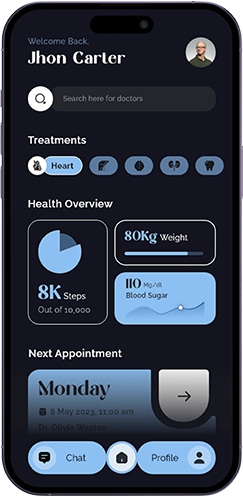
AI Integration with Clinical Systems
Integrated an AI-powered virtual health assistant with EHR, laboratory, and imaging data through HL7 and FHIR, giving it clinical context for healthcare workflows.
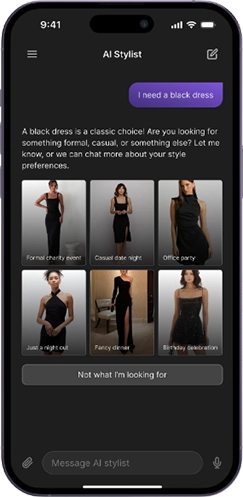
Let AI Agents Connect With APIs, Tools, and Enterprise Systems
Give your agents access to the systems and resources they need to get work done. We connect them with business applications, APIs, knowledge, other agents, and human reviewers within defined access boundaries.

What Autonomous AI Agent Changes Your Business Workflow
Put AI agents to work on tasks that demand more than a single response. Leaders can scale execution with defined controls, while practitioners can measure, debug, and improve how agents perform in production.
 For Leadership
|
|---|
|
|

 For Practitioners
|
|---|
|
|

Let AI Complete the Task, Not Just Answer the Question
Your workflows. Your tools. Your approval boundaries. Now handled by an agent that plans and acts. Let Excellent Webworld help you with your AI agent development.
- Turn complex workflows into agent-led actions
- Connect agents with your tools and systems
- Keep approvals and autonomy under your control
AI Agent Development Backed With Models, Frameworks, and Infrastructure
We use technologies that directly shape how AI agents reason, act, remember, and operate. Each component is selected for its fit with the agent’s architecture, workflow, and production requirements.
Agent Frameworks
- LangGraph
- CrewAI
- Semantic Kernel
- OpenAI Agents SDK
- Claude Agent SDK
- Google ADK
Reasoning Patterns
- ReAct
- Plan-and-Execute
- Reflexion
- Tree of Thoughts
Tool Interfaces
- Function Calling
- OpenAPI Tools
- MCP
Models
- OpenAI GPT
- Anthropic Claude
- Gemini
- Azure OpenAI
- Amazon Bedrock
Memory Infrastructure
- Pinecone
- Weaviate
- Redis
- DynamoDB
- Session state management
Observability
- OpenTelemetry
- Langsmith
- Datadog
- Trajectory logging
- Cost/latency tracking
How Much Does AI Agent Development Actually Cost
There is no single price for AI agent development because every agent operates differently. We estimate costs based on task complexity, tool access, autonomy, orchestration, evaluation, and monitoring requirements.
- One agent
- Bounded tool set
- Single-purpose task
Multi-Tool Agent With Guardrails
Multiple tools with controlled actions.
- Broader tool access
- Human-in-the-loop approval gates
- Production evaluation
Multi-Agent Orchestration Program
Multiple agents for complex workflows.
- Supervisor/worker or hierarchical multi-agent system
- Agent-to-agent (A2A) systems coordination
- Ongoing monitoring
| Cost Drivers | Factors |
|---|---|
| Complexity | The range of tools, apps, and systems the agent must interact with. |
| Autonomy | How independently the agent can act and where human oversight is required. |
| Orchestration | Single-agent vs. coordinated multi-agent orchestration |
| Memory | Memory depth, state persistence, and context retention requirements |
| Evaluation | Level of evaluation, observability, and performance tracking required before and after deployment. |
Our AI Agent Development Process
Every agent starts with a clear task, risk boundary, and success metric. We then build, test, deploy, and refine the system against real operational scenarios.
Task & Risk Assessment
We assess your workflows, tool requirements, and risk exposure to determine where agents can act independently or need oversight.
Agent Architecture Design
Select the reasoning pattern, memory strategy, and tool set based on task complexity and operational requirements.
Guardrail & Approval Design
Define which actions require human approval, which can run independently, and where execution must stop or escalate.
Tool Integration
Your agent gains access to approved business systems through structured tool like CRM solutions and validated API integrations.
Agent Build
We bring the architecture together through agent logic, memory management, and coordinated tool execution.
Trajectory Evaluation
We test how agents complete real-world tasks, examining their decisions, tool calls, recovery paths, and results.
Deployment
Deploy the tested agent into your production environment with access controls, monitoring, and operational checks configured.
Monitoring
We monitor agent execution, performance metrics, tool interactions, and operating costs to identify issues as they emerge.
Refinement
Your agent evolves through performance-driven updates to its reasoning logic, tool set, and autonomy boundaries.
Related AI Engineering Services
Your AI project may need an agent, integration layer, RAG system, automation workflow, or a combination of these. We keep each service clearly defined so you can scope the right solution from the start.
AI Integration Services
AI capabilities become part of your existing software through connections with business applications, APIs, and operational workflows.
RAG Development Services
Retrieval-augmented generation connects language models with relevant business information, helping them respond using your organization’s knowledge.
AI Development Services
From predictive models to intelligent applications, AI development services address specific business challenges through tailored software solutions.
Generative AI Development
Generative AI powers applications that create content, summarize information, answer questions, and support natural language interactions.
AI Automation
For processes with defined steps and outcomes, AI automation connects task execution with business rules and system workflows.
AI Consulting
A clear AI roadmap starts with business priorities, practical use cases, technical feasibility, and implementation planning.
MLOps
Your AI models move into production with structured deployment pipelines, version control, performance monitoring, and operational support.
Agentic AI Development
Multiple AI agents plan tasks, coordinate specialized responsibilities, and execute actions across your connected business systems.
AI Agent Development Across Industries
Whether your task involves financial reconciliation, clinical intake, shipment exceptions, case processing, or order management, the agent needs to fit the way that industry operates. We architect and engineer the AI agent accordingly.
Transaction & Reconciliation Agents
Automate financial workflows by validating records, processing transactions, and escalating discrepancies according to approval rules.
Healthcare Workflow Agents
Automate clinical workflows by scheduling appointments, collecting patient intake data, and routing claims. AI agents access EHR records to retrieve patient history and flag claims for manual review.
Case Processing Agents
Assist with document handling, case updates, and multi-step administrative processing, drawing on EWW’s Government of Dubai engagement.
Logistics Operations Agents
Support logistics operations by coordinating route planning, dispatch activities, and shipment issue resolution across connected systems.
Order & Service Agents
Agents support retail operations through order management, inventory checks, and customer service workflows across connected applications.
In-Product Action Agents
Integrate task-oriented agents into SaaS products so users can trigger workflows and complete actions through natural language.
What Our Clients Are Saying
Agent development is ultimately judged by what happens in real business environments. Hear from clients who have worked with EWW to build and deploy production-ready AI solutions.

Abdulaziz Alotaibi

I chose Excellent Webworld for its quality, fair pricing, and collaboration. They treated my app ‘Move Coins’ like their own, ensuring success.

Thomas Devito

I’ve been working with Excellent Webworld for over 10 years and have received dozens of web productions for small businesses.

Nick Wright

The designers took the challenge to redesign my app and website from scratch and give my brand a newly updated identity.
Frequently Asked Questions
An AI agent is an autonomous system that reasons about a task, plans a sequence of steps, selects and calls tools, and acts toward completing that task. Unlike models that generate one response to a prompt, agents work autonomously to accomplish objectives.
A chatbot is something that responds to messages in conversation. An agent reasons about a task, decides what actions to execute, calls APIs or tools, and continues until the task is finished. It’s like a chatbot can be an interface into an agent, but the agent is the decision-making system behind it.
AI agent development is all about building the reasoning and planning logic. AI integration connects that agent’s tools to your existing systems and workflows. Most projects involve both, scoped separately.
No. RAG is a tool an agent can call when it needs grounded information from a knowledge base. Many agents operate primarily via API and database tool calls without any retrieval component.
High-impact actions route via human approval by default. Action allow-lists and rate limits restrict what an agent can perform. Guardrails are customized based on your risk tolerance.
Multi-agent orchestration uses multiple specialized agents (typically a supervisor coordinating workers) for complex tasks. It’s mostly required when a single agent’s scope becomes too broad to manage reliably.
You can know how an AI agent is working by measuring task-completion rate, tool-call accuracy, and whether the agent reliably accomplishes business objectives across real scenarios. Not just whether individual responses sound plausible.
Yes. Existing APIs can be exposed as callable tools via function calling, OpenAPI specs, or MCP servers, letting an agent interact with existing systems while retaining authentication and authorization controls.
If you want to go for a single-agent development with defined tools, it ranges from $25,000 to $50,000. For multi-agent systems development, it ranges from $75,000 to $200,000+. Still, the exact cost depends on tool count, guardrail complexity, and system integration needs.
When it comes to single-agent projects, it takes 6 to 10 weeks. Multi-agent systems development takes 12 to 20 weeks. Discovery and system assessment add 1 to 2 weeks. Scaling existing prototypes typically takes 4 to 8 weeks.
Yes. We assess your existing architecture, identify bottlenecks, and add guardrails, multi-agent orchestration, and evaluation frameworks as needed. Scaling doesn’t require rebuilding from scratch.