AI Integration Services
Connect AI models, agents, APIs, generative AI, and RAG pipelines to the software, data, and workflows your teams already use. We integrate AI into your existing applications and enterprise systems, making your entire technological foundation smarter, faster, and future-ready without reworking your stack and rebuilding your technology from scratch.
Years of Experience
Industries Served
Countries Served
Tech Experts


- AI Model & API Integration
- AI Agent & Tool Integration
- RAG & Enterprise Data Integration
- CRM & ERP Integration
- AI Workflow Orchestration


AI Integration Focused On Business Value, Not Adoption Alone
It is easy to get swept up in the AI hype and assume your business needs it everywhere. Our approach is to integrate it deliberately for outcomes you actually want.
01
AI Integration Without Replacing Systems
Our AI specialists assess your existing stack to identify integration opportunities with your software instead of rebuilding your systems around a new AI stack.
02
AI Connected to Enterprise Data
We help you establish a controlled and secure connection between AI applications and your enterprise’s data across APIs, databases, knowledge bases, and documents.
03
Using AI to Trigger Automated Actions
AI’s role is not limited to producing an answer or recommendation. We help you automate business actions by connecting AI to the systems that carry out the next step.
04
Making AI Available Across Applications
We establish secure and reliable data exchange systems via APIs, gateways, and other integration layers to ensure all apps have shared access to AI capabilities.
05
Governance Around AI Connectivity
To ensure that AI has controlled access, our security experts set up authentication, authorization, model usage, access, and rate limits around every AI interaction.
06
Modernizing Existing Apps with AI
One of the biggest benefits of AI integration is that you can add intelligent capabilities to your legacy software without needing a complete platform replacement.
No Stalled Pilots
You won’t have to wait for weeks or months to reap the benefits of AI, as our integrations are production-ready from day one instead of being stuck at the PoC stage.

Zero System Replacement
Most AI integrations don’t demand a rebuild of your already-working systems. We connect AI to your existing stack in production, so nothing gets replaced or migrated.

Governed From Start
Our engineers scope every single AI connection with authentication and access limits in place before it goes live, establishing governance from the first integration.

Our Full Range of AI Integration Services for Existing Applications
As a leading AI integration company, the scope of our services spans everything from a single API connection to a fully governed, enterprise-wide AI deployment.
AI API Integration
We connect your platforms to speech APIs, vision APIs, and translation APIs, among others, so each integration becomes a modular component you can update independently.
LLM Integration
Integrating foundation LLM models like OpenAI, Gemini, Azure OpenAI, Anthropic, and open-source models into existing applications and workflows for higher-accuracy responses.
Generative AI Integration
Our team introduces generative AI for conversational AI, text generation, content transformation, summarization, and document generation, making it practical in daily operations.
RAG Integration
We connect your apps to document repositories, vector databases, and enterprise search, so your LLMs answer with citations, while fully respecting source access permissions.
AI Agent & Tool Integration
By connecting REST APIs, OpenAPI tools, MCP servers, and existing APIs as callable tools, we enable AI agents to reason and execute within structured, human-approved policies.
Integration with Enterprise Apps
We enhance your enterprise apps by embedding AI directly into CRM, ERP, HRMS, ITSM, CMS, and other software, so intelligence becomes an inherent part of the user experience.
AI Workflow Integration
We integrate AI into business processes, API orchestration, and approval steps, so events can initiate AI tasks driving automated downstream actions across your processes.
AI Gateway Integration
To ensure every AI endpoint falls under consistent policies and monitoring standards, we introduce a centralized AI gateway for authentication, model routing, and rate limiting.
AI Data Pipeline Integration
We integrate AI into your enterprise data stack, including warehouses, lakehouses, streaming platforms, and analytics for stable, governed data flows and reliable inference.
Recognized Industry Expertise in AI Integration Services
Our industry recognition reflects the engineering depth required to integrate AI across APIs, enterprise data, cloud infrastructure, and business software.
Clutch Global Ranking (Software Development)
Years of enterprise engineering
Software Development Talent
Countries with Active IT Deployments
Top Clutch 100 Fastest Growing Companies 2026
Top Clutch Artificial Intelligence Company Salt Lake City – 2026
Top Clutch AWS Company United States 2026
Top Clutch Recommendation Systems Company United States 2026
Top Clutch Azure Company United States 2026
Top Clutch Systems Integration Company Dubai 2026
Your AI Integration Challenges, Solved
Drawing from our project experience, we’ve identified six failure points that can turn AI integration into a stalled pilot. Here’s how we solve each one.
| Challenge Area | What Can Go Wrong | How We Solve It | ||
|---|---|---|---|---|
|
AI doesn’t naturally understand your systems
|
What Can Go Wrong | An LLM cannot automatically infer your database schemas, APIs, permissions, or business rules without those details being explicitly documented first. | How We Solve It | We map out every schema, API contract, and business rule explicitly before any AI model gets connected, so nothing is left for it to infer on its own. |
|
Enterprise data is distributed
|
What Can Go Wrong | Relevant information sits scattered across databases, SaaS tools, file stores, APIs, warehouses, and legacy systems your team already relies on. | How We Solve It | We build a governed retrieval and data layer that unifies access across every source without ever duplicating or destabilizing the systems underneath. |
|
AI needs controlled access
|
What Can Go Wrong | Connecting AI to enterprise systems raises real identity, authorization, data-exposure, and auditability questions no one should answer casually. | How We Solve It | Access rules, scoped permissions, and audit logging are designed into the integration architecture before go-live, not retrofitted after any incident. |
|
AI must trigger real actions safely
|
What Can Go Wrong | Generating a recommendation is very different from letting AI create an order, update a CRM record, or call an internal API autonomously. | How We Solve It | We gate every high-impact action behind human-approval checkpoints and policy-scoped permissions, thus autonomy is earned per workflow, never assumed. |
|
Multiple AI providers create complexity
|
What Can Go Wrong | Different models and services across applications create routing, monitoring, cost, and consistency challenges that compound fast at enterprise scale. | How We Solve It | We architect model-agnostic gateway layers so routing and governance stay consistent regardless of provider blend, even as your stack keeps expanding. |
|
Existing systems weren’t built for AI
|
What Can Go Wrong | Legacy APIs, synchronous architectures, and rigid data formats resist any direct AI consumption without real friction across nearly all system layers. | How We Solve It | We build middleware and adapters that let today’s AI reach pre-API era systems without forcing a full platform rebuild or disrupting daily operations. |
How AI Fits Into Your Technology Architecture
How far AI can reach into your business depends on the architecture behind it. We engineer the connections that give AI access to the right systems and actions.
01. Application-to-AI Integration
This integration architecture pattern is best suited for business cases where you’re looking to integrate AI directly into existing apps and products.
02. AI-to-Enterprise-System Integration
Among the most commonly applied patterns, it lets AI apps or agents retrieve data or perform controlled actions against CRM, ERP, or other systems of record.
03. AI-to-Data Integration
Our team deploys this architecture pattern for connecting AI with documents, knowledge bases, databases, data warehouses, and enterprise search.
04. Event-Driven AI Integration
Best suited for asynchronous workloads like fraud detection, workflow automation, document processing, classification, and large-scale analysis.
05. AI Gateway Architecture
We deploy this architecture pattern for centralized control over authentication, rate limits, usage, logging, policies, observability, and routing.
06. Agent Tool Integration
Used for exposing business functionality to agents without rebuilding the underlying application. This is a differentiator from generic agent development.
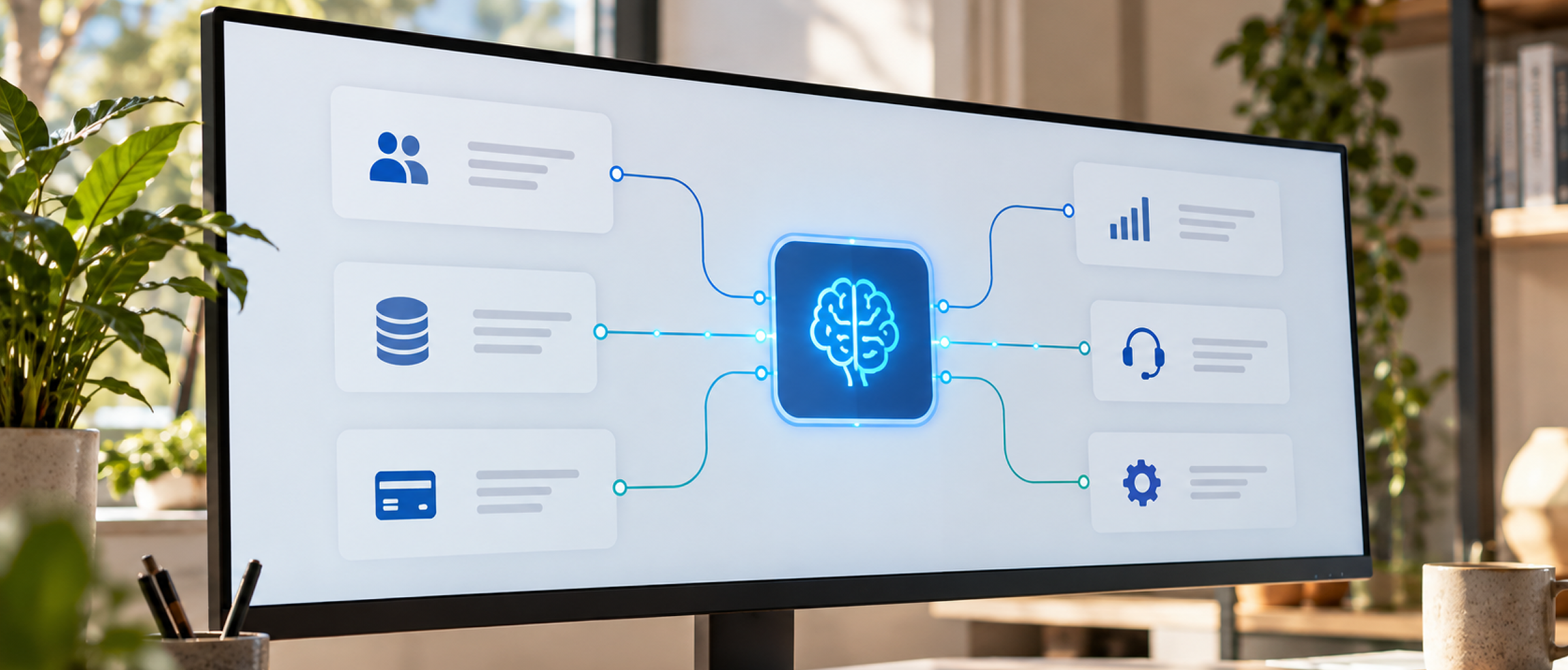
Where AI Connects Across Your Existing Technology Environment
We integrate AI capabilities across the technology layers they depend on: from the model and application layer through to enterprise data and system interfaces.
Foundation models and AI services become part of your applications and workflows.
- OpenAI
- Anthropic
- Gemini
- Azure OpenAI
- Amazon Bedrock
- Open-Source LLMs
AI capabilities are embedded within the business platforms your teams already rely on.
- Salesforce
- HubSpot
- SAP
- Microsoft Dynamics
- ServiceNow
- Custom CRM/ERP
Your data infrastructure supplies the information AI needs to retrieve and reason.
- PostgreSQL
- MySQL
- MongoDB
- Data Warehouses
- Data Lakes
- Vector Databases
- Document Stores
Existing APIs and event mechanisms serve as controlled paths into the business systems.
- REST APIs
- GraphSQL
- SOAP
- Webhooks
- OpenAPI
- Events
- Message Queues
AI agents gain controlled access to models, tools, and enterprise functionality.
- Function Calling
- Tool Calling
- MCP
- AI Gateways
- Model APIs
- Embedding APIs
Industries and Businesses That Rely on Our AI Integration Services
Whether AI is being added to an existing product or introduced across an enterprise environment, our role is to make the integration work at your current AI maturity.
Legacy-Heavy Enterprises
Established enterprises often have legacy systems that predate API-first builds. For them, we engineer middleware and adapters instead of forcing a platform migration.
Cloud-Native Data Teams
If you’re an organization using modern cloud services but your data is trapped across fragmented systems, we help unify it into a governed AI-ready layer.
Pre-Production Teams
Our AI team is also able to help businesses that have piloted their AI initiative but can’t get it past a demo by specifically addressing production-readiness gaps.
Multi-Provider AI Teams
Our AI integration services can help multi-provider AI teams deploy a controlled AI integration architecture across enterprise systems and different model vendors.
Digital Transformation Teams
Digital transformation teams often need to modernize established workflows with AI. We help them extend existing systems without forcing a core platform replacement.
Product & SaaS Companies
Product and SaaS companies often need to embed AI into existing products. We help them add intelligent capabilities without redesigning the core application.
Operationalize AI Across Your Existing Systems
Connect AI to your existing technology without disrupting the systems your business depends on, with an architecture built around how those systems actually work.
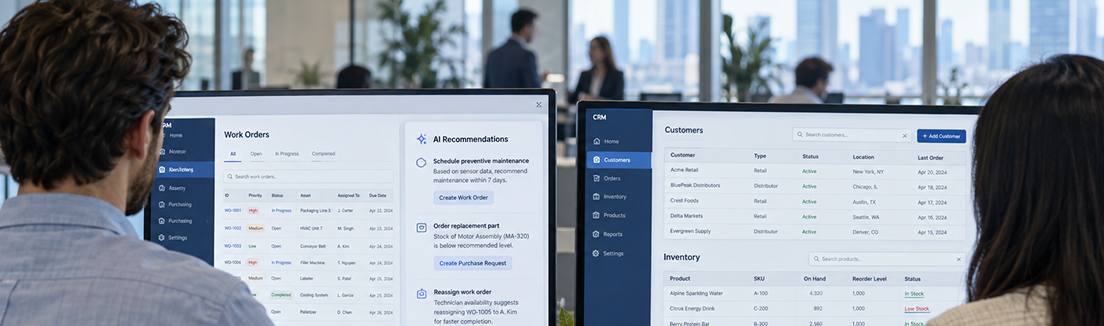
How AI Integration Differs from Related AI Services
Knowing where your AI initiative stands helps determine whether you need to connect an existing capability, build one, or rethink the architecture around it.
| Service | What It Actually Is | Not This Page If… | ||
|---|---|---|---|---|
|
AI Integration Services
|
What It Actually Is | Connects existing AI capabilities to the systems your business already runs, creating the technical pathways needed for AI to work within operations. | Not This Page If… | You need a new AI capability built from the ground up rather than an existing model, agent, or service connected to your current tech stack. |
|
AI Agent Development Services
|
What It Actually Is | Here, the engineering centers on the agent itself: its reasoning loop, tool use, memory, task boundaries, and safeguards are designed for a defined purpose. | Not This Page If… | Your requirement is to develop a new decision-making loop involving one or multiple agents, not an existing system wired up to AI. |
|
Agentic AI Development Services
|
What It Actually Is | Agentic AI focuses on the maturity and transformation layer, mainly moving an organization from AI-assisted to autonomous, goal-directed operation. | Not This Page If… | The priority is to transform a business function around autonomous, goal-directed AI, with the operating model and decision flows designed for broader change. |
|
RAG Development Services
|
What It Actually Is | Concerned with the development of the data retrieval and grounding pipeline itself, involving work on embedding, indexing, retrieving, and re-ranking. | Not This Page If… | A data retrieval pipeline needs to be developed from scratch first, covering how enterprise content is processed, indexed, retrieved, and supplied to the AI. |
|
AI Development Services
|
What It Actually Is | This is the overarching domain. AI development services are used to architect complete AI-powered applications or systems from the ground up. | Not This Page If… | Your primary objective is to develop an AI-powered application itself from the ground up, including its core logic and user experience. |
|
AI Consulting Services
|
What It Actually Is | Before committing to any of the services mentioned, a consultation regarding AI strategy, use cases, and architecture is usually the very first step. | Not This Page If… | You are yet to determine which AI opportunities to pursue or how they should fit your technology environment, making strategy the immediate priority. |
Why Enterprises Choose Us for AI Integration Services
We approach AI integration as an enterprise engineering discipline, drawing on the technical depth we use to work complex systems that cannot simply be built around AI.
Integration Across Your Tech Stack
Your existing technology remains the foundation. We connect AI into it without forcing a platform change or disrupting operations.
Deep Software Engineering Expertise
AI integration can reach far into an application stack. Our software development expertise makes those connections work reliably.
API-First Integration Architecture
We build AI connections around defined APIs, giving your systems controlled interfaces that remain easier to govern and extend.
Security At the Integration Layer
Security controls are embedded into the integration layer, governing authentication, data access, secrets, logging, and policy rules.
Production-Ready Engineering Depth
We engineer beyond the initial connection, addressing failure handling, retries, and recovery before the integration reaches production.
Forward-Deployed Engineering Model
Forward-Deployed Engineering places our engineers within client environments, bringing hands-on expertise to a complex integration.
Our Recent AI Integration Projects
See how we’ve integrated AI into existing products and business systems, turning standalone capabilities into something teams can use in their day-to-day operations.
Integrating AI into Sports Platform
Integrated AI-driven intelligence with athlete data and external licensing systems, connecting intelligent analysis to established workflows within a UAE sports governance platform.
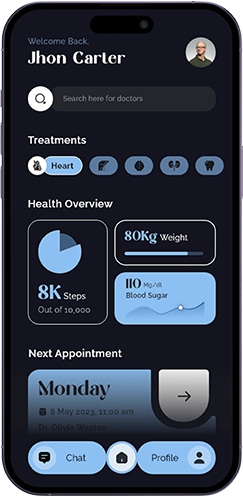
AI Integration with Clinical Systems
Integrated an AI-powered virtual health assistant with EHR, laboratory, and imaging data through HL7 and FHIR, giving it clinical context for healthcare workflows.
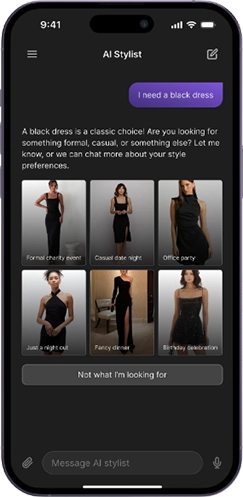
Controlling How AI Connects with Enterprise Systems
When AI connects with enterprise technology, the integration layer becomes part of your security architecture. We design it to keep access controlled and traceable.
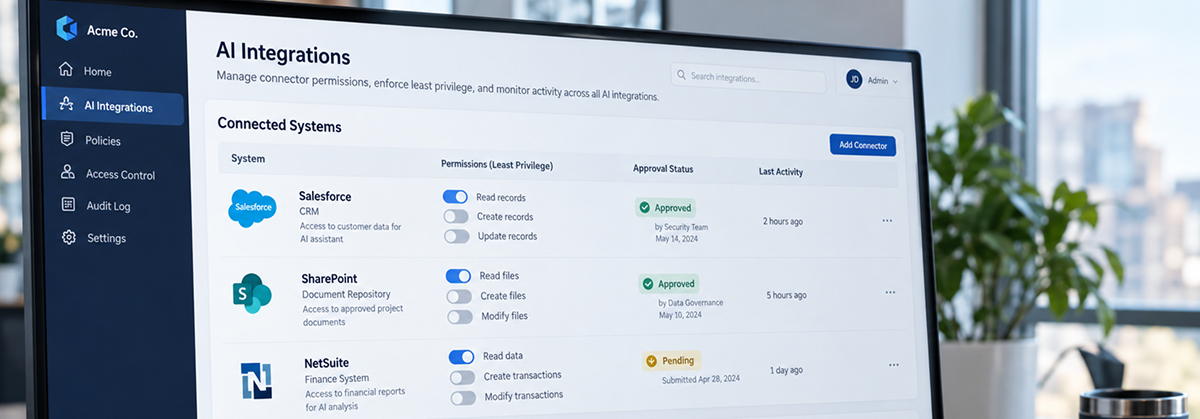
The Compliance Framework Behind Responsible AI Integration
The right compliance framework depends on the environment, and our experience across regulated industries helps us engineer AI integrations around those requirements.
SOC 2 Type II
Enterprise controls for security, availability, confidentiality, and system access.
ISO/IEC 27001
A structured framework for managing information security risks and controls.
GDPR
Privacy controls for AI integrations that process personal data across the EU.
EU AI Act
Risk-based requirements for responsible AI use, oversight, and accountability.
NIST AI RMF
Guidance for identifying, assessing, and managing risks across AI deployments.
ISO/IEC 42001
An AI management framework for establishing governance across the AI lifecycle.
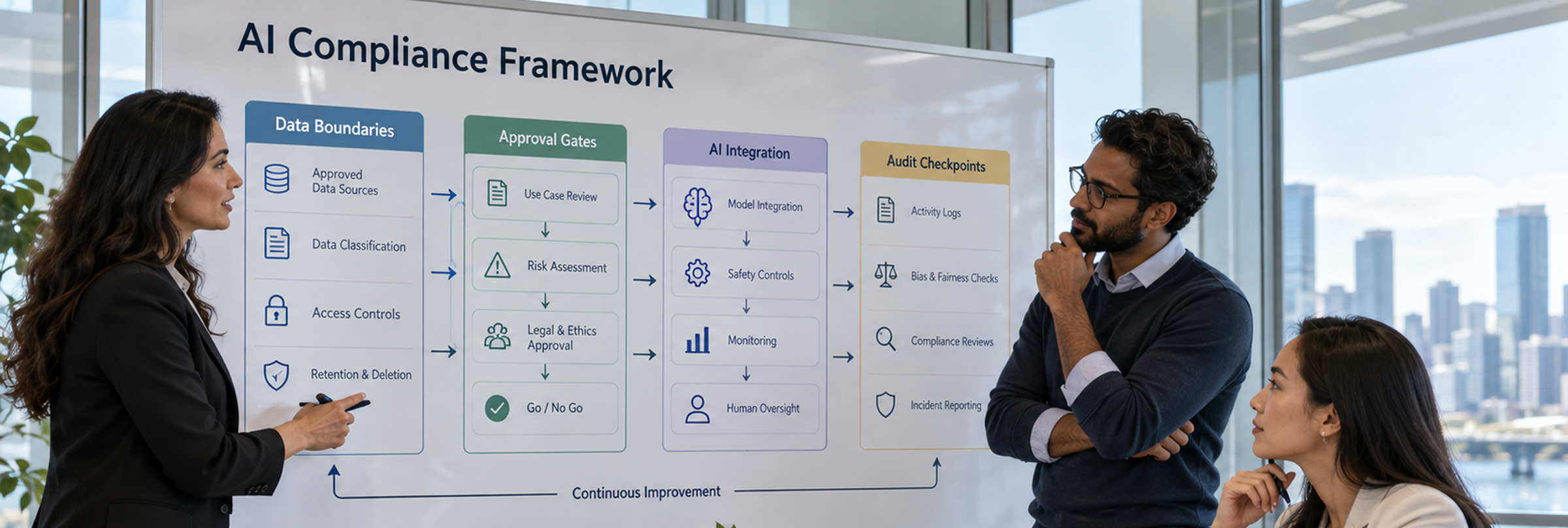
Where AI Connects Across Your Existing Technology Stack
In practice, the true value of AI integration comes from embedding AI where it can justifiably support your business, rather than treating it as a separate layer.
AI → Applications
AI connects with web and mobile applications as well as SaaS platforms. It also extends enterprise software with AI capabilities that work within user experiences.
AI → APIs
REST, GraphQL, SOAP, OpenAPI, and internal APIs serve as transit systems for AI to communicate with the applications and services already in your environment.
AI → Data
When the right access layer is in place, AI can work with databases, warehouses, knowledge stores, and documents through governed data management.
AI → Business Platforms
CRM, ERP, HR, and ITSM systems can bring AI into everyday operations. It can help teams access business intelligence within the platforms they already depend on.
AI → Workflows
AI can particularly be useful for workflow automation and RPA development, integrated through orchestration and events to make specific tasks more responsive.
AI → Agents
AI agents can invoke existing business functionality when exposed through approved tools, giving them a controlled way to retrieve information and take action.
How AI Integration Creates Value Across Your Business
AI integration can create value across the business, helping leadership improve outcomes while making everyday work more efficient for the teams using these systems.
 For Leadership
|
|---|
|
|

 For Practitioners
|
|---|
|
|
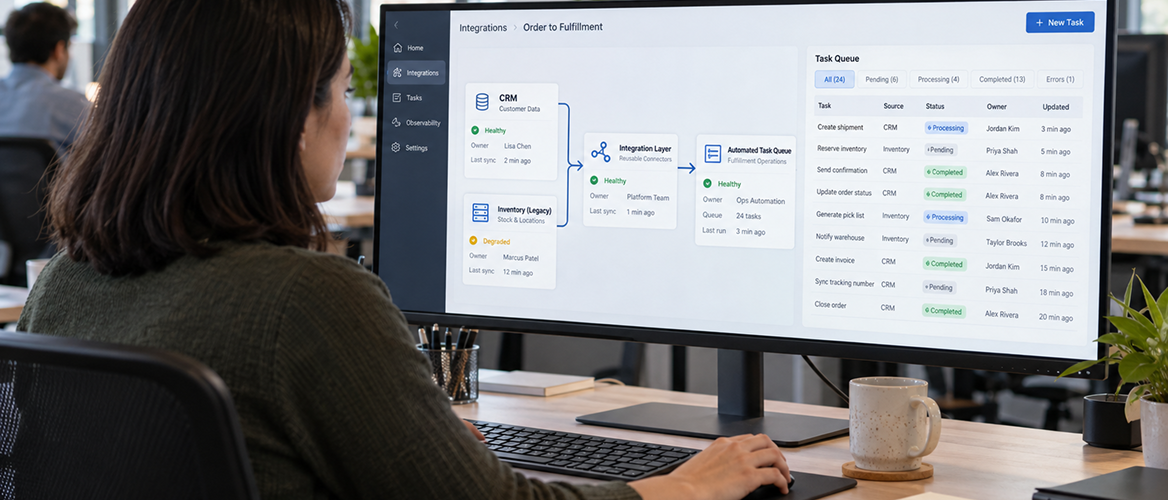
Bring AI Into Your Existing Technologies
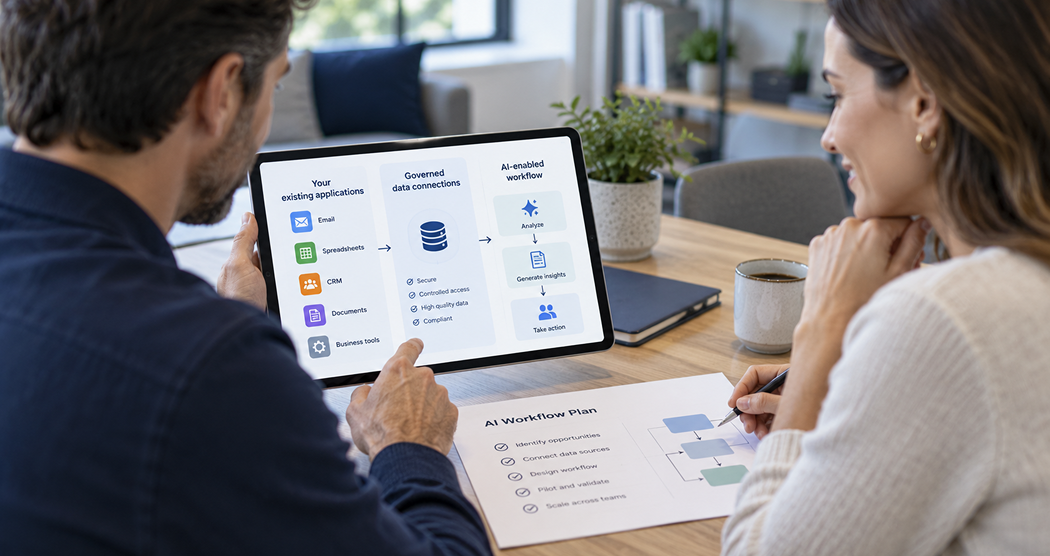
Turn your existing systems into AI-enabled workflows by connecting the capabilities you need to the applications and data your business already depends on.
AI Integration Technologies Across Our Service Stack
Our 350+ strong workforce brings AI integration expertise across modern technologies. We select the stack based on your architecture and project requirements.
AI APIs
- OpenAI
- Anthropic
- Google Gemini
- Azure OpenAI
- Amazon Bedrock
API Technologies
- REST
- GraphSQL
- SOAP
- OpenAPI
- Webhooks
AI Interfaces
- Function Calling
- Tool Calling
- MCP
- Embeddings
Integration Infrastructure
- API Gateways
- Message Queues
- Event Buses
- Workflow Engines
Data & Storage
- SQL Databases
- NoSQL Databases
- Vector Databases
- Data Warehouses
- Object Storage
Identity & Access
- OAuth 2.0
- OpenID Connect
- SSO
- IAM
- Managed Identity
Cloud & Infrastructure
- AWS
- Microsoft Azure
- Google Cloud
- Docker
- Kubernetes
Observability & Monitoring
- Datadog
- Grafana
- Prometheus
- New Relic
How Much Does AI Integration Cost with Excellent Webworld?
AI integration has no fixed scope. Its complexity and dependencies vary by project. So we group engagements into four broad tiers based on the scope of service.
- One existing system connected to AI
- One AI API integrated into the workflow
- Source of data is clearly specified
- Limited to a single workflow scope
- Connects multiple systems of record
- Governed data layer for consistency
- Gateway setup connects data sources
- Designed for cross-system workflows
- Governance layer spans every system
- Scales across all agents & workflows
- System health gets monitored daily
- Scoped across the entire enterprise
| Pricing Factor | What Drives The Number |
|---|---|
| Systems & API Scope | More systems and APIs raise integration work |
| Data Readiness | Data cleanup adds work before AI integration |
| Compliance & Governance | Stricter governance adds implementation work |
| Processing Model | Real-time processing requires event handling |
| AI Provider Complexity | Multiple AI providers may need routing logic |
Our AI Integration Process for Existing Enterprise Systems
AI integration needs to work reliably beyond the initial deployment. Our process considers how the solution will operate once it becomes part of your environment.
Integration Assessment
We begin by mapping existing applications, data sources, AI requirements, and constraints.
Integration Architecture
Our technical leadership team plans how AI should communicate with your existing stack.
Interface & Access Design
Next, we define APIs alongside authentication and authorization for secure AI access.
Establishing AI Connection
We connect AI models, agents, RAG components, or APIs to the integration environment.
Broader System Integration
AI is integrated with the apps, workflows, enterprise platforms, databases, and APIs.
AI Integration Testing
Before deployment, we test data flow, edge cases, failure handling, API reliability, and latency.
Production Deployment
The AI integration architecture is deployed to the appropriate production environment.
AI Integration Monitoring
We monitor API health, usage, model behavior, latency, and costs for potential issues.
Ongoing Optimization
Post-launch, we improve performance, reliability, costs, and AI behavior over time.
Discover Related AI Engineering Services for Your Enterprise
If you’re looking to address your broader enterprise AI strategy, we can help you move from individual AI initiatives toward a more connected technology roadmap.
RAG Development
Make your AI integrations more contextual with enterprise data retrieval systems.
Enterprise LLM Development
For organizations moving beyond individual AI use cases, enterprise LLMs can support broader adoption.
AI Copilot Development
Copilots bring AI assistance into the applications and workflows your teams already use.
AI Integration for Industry-Specific Systems
Our experience across regulated industries combined with deep AI engineering expertise enable us to deliver AI integration services across diverse technology environments.
AI in Healthcare
AI with EHRs, healthcare applications, patient systems, and operational workflows.
AI in Fintech
AI with financial platforms, transaction systems, risk systems, and custom applications.
AI in Insurance
AI helps with claims processing, underwriting, documentation, and policy systems.
AI in Retail
AI with commerce platforms, customer data, inventory, and recommendation systems.
AI in Logistics
AI implemented for fleet management, routing, supply-chain, and operational platforms.
AI in Manufacturing
AI assisting with production systems, IoT, quality control, and maintenance workflows.
AI in SaaS
AI embedded directly into your existing software products and customer workflows.
AI in Government / Public Sector
AI with citizen service platforms, government databases, and administrative workflows.
FAQs About AI Integration Services
Benefits of AI integration include automating the repetitive workflows that humans perform in everyday tasks. It also helps reduce processing errors faced in the system and unlocks the value sitting inside your existing data. You get lower operational costs along with the ability to scale without adding headcount.
Yes, adding AI to legacy software is something that current businesses are implementing. Businesses opt for API bridging and middleware layers to add AI capabilities to existing systems without rebuilding them. The goal remains the same, which is to improve what your current system delivers.
It totally depends on the requirements, like data quality and level of customization. However, most projects take around 15 weeks or less to integrate AI. If its simple module deployment, it will go live faster. But if it’s complex enterprise integrations, it requires extra time.
Again, there is not fix cost required to integrate AI; still, to give you an average, it costs around $10,000 – $500,000+. The AI integration cost depends heavily on scope, technology, and engagement model as well. What we recommend is to assess your requirement and get a quote specific to your situation via an AI development company.
AI integration is a profitable service as most of the clients observe impactful returns within the first two quarters post deployment. This is carried out with the help of cost reduction and reduction in repetitive operations.
Make sure that the agency you choose for integrating AI prioritizes integration around zero data leakage principles. Also, make sure they follow end-to-end encryption, strict access control like RBAC, and total compliance with GDPR and CCPA.
You must look for experience in particular industries, quick and transparent delivery timelines, as well as post-launch support. Along with these factors, also check if they prioritize data security standards to ensure they deliver an impactful ROI.