Web Portal Development Services
Excellent Webworld has been recognized for a diversity of web portal development solutions. We deliver robust, secure, personalized digital hubs. Our team engineers around role-based access, making your portal offer the individual user exactly the tools, data, and services their role requires. Partner with web portal developers who have worked across the healthcare, finance, logistics, and B2B sectors. They seamlessly align custom portals to centralize data, integrate legacy systems, and provide user-specific self-service dashboards.
Engineers, Architects & AI Specialists
Industries Served
First Working Prototype
Clients Served Globally


- Custom & Platform-Based Development
- B2B, Customer, Patient & Financial Portals
- AI, AR/VR, IoT & Blockchain Integration
- Cloud-Native & Microservices Architecture
- Third-Party API & Payment Gateway Integration
- Real-Time Analytics & Reporting Dashboards
- Multi-Language & Multi-Region Support
Types of Web Portals Developed For Every Industry We Serve
Every portal type is there to solve a specific job for a specific user, so we engineer the architecture, security, and features around that job first. Moreover, we offer web portal development services aligned to your industry actually operates.
B2B Portals
- Corporate Account Management
- Contract Pricing & Catalog
- Quote Management
- Partner Self-Service
Customer Portals
- Order Placement & Management
- 24/7 Self-Service Access
- Integrated Support & Ticketing
- Analytics & Reporting
Ecommerce Portals
- Content & Catalog Management
- Promotion & Discount Tools
- Order Tracking & Checkout
- Multiple Payment Options
eLearning Portals
- Learning Content Management
- Video & Game-Based Learning
- Role-Based Access & Records
- AI-Based Content Recommendations
HR Portals
- Employee Directory & Handbook
- Document & Policy Management
- Automated Requests & Approvals
- Payroll & Compensation Access
Real Estate Portals
- Property Listing & Search
- Virtual Tours & Map Integration
- Mortgage Calculators
- Payment & Billing Tools
Insurance Portals
- Quote & Policy Management
- Claims Management
- Document Management
- Self-Service Knowledge Base
Patient Portals
- Secure Access to PHI
- Appointment Scheduling
- HIPAA-Compliant Messaging
- Remote Patient Monitoring
Financial Portals
- Account Management
- Financial Calculators
- AI-Based Personalization
- Data Security & Compliance
Travel Portals
- Search & Price Comparison
- Payment Gateway Integration
- Multi-Currency Support
- Reviews & Ratings
Media Portals
- Content Management & Streaming
- CDN Integration
- Digital Rights Management
- Social Media Integration
Community Portals
- Community Membership & Profiles
- Knowledge Sharing & Forums
- Event Management
- Chat & Instant Messaging
Web Portal Development Services for Modern Enterprises
From strategy and architecture to custom development, modernization, and ongoing optimization, our web portal development services enable enterprises to build scalable and user-centric digital platforms. This helps to integrate seamlessly with existing business systems.
01: CONSULTING
Portal Consulting
We work on the right foundation with a clear implementation roadmap. Our team assesses your business objectives, technology landscape, user requirements, and integrations. This seamlessly defines the optimal portal architecture, technology stack, and implementation strategy.
02: DEVELOPMENT
Web Portal Development
We design and build scalable web portals tailored to your business processes and user experiences. Whether you need a customer portal, employee portal, vendor portal, partner portal, or self-service portal, our solutions will work accordingly. This streamlines operations and improves digital engagement.
03: MODERNIZATION & MIGRATION
Portal Modernization & Migration
We modernize legacy portals or migrate to a more scalable technology platform with minimal business disruption. We have been improving performance, strengthening security, and preserving critical data. So, this ensures a seamless transition to modern architectures.
04: SUPPORT & MAINTENANCE
Portal Support & Maintenance
Ensuring your portal continues to perform at its best with proactive maintenance, security updates, performance monitoring, and continuous feature enhancements. This way, your business evolves alongside your business.
Web Portals Built for Organizations That Can’t Afford Downtime
Clutch Global Ranking
Technologists Company-Wide
Countries Served
Years in Enterprise Software Engineering
Top Clutch Systems Integration Company — Dubai 2026
Top Clutch App Modernization Service — United States 2026
Top Clutch AWS Company United States 2026

Top Clutch Azure Company — United States 2026

Top Clutch Google Cloud Company United States 2026

Top Clutch Web Developers — Salt Lake City 2026
Custom vs. Platform: Making the Right Technology Investment
Enterprises must have a clear understanding of which sort of web portal makes their operations smooth. Making this decision reshapes your budget, development effort, and time-to-market.
| Platform-Based Development | Custom Software Development | |||
|---|---|---|---|---|
|
Advantages
|
Platform-Based Development | Faster implementation, built-in vendor updates, lower upfront investment | Custom Software Development | No functional ceiling, built around your exact workflows, scales without licensing constraints |
|
Limitations
|
Platform-Based Development | Functionality bound by the platform’s architecture, yet customization gets harder as needs grow | Custom Software Development | Longer implementation timeline & higher upfront investment |
|
Best For
|
Platform-Based Development | Standard workflows with well-established patterns (catalog browsing, order tracking, basic self-service) | Custom Software Development | Complex processes that don’t map to a template-regulated industries, proprietary business logic |
|
Ownership Model
|
Platform-Based Development | Licensed platform; when you build on someone else’s roadmap | Custom Software Development | Fully owned architecture; this has no dependency on third-party vendor. |
|
Long-Term Cost
|
Platform-Based Development | Lower upfront, but ongoing licensing fees compound over time | Custom Software Development | Higher upfront, but no recurring platform licensing cost long-term |
|
Example
|
Platform-Based Development | A Magento-based eCommerce portal | Custom Software Development | A custom-tailored customer self-service portal. It is built around your specific workflows |
|
Starting Cost
|
Platform-Based Development | Starts at $15,000 | Custom Software Development | Starts at $70,000 |
Web Portals Developed To Tailor Real User Traffic
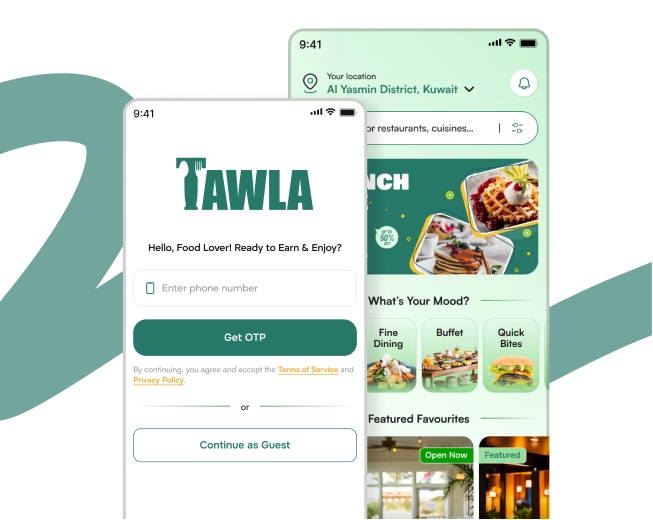
TAWLA, Restaurant & Hospitality
- Operations split across five disconnected tools with no real-time visibility
- No native Arabic-first UX or local KNET payment support
- Architecture couldn’t scale across multiple restaurant locations
- Replaced a five-tool stack with one unified operating platform
- 30% Lower Order Errors
- 2.1× Faster Order Throughput
- 99.9% Platform Uptime
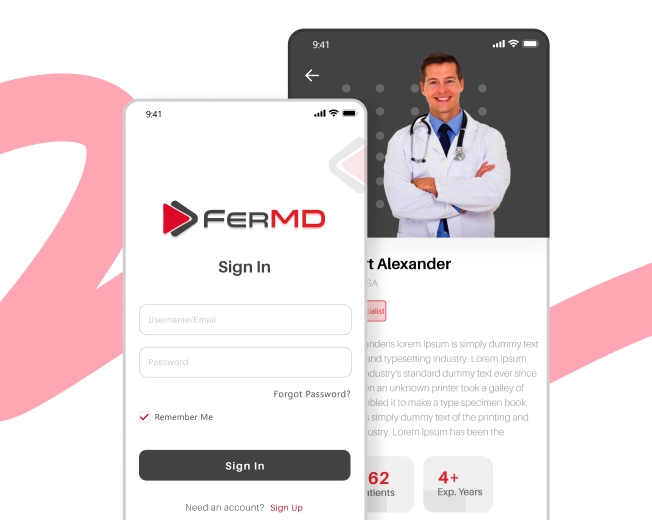
FerMD, Telemedicine & Connected Care
- Patient care fragmented across providers with no unified record
- Needed AI-assisted intake without crossing into diagnosis
- HIPAA compliance had to be built in
- Unified 8 connected care services onto a single patient record
- 68% Faster Care Coordination
- 2.3× Faster Patient Routing
- 100% HIPAA-Compliant Architecture
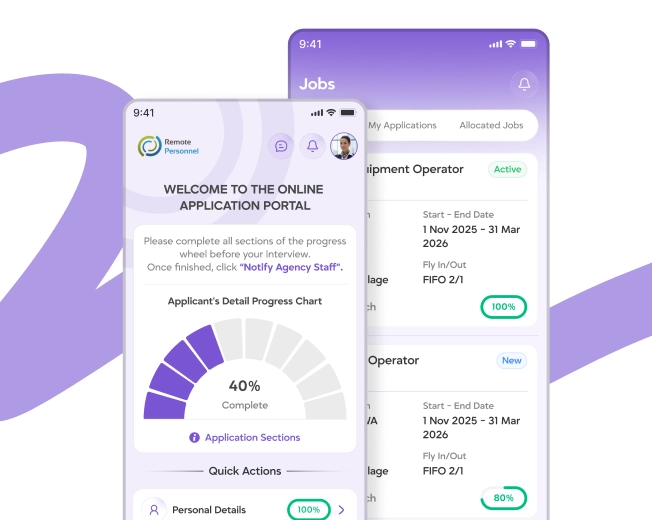
Remote Personnel, Workforce Staffing
- FIFO hiring ran on manual phone and email coordination
- No 24/7 staffing access across remote WA and QLD sites
- Needed a rigorous, auditable worker verification process
- Replaced manual coordination with 24/7 on-demand digital staffing
- 57% Less Hiring Admin
- 34% Faster Time-to-Hire
- 2.0× Candidate Throughput
Security-Adhered Web Portal Development Services
A portal is a single access point to sensitive data, health records, financial details, and personal information. So every system we design meets the certifications and standards your industry and region demand
ISO 27001
Framework to establish, implement, and maintain a robust Information Security Management System (ISMS) across every portal and the data it holds.
SOC 2 Type II
Validates security, availability & confidentiality controls across portal infrastructure through independent, ongoing audits.
HIPAA
Governs protected health data accessed through patient portals, requiring safeguards across every covered entity and business associate.
PCI DSS
Regulates secure handling of payment card data for eCommerce, travel, and financial portals with checkout or billing functionality.
GDPR
Controls EU data processing, consent management, and cross-border data transfer requirements for portals handling EU user data.
CCPA
Gives California residents rights over their data, including access, deletion, and opt-out of data sale—relevant to any portal collecting personal information from U.S. users.
PIPEDA
Governs the collection, use, and disclosure of personal information by private-sector organizations operating in Canada.
UAE PDPL
Governs personal data processing and cross-border transfer requirements for portals operating within the UAE.
Saudi PDPL
Sets data protection and localization requirements for portals operating within the Kingdom of Saudi Arabia.
WCAG 2.2
Web accessibility standards ensure portals are usable by people with disabilities—essential for any public-facing customer or citizen portal.
NIST Cybersecurity Framework
Guidelines to manage and reduce cybersecurity risk throughout portal architecture and infrastructure.
FERPA
Governs student education records for eLearning and university portals handling academic and personal data.
Build Enterprise-Grade Web Portals That Drive Business Growth
Being the custom web portal development services provider, we develop secure, scalable portals that unify users, systems, and workflows. Our solutions drive automation, efficiency, and business growth.

- Role-Based Access for users, partners, and admins
- Seamless Integrations with ERP, CRM, APIs & more
- Workflow Automation to streamline business operations
A Seven-Step Web Portal Development Roadmap
The web portal development process is just a clear path from the first conversation to launch.
Discovery & Strategy
Our team works to align business objectives, user needs, technical requirements, and compliance considerations. This will help define the project scope, success metrics, and a clear delivery roadmap.
Solution Architecture & Experience Design
We define the solution architecture, user journeys, information architecture, and UI/UX while validating concepts through wireframes and interactive prototypes.
Agile Development
Our engineering teams build secure, scalable front-end, back-end, APIs, and business workflows using iterative development cycles with continuous stakeholder feedback.
Enterprise Integration
We integrate your portal with enterprise systems—including ERP, CRM, identity providers, HRMS, LMS, payment gateways, and third-party applications—to create a unified digital ecosystem.
Quality Assurance & Security Validation
Every release undergoes comprehensive functional, performance, security, compatibility, and usability testing to ensure enterprise-grade reliability before production.
Deployment & Go-Live
We manage production deployment, environment configuration, data migration, user enablement, and post-launch stabilization to ensure a seamless rollout.
Continuous Support & Optimization
Following launch, we provide proactive monitoring, maintenance, performance optimization, feature enhancements, security updates, and ongoing technical support to maximize long-term value.
Technology Stack for Web Portal Development
Our web portal development services have five layers of the tech stack solutions. Here is each handling a different part of how the system runs and is deployed.
Frontend
- React
- Next.js
- Angular
- Vue.js
- Strapi
- Contentful
- Sanity
- WordPress
- Drupal
- Sitecore(for content-heavy portals)
Backend
- Node.js
- NestJS
- .NET Core
- Django
- Laravel
- Spring Boot
Database
- PostgreSQL
- MySQL
- MongoDB
- Microsoft SQL Server
- Redis(caching)
Integration
- REST APIs
- GraphQL
- CRM integration (Salesforce, HubSpot)
- Zendesk & ServiceNow (support/ticketing)
- Payment gateways (Stripe, PayPal)
Infrastructure & Security
- AWS
- Microsoft Azure
- Google Cloud
- Docker
- Kubernetes
- OAuth 2.0
- SSO
- Role-Based Access Control (RBAC)
- AES-256 Encryption
Expand Your Portal Integrations Seamlessly
These technologies and tools extend to diverse aspects of the portal from a functional access point into a genuinely differentiated experience.
Few Non-Negotiables Behind Every Portal We Deliver
Web Portal Development Vs. Website Development: How They Differ
CTOs and enterprises get confused constantly between web portals and websites. But they solve different problems, & here’s the actual difference.
| Points of Difference | Web Portal | Website | ||
|---|---|---|---|---|
|
Interaction
|
Web Portal | Users interact with and act on the data on the page | Website | Static, informational, read-only content |
|
Access & Users
|
Web Portal | Requires a URL plus credentials; content is personalized and restricted to authorized users | Website | Publicly accessible via URL alone, with no authentication required |
|
Content Ownership
|
Web Portal | Multiple authorized users can update and manage their own content within defined permissions | Website | Only an admin can modify content, a single point of control |
|
Personalization
|
Web Portal | Real-time, personalized to each authenticated user | Website | One-size-fits-all; every visitor sees the same experience |
|
Integrations
|
Web Portal | Commonly integrated with CRM, ERP, and other core business systems | Website | Rarely integrated with external business systems |
Frequently Asked Questions
Portal development costs vary significantly based on complexity, and there are two main paths that affect the range. Platform-based development (building on an existing CMS or framework) is typically the faster, lower-cost route, since you’re configuring rather than building from zero. Custom development (fully bespoke architecture built around your specific workflows) costs more upfront but avoids the functional ceiling and licensing dependency that comes with platform-based builds.
Beyond that base decision, cost is driven by the number of user roles; the depth of integrations (ERP, CRM, and payment systems); compliance requirements (HIPAA, PCI DSS, and GDPR add engineering overhead); and whether a companion mobile app is needed. Get Free Quote now!
Look past the pitch and evaluate four things specifically:
- Compliance depth — Especially if your portal touches regulated data, a partner should be able to speak fluently about the specific certifications (ISO 27001, SOC 2, HIPAA, and GDPR) relevant to your industry, not just list badges.
- Post-launch accountability — Ask directly what happens after go-live: Who owns bug fixes, security patching, and scaling support, and under what terms?
- Architecture transparency — A reliable partner will walk you through why they recommend custom vs. platform-based for your specific case, rather than defaulting to whichever approach is easiest for them to sell.
- Proven delivery — Not just claimed expertise; ask for case studies with real, verifiable outcomes, not just a portfolio list
If your business currently manages customer accounts, partner relationships, employee requests, or service delivery through email threads, spreadsheets, or phone calls, a portal replaces that fragmented coordination with a single, role-based system where every user gets exactly the tools and data relevant to them. Moreover, a web portal becomes necessary once your business has grown past the point where informal coordination scales, there are multiple user types, there are recurring transactions, or there are compliance requirements that demand traceability.
Any industry managing complex, role-based relationships benefits; healthcare (patient portals), financial services (account and advisor portals), B2B distribution (partner and dealer portals), real estate, insurance, and education are the most common. Moreover, the common thread isn’t the industry itself, but whether the business coordinates recurring interactions across multiple distinct user types who each need different data and permissions.
Timelines depend heavily on scope, but most experienced teams recommend a phased approach: a working core version launched first (covering essential workflows), with additional modules and integrations rolled out in subsequent phases. This lets your business start capturing value and gathering real user feedback early, rather than waiting for every feature to be complete before anything goes live. So, it reduces the risk of building features nobody ends up using.