Application Modernization Services
We are a globally trusted application modernization partner. For 15+ years, our legacy application modernization services have transformed aging systems into scalable and high-performing applications. From code refactoring to architecting for AI, we help enterprises reduce technical debt, cut maintenance costs, and accelerate business growth.
Legacy Systems Modernized
Enterprise Tech Partners
Years of Modernization Expertise
Cloud Platforms Integrated


- Cloud-Native Re-architecture
- Monolith-to-Microservices Migration
- Legacy Code Refactoring & Cleanup
- AI-Driven Performance Optimization
- Zero-Downtown Deployment Pipelines

Modernizing Your Legacy Systems Into Future-Ready Applications
Our system-wide app modernization approach aligns architecture, technical debt, and business priorities to guide your transition to future-ready applications.
01
Future-Proof, Scalable Cloud Architecture
Experienced software architects redesign monolithic systems into cloud-native, modular architectures that scale with demand and reduce infrastructure overhead.
02
A Risk-Free, Zero-Downtime Migration Plan
Our systemic approach keeps your operations uninterrupted as we migrate critical applications through phased cutover plans and automated rollback safeguards.
03
Seamless Legacy & Third-Party Integration
Through robust APIs, our integration experts connect your legacy databases to external systems while retaining data integrity during the modernization process.
04
Intelligent Workflow & Process Automation
A big part of enterprise application modernization is AI-powered automation. We help you achieve that with predictive maintenance and automated decision-making.
05
Enterprise-Grade Security Hardening Steps
Role-based access, identity management, and end-to-end encryption are some of the capabilities we add so your modernized systems meet modern security standards.
06
High-Availability Performance Engineering
Beyond immediate solutions, we re-architect legacy infrastructures using cloud-native design principles, optimizing system performance for consistent uptime.
Compliance-First Architecture
Globally recognized security and regulatory requirements (SOC 2 Type II, ISO 27001, GDPR) guide our application modernization engagements from day one.
Enterprise-System Connectivity
Advanced integration layers and bi-directional API pipelines preserve communication between your modernized application and legacy enterprise systems.
AI & Agentic Integration
Our AI specialists embed LLMs, predictive analytics, intelligent automation, and agentic workflows directly into your modernized application architecture.
Application Modernization Services for AI-Ready Enterprises
As an app modernization company for 15+ years, we have modernized mission-critical systems with our cross-functional services across various industry verticals.
Application Assessment & Strategy
A top-to-bottom audit of the system’s architecture, technical debt, and dependencies shapes a modernization strategy aligned with business goals and risk mitigation plans.
Application Re-architecting & Design
We position your modernized application for cloud or hybrid environments by replacing monolithic systems with service-oriented, microservices, or AI-native architectures.
Cloud & Infrastructure Modernization
Cloud migration to AWS, Azure, or GCP happens with zero downtime, covering environment configuration, large-scale data migration, DevOps setup, and performance tuning.
Code Refactoring & Optimization
By consolidating redundant systems and improving test coverage, our engineers modernize your legacy codebases for reduced technical debt and long-term maintainability.
API & System Integration Architecture
Robust APIs and integration layers connect your platform to internal and third-party systems without complete rewrites through event streaming and asynchronous workflows.
AI-Powered Modernization & Analytics
We embed AI and ML capabilities into your modernized systems, and transform aging applications into competitive, data-driven platforms that unlock business intelligence.
Application Modernization Solutions for Every Legacy Challenge
Outdated legacy systems majorly constrain business growth. Our purpose-built solutions focus on architecture redesign, efficiency gains, and secure migration.
Application Re-architecting
- Migrating Monoliths to Microservices
- Designing Cloud-Native Architecture
- API-First Application Restructuring
- Scalability & Performance Planning Work
Application Migration
- Migrating Legacy Systems to the Cloud
- On-Premises to Hybrid Cloud Migration
- Data Migration and Validation Process
- Thorough Post-Migration Testing Cycles
Application Containerization
- Docker and Kubernetes Implementation
- Deploying Isolated Container Services
- CI/CD Pipeline Integration and Setup
- Container Security Hardening Process
Application Refactoring
- Code Structure Optimization Process
- Reducing Accumulated Technical Debt
- Dependency Modernization Across Systems
- Test Coverage Improvement Across Code
Functionality Customization
- Reworking Legacy Application Features
- Developing New Application Capabilities
- Realigning Business Logic with Goals
- User Workflow Enhancement Across Teams
Application UX/UI Redesign
- Interface Modernization Across Screens
- User Experience Audits Across Platforms
- Building Brand-Aligned Design Systems
- Ensuring Full Accessibility Compliance
Application Integration
- Building Custom APIs for your Systems
- Building Third-Party System Connectors
- Automating Data Exchange Across Systems
- Enterprise System Interoperability Work
Application Security Modernization
- Conducting Legacy Security Assessments
- Managing Identity & Access Controls
- Deploying Enterprise Security Controls
- Aligning Compliance and Risk Standards
Application Performance Optimization
- Performance Bottleneck Analysis Process
- Fine-Tuning Database Query Performance
- Optimizing Resource Utilization Fully
- Tracking Application Performance Closely
How We Helped Enterprises Modernize Legacy Systems Without Disrupting Operations
We’ve partnered with logistics operators, marketplace platforms, and enterprise software teams to modernize legacy systems into scalable, cloud-native applications while safeguarding day-to-day business continuity.
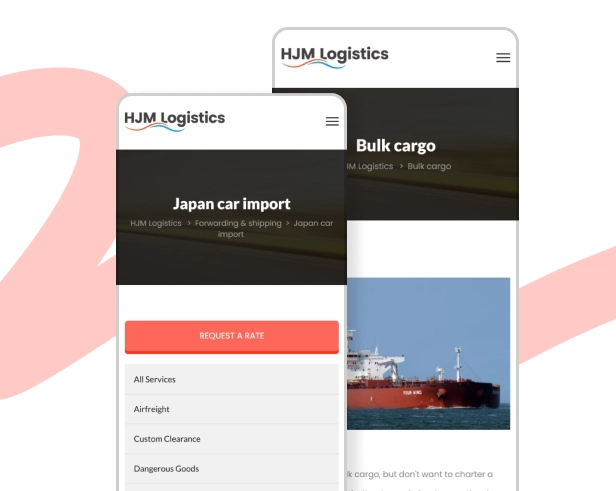
Logistics Platform Modernization for HJM Logistics
- Legacy systems couldn’t support multi-region freight operations
- Manual coordination across forwarding, warehousing, and bulk cargo units
- No unified digital platform connecting global service lines
- Unified platform connecting shippers, carriers, and administrators
- AI-powered load matching accelerated carrier allocation
- Modernized digital infrastructure supporting a global client base
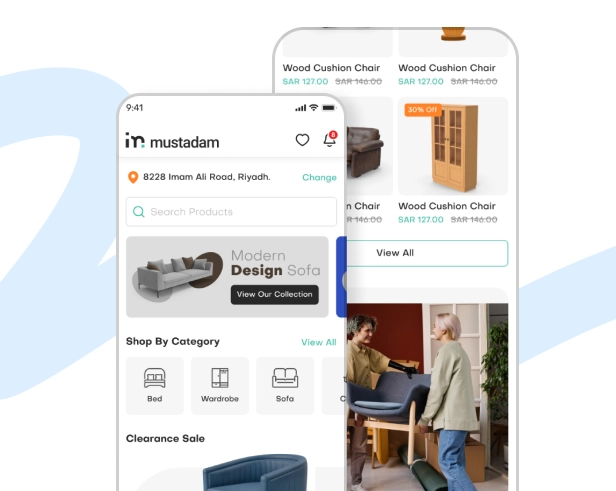
Marketplace Platform Modernization for Mustadam
- Legacy commerce infrastructure limited to single-market operations
- No scalable mobile experience for buyers and sellers
- Manual listing and inventory management processes
- Modernized ecommerce platform with native iOS and Android apps
- Scalable marketplace architecture supporting growing product catalog
- Streamlined buyer-seller experience across web and mobile
Still Running On Legacy Architecture?
Most enterprises delay modernization until legacy systems start blocking growth. We replace that risk with a clear roadmap, executed by one accountable partner.

- A single partner across assessment and delivery
- A zero-downtime migration and deployment plan
- Fixed roadmap tied to measurable business outcomes
- Post-modernization support and monitoring included
Application Modernization Across Enterprise Industries
Different industries face different challenges, whether it’s compliance in healthcare or personalization in retail. Our software development approach adapts to the needs of each sector, which helps businesses modernize processes and better connect with customers.


Application Modernization Aligned With Global Compliance Standards
Modernization must strengthen compliance alongside technology. Our engineering practices follow regional regulations and industry frameworks across all stages.
Modernization aligned with U.S. security, privacy, and industry regulations.
- HIPAA
- HITECH
- SOC 2 Type II
- SOC 1 Type II
- PCI DSS
- NIST CSF
- NIST SP 800-53
- NIST AI RMF
- FedRAMP
- CCPA / CPRA
- FERPA
- GLBA
- FISMA
- ADA Section 508
Application modernization supporting European privacy and security requirements.
- GDPR
- UK GDPR
- ISO/IEC 27001
- ISO/IEC 42001
- ISO 9001
- PCI DSS
- PSD2
- eIDAS
- DORA
- NIS2 Directive
- WCAG 2.2
- Cyber Essentials Plus (UK)
Modernization adhering to Canadian privacy and public-sector compliance needs.
- PIPEDA
- PHIPA
- SOC 2 Type II
- PCI DSS
- ISO/IEC 27001
- ISO/IEC 42001
- WCAG 2.2
- ITSG-33
- Protected B
Modernization supporting various regional privacy and cybersecurity regulations.
- PDPA (Singapore)
- PDPA (Thailand)
- Privacy Act (Australia)
- APPs (Australia)
- APPI (Japan)
- ISMAP (Japan)
- IRAP (Australia)
- PCI DSS
- ISO/IEC 27001
- ISO/IEC 42001
Application modernization aligned with regional privacy and digital regulations.
- Saudi PDPL
- UAE PDPL
- NDMO
- ECC
- SAMA Cybersecurity Framework
- QCB Information Security
- Bahrain PDPL
- PCI DSS
- ISO/IEC 27001
- ISO/IEC 42001
Technology Stack Powering Our Application Modernization Projects
As an AI-first software engineering company, our wide-ranging technical repertoire helps us maximize performance, scalability, and long-term maintainability.
Programming Languages
- .NET
- Java
- PHP
- Python
- Ruby
- Kotlin
- Go
- C/C++
- Rust
- HTML
- CSS
- JavaScript
- TypeScript
Frameworks & Libraries
- ASP.NET Core
- Spring
- Laravel
- Symfony
- Django
- Flask
- Node.js
- Express
- NestJS
- Ruby on Rails
- React
- Angular
- Vue
- Next.js
Mobile Technologies
- Swift
- Kotlin
- React Native
- Flutter
- Ionic
- .NET MAUI
Cloud Partners
- AWS
- Microsoft Azure
- Google Cloud Platform
- Oracle Cloud
- DigitalOcean
- Cloudflare
Database
- MySQL
- PostgreSQL
- MS SQL
- Oracle
- MongoDB
Cloud Database & Storage
- Amazon S3
- Amazon Redshift
- Azure Data Lake
- Azure Blob Storage
- Azure Cosmos DB
- Google Cloud SQL
DevOps & Containerization
- Docker
- Kubernetes
- Terraform
- Jenkins
- Azure DevOps
- TeamCity
- Pulumi
- Istio (Service Mesh)
Enterprise Platforms
- Microsoft Dynamics 365
- Salesforce
- NetSuite
- Odoo
- SAP Commerce
- Adobe Commerce (Magento)
AI, ML & Analytics
- TensorFlow
- PyTorch
- OpenAI API
- LangChain
- Power BI
- Tableau
- Apache Spark
Vector & AI Data Layer
- Pinecone
- Weaviate
- pgvector
- Elasticsearch
Your Legacy Application Challenges, Solved
Legacy systems create different business challenges, but the reason behind every modernization initiative usually falls into one of these four challenge areas.
| Challenge Area | What’s Happening | What Changes Under Modernization | ||
|---|---|---|---|---|
|
Legacy Systems Limit Business Growth
|
What’s Happening | Outdated architectures can’t support integrations, user demands, or new features, leading to increased technical debt caused by temporary workarounds. | What Changes Under Modernization | Our modernization engagement rebuilds your application’s architecture around scalable, modular structures so new features ship in weeks, not quarters. |
|
Software Maintenance Costs Keep Rising
|
What’s Happening | Keeping the systems stable and functional becomes an increasingly expensive exercise that involves specialized legacy skill sets and patchwork fixes. | What Changes Under Modernization | Refactoring eliminates the technical debt accumulated in the codebase over the years. The resulting modernized frameworks reduce maintenance overhead. |
|
Security & Compliance Risks Increase
|
What’s Happening | Security and compliance gaps keep widening as outdated frameworks, unpatched dependencies, and legacy infrastructure leave the application exposed. | What Changes Under Modernization | Unsupported frameworks give way to secure, actively maintained platforms built with ISO-aligned practices, making compliance easier to maintain. |
|
Applications Can’t Support AI Capabilities
|
What’s Happening | AI initiatives are often stalled because legacy applications lack the architecture needed to support modern data processing and intelligent features. | What Changes Under Modernization | We modernize the data layer and application architecture to be AI-ready, updating it with automation, predictive analytics, and intelligent features. |
|
Applications Can’t Keep Up With Growth
|
What’s Happening | When the business expands into higher data volume and user load, the rigid legacy architecture and infrastructure fails to accommodate the demands. | What Changes Under Modernization | Migrating to a cloud-native infrastructure that’s re-architected for horizontal scale makes your applications more responsive to growing demands. |
How Application Modernization Changes Daily Operations
Successful application modernization creates an operating environment where business leaders, engineers, and end users work with greater confidence and agility.
|
For Business Leaders
|
|---|
|
|

|
For End Users
|
|---|
|
|

Why Enterprises Trust Our Application Modernization Expertise
For 15+ years, we’ve modernized applications across regulated, high-stakes industries. That track record is why enterprises continue to entrust our expertise.
AI-First Approach, Not Legacy Fixes
Every legacy system we modernize is architected for AI workloads from day one, never retrofitted after launch as an afterthought.
300+ Engineers Across Disciplines
A team of 300+ engineers spanning architecture, DevOps, cloud, AI, and security means no project stalls waiting on one specialist.
Trusted By Government & Enterprise
A portfolio featuring clientele like the Government of Dubai and Amazon demonstrates our expertise in mission-critical delivery.
Zero-Downtime Migration Discipline
Every minute of downtime risks revenue. Our phased rollouts and parallel deployments keep business-critical operations running.
Deep GCC & Global Compliance Record
We’ve modernized compliance-sensitive systems across GCC, US, UK, and European regulatory environments without slowing delivery.
Architecture Ready For What’s Next
From single-app refactors to enterprise-wide rebuilds, every system integrates cleanly with cloud platforms and emerging AI tools.
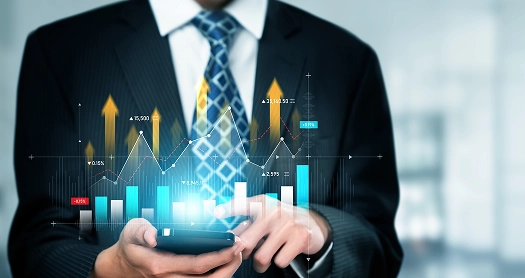
Rebuild Legacy Systems For The AI Era
We rebuild legacy applications into AI-native platforms, embedding automation, predictive analytics, and intelligent workflows that outpace modern standards.
- Automate workflows with intelligent agents
- Surface predictive insights from legacy data
- Real-time monitoring and anomaly detection
- Catch performance gaps before they escalate
Award-Winning Excellence In Legacy Application Modernization
Industry recognition reflects our ability to modernize complex legacy applications while meeting enterprise expectations for quality, security, and innovation.
Clutch Global Ranking — IT Services
Business Environments Managed
Countries With Active IT Deployments
Years in Enterprise IT Management
Top Clutch App Modernization Service — United States 2026
Top Clutch AWS Company — United States 2026
Top Clutch Azure Company — United States 2026
Top Clutch App Modernization Service — Hong Kong 2026
Top Clutch App Modernization Service — Saudi Arabia 2026
Top Clutch App Modernization Service — United Arab Emirates 2026
How Much Does Application Modernization Really Cost?
Costs range $25,000-$2M+. Targeted rehosts or refactors run $25,000-$150,000, while full enterprise re-architecture with AI infrastructure runs $500,000-$2M+.
Targeted Modernization
Ideal For Single Apps With Limited Scope
- Cloud rehosting via lift-and-shifts
- Refactoring of a single application
- Core-level UI/UX modernization work
- Essential third-party integrations
Enterprise Modernization
Suited For Mid-Markets And Growing Firms
- Microservices-based rearchitecting
- Phased cloud migration deployment
- Third-party & EHR/CRM integrations
- AI-assisted code review & migration
Full-Scale Transformation
For Large, Regulated, Multi-System Firms
- Rearchitecture across many systems
- Legacy database & warehouse updates
- HIPAA, PCI DSS & SOC 2 compliance
- Dedicated security, DevOps, AI team
| Cost Factor | Breakdown & Considerations |
|---|---|
| Modernization Approach | Rehosting costs less; full rebuild costs more |
| System Complexity & Age | Codebase size & debt drive engineering hours |
| Data Migration | Volume, structure, quality of data drive cost |
| Third-Party Integrations | Integrations are scoped & priced individually |
| Compliance Requirements | Regulated industries carry a 20-40% premium |
| Downtime Tolerance | Zero-downtime cutovers cost more than usual |
| AI Integration Scope | AI raises upfront cost, lowers upkeep spend |
| Team Composition | In-house, outsourced, or hybrid affects cost |
A Structured Roadmap for Application Modernization
Our structured, risk-managed process ensures minimal disruption and aligns technical decisions with your business goals, modernizing legacy systems confidently.
Legacy Assessment
Business goals, architecture, and technical debt are evaluated before any plans.
Modernization Strategy
The modernization strategy takes shape around timelines, risks, and priorities.
Environment Preparation
Cloud, DevOps, security, and deployment environments are prepared for rollout.
Application Modernization
Phased delivery, testing, and validation drive the legacy modernization process.
Validation & Go-Live
Performance, security, and system readiness undergo final checks before go-live.
Continuous Optimization
Ongoing monitoring, updates, and performance gains continue well beyond go-live.
Add-On Services That Augment Your Modernization Investment
As you progress through the various app modernization phases, our specialized engineering teams can continue to support you with these closely related services.
What Our Clients Are Saying
Every engagement is a reflection of how the right engineering partner creates measurable impact. Hear directly from our international clients who have experienced the difference Excellent Webworld’s services make across their business.

Abdulaziz Alotaibi

I chose Excellent Webworld for its quality, fair pricing, and collaboration. They treated my app ‘Move Coins’ like their own, ensuring success.

Thomas Devito

I’ve been working with Excellent Webworld for over 10 years and have received dozens of web productions for small businesses.

Nick Wright

The designers took the challenge to redesign my app and website from scratch and give my brand a newly updated identity.
Frequently Asked Questions
Legacy application modernization refers to the process of transforming or upgrading dated systems that no longer meet current performance, security, and business requirements. In a general sense, this involves either migrating, refactoring, rearchitecting, or rebuilding an application without destabilizing the core business logic. Modernization is often a part of a broader digital transformation initiative driven by improved scalability and competitiveness.
You should consider modernization when your application struggles to support business growth or shows clear technical warning signs. Common triggers include rising maintenance costs, frequent downtime, security vulnerabilities, poor integration capabilities, inability to add new features, and performance degradation under increasing data or user load.
The most common strategies include:
- Rehosting — moving the application to new infrastructure (typically cloud) without changing the code
- Replatforming — moving to a modern platform with minor code adjustments
- Refactoring — restructuring and optimizing existing code without changing core functionality
- Rearchitecting — redesigning the application’s architecture, often shifting from monolith to microservices
- Rebuilding — a full rewrite and replacement of the legacy system
The right strategy depends on system complexity, business criticality, and long-term scalability goals.
Costs typically range from $25,000 for targeted, single-application projects to $2M+ for enterprise-wide transformations. The final cost depends on the modernization approach chosen, system complexity, data migration scope, number of integrations, and compliance requirements. We provide a detailed cost estimate after a technical assessment of your system.
Timelines vary based on scope and complexity. Targeted refactoring or UI modernization can take a few weeks to 3 months, while enterprise-wide re-architecture or full system rebuilds typically take 12 to 18 months. We build phased roadmaps so your business sees incremental value throughout the modernization process, not just at the end.
Key trends shaping modernization in 2026 include:
- AI-assisted modernization — using AI to accelerate code comprehension, migration, and testing, significantly reducing project timelines
- Cloud-native architecture — building for elasticity, containerization, and managed services from the ground up
- Agentic AI integration — embedding autonomous, multi-step workflows directly into modernized applications
- Zero-downtime migration practices — phased, parallel-run cutovers that eliminate business disruption during transformation