Traditional RAGs are developed around a simple concept that generally retrieves essential information, adds the requirement to the prompt & lets the LLM models generate a clear answer. That is one such approach that works well in terms of a small set of relevant documents.
But the real challenge appears when a question requires multiple retrieval steps, sources, or pieces of information before an accurate answer can be generated. For example, a user might ask: “Why was this customer’s support issue escalated, and what does our latest product policy recommend as the next step?”
So answering such questions generally needs thorough customer reviews for the support history segment, reasons for escalation, findings relevant to the policy & conditions that connect all the significant information prior to sending out any outputs.
For a fixed retrieval system, you cannot get any dynamic results that seem to be valuable.
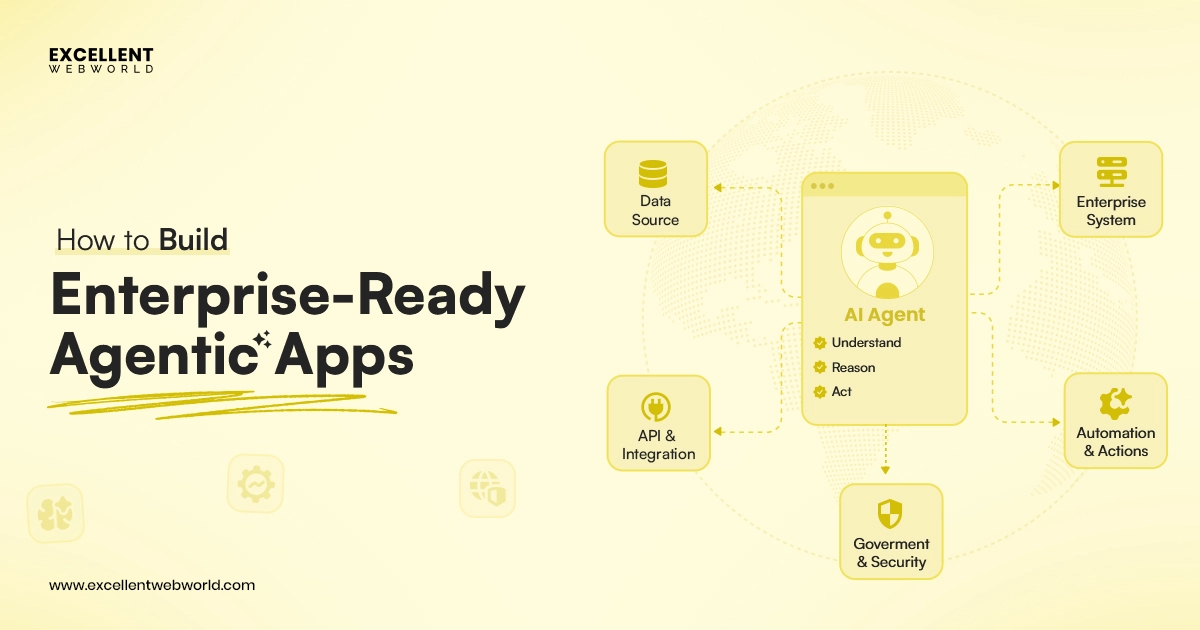
Many teams weighing this decision also compare RAG with fine-tuning when looking for the right approach to improve LLM performance. That’s when Agentic RAG comes into play. With an Agentic RAG system, there is a total shift in the results that integrates an agent to take control by finding the reasons for the task, breaking down complex things into smaller queries, and also taking in information from different sources, evaluating the overall concept, and supporting the outputs.
Tech giants like Microsoft also explain how agentic RAG systems are the new evolution and a better version of RAG than the traditional ones, helping simplify complicated things. This shift is part of a broader pattern we’re seeing across AI trends heading into 2026.
In this blog, we will have great insights about the differences between Agentic RAG and traditional RAG, how each architecture actually works, where traditional RAG falls short, and when the agentic approach generally creates value for enterprise applications.
How Does Traditional RAG Work?
- Retrieve
- Augment
- Generate
Firstly, this traditional system processes the user’s question & searches the indexed knowledge base for significant information. This utilizes vector searches, keyword searches, semantic rankings, and hybrid retrieval approaches.
Next, the most relevant passages are added to the prompt inputs as the grounding context. Finally, the LLMs generate an insightful response utilizing the retrieved information.
- User Query
- Retriever
- Knowledge Base
- Relevant Context
- LLM
- Response
For any type of question, traditional RAG generally follows this same pathway to the output. For example, if you consider an employee asking: “What is our parental leave policy?.
If the answer exists in the company’s HR documentation system, then the traditional RAG can retrieve the relevant information and provide the output in a single pass. That kind of simple coordination can be said to be one of the biggest strengths.
Microsoft notes that the standard RAG system works quite well when there is an associated query map connected to a single search against a contained index.
The important thing is that Traditional RAG vs Agentic RAG is not like a simple comparison between an older and newer version of technology. Rather, traditional RAG is known to be a practical choice where the retrieval problem is quite easy & straightforward.
What Are the Limitations of Traditional RAG?
The single-pass approach in the case of this RAG type becomes much less effective when a question needs multiple steps or information from different sources.
For example, suppose you consider healthcare revenue growth across the last 3 quarters and explain the main factors that drive the changes in growth; the system needs to;
- Retrieve outputs from 3 different reporting periods
- Identifies the correct business process segments.
- Finds the management commentary setup.
- Evaluates & compares the figures.
- Bridges the gap between the numerical changes and their explanations.
The traditional RAG has limited ability to recover when the first retrieval process produces incomplete information or weaker results. There is no such inherent planning layer asking;
- What information is missing?
- Should I search another source?
- Should I reformulate the queries?
- Is the evidence sufficient to support the answer?
These limitations explain many of the Agentic RAG vs Traditional RAG key differences. Basically, traditional RAG generally retrieves information for just a query, while agentic RAG can reason about what information is needed for a query. Many of these limitations aren’t really about RAG at all; they trace back to broader AI implementation challenges like weak indexing, poor chunking strategy, or unclear evaluation criteria.
What Makes RAG Agentic? Key Differences in Retrieval
Agentic RAG adds an LLM-driven AI agent between the user & retrieval layer, thus transforming the basic fixed pipeline of a retrieval system into a particular task that the system can plan and adapt to. This is the scenario where the Agentic RAG vs Traditional RAG differences begin to appear, basically providing transparency.
There are 4 capabilities that differentiate this transformative shift from traditional RAG to Agentic RAG;
- Query Planning & Decomposition: The agents actually break down the complex questions into focused sub-queries and manage each retrieval task quite separately, often using agentic AI frameworks purpose-built for this kind of orchestration.
- Iterative Retrieval Approach: In the case of incomplete or weak results findings, the agentic RAG system is able to refine the query or try another source instead of relying on the first retrieval.
- Dynamic Source Selection: The agent in RAG can mainly determine the knowledge base system, database, API, and also some other retrieval tools that are appropriate one for each type of question.
- Answer Validation: Before responding to any queries, the agent-based RAG system can generally check whether the generated answer is actually supported & validated by proper evidence.
Agentic RAG is mainly introduced as a concept of a feedback loop, rather than a direct retrieval-to-generation concept. This helps in analyzing the results, refining searches if needed, and continuing the whole workflow based on the evidence, with strong proof and reasoning abilities. After these conditions are met, only then does the system actually generate a response for maximum productivity.
For a broader look at how autonomous systems like this operate beyond retrieval, AI agent examples offer a useful perspective on their broader capabilities and applications.
Agentic RAG vs Traditional RAG: Side-by-Side Comparison
You will have much better clarity with this side-by-side comparison of the key Agentic RAG vs Traditional RAG differences based upon the retrieval process, reasoning, sources & complexity as well.
| Dimension | Traditional RAG | Agentic RAG |
|---|---|---|
| Query handling | Follows a predefined retrieval path | Can decompose, rewrite, and route queries |
| Retrieval | Usually a single retrieval step | Can perform multiple targeted searches |
| Reasoning | Limited between retrieval and generation | Plans and evaluates retrieval steps |
| Source selection | Generally predetermined | Can select sources and tools dynamically |
| Error recovery | Limited | Can refine and retry searches |
| Context | Based mainly on initial retrieval | Builds context across multiple steps |
| Latency & cost | Generally lower | Can be higher |
| Best fit | Straightforward knowledge queries | Complex, multi-step, multi-source questions |
The main trade-off is the balance between capability and complexity. The traditional RAG tends to keep the retrieval path quite predictable, while the Agentic RAG is the one that can adapt greatly.
According to Microsoft study reports, it has been identified that there is some multi-step reasoning, dynamic source selection, query decomposition, and also some iterative refinement that act as key scenarios for the RAG mechanism.
Agentic RAG vs Traditional RAG: A Real-World Example
Take an example: an enterprise support assistant asked, “Why was this customer’s support issue escalated & what does our current product policy suggest next?”
In terms of traditional RAG, the system basically conducts a predefined search & retrieves relevant passages and insights. It can be happened like this RAG system may explore the customer’s support history information, but it can miss insights related to the policy and even retrieve the policy wihout any proper customer context.
On the other hand, with Agentic RAG, the system can break down complex requests into smaller & simpler tasks that review the support history, identify the escalation reasons, and also make the findings more prominent by combining them with validated & logical facts prior to any outputs. This kind of coordinated, multi-agent architecture, where each agent handles a distinct part of the task and passes findings downstream, is the same pattern used in production systems like AI-driven loan approval workflows.
Similar principles apply to enterprise platforms where AI needs to reason across information, workflows, and business rules. A recent Sports Governance Intelligence Platform demonstrates how AI can move beyond simple information retrieval to support intelligent decision-making and more autonomous workflows.
Sports Governance Intelligence Platform
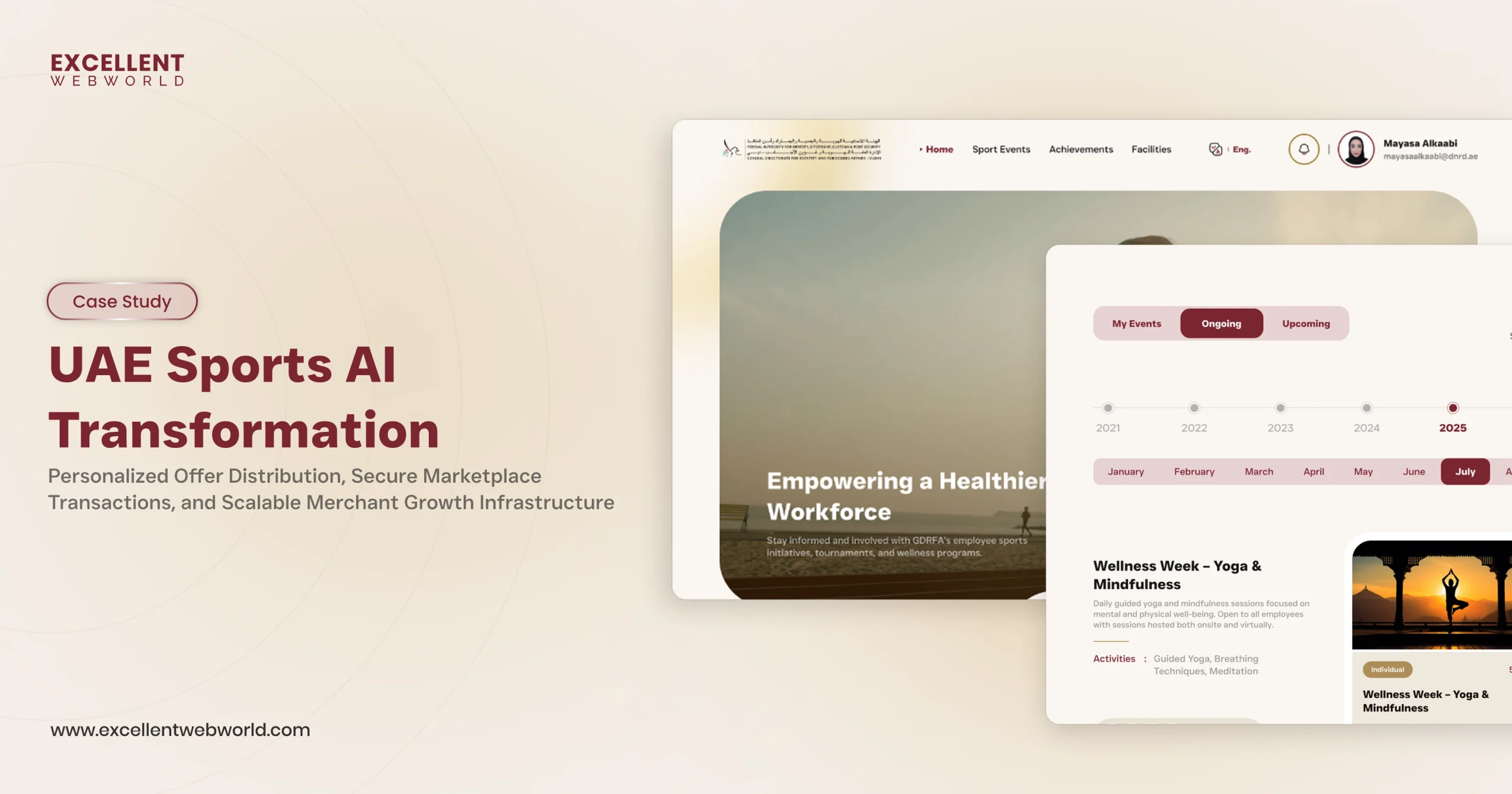
GDRFA is a Sports Governance Intelligence Platform that combines AI, athlete talent intelligence, and agentic automation to streamline governance, licensing,...
This clearly highlights the key Agentic RAG vs Traditional RAG difference. Traditional RAG retrieves context mainly for a query, while Agentic RAG helps to determine what context it needs, where to find it, and also additional retrieval information requirements.
When Is Traditional RAG the Better Choice?
Not every AI application, I think, needs agentic reasoning ability. Suppose, for a straightforward query like: “How do I reset my password?”
Traditional RAGs basically retrieve the suitable help center content or important information and, based on that information, give accurate outputs without additional planning or any feedback loops. This is the same reason simpler AI chatbot deployments for help-center or FAQ use cases rarely need agentic reasoning either.
The main advantages of having traditional RAGs are;
- Provides Lower Latency
- Basic Architecture
- Easier in Debugging
- More Predictable Responses
So, as per my insights into this concept, I would say that if most of the failures occurred due to poor indexing, chunks, and ranking, working on improving the existing RAG system is an ideal choice.
And, in the case of queries where there are multiple retrieval steps, sources, or reasoning abilities, then the stronger case is definitely moving towards Agentic RAG.
How Can Enterprises Move Towards Traditional to Agentic RAG?
Shifting from traditional RAG to Agentic RAG doesn’t mean rebuilding the entire AI architecture in general. The enterprise can introduce agentic capabilities, starting with the retrieval issues that actually create the most significant limitations.
For example, if you consider an existing RAG application, you can add query decomposition, dynamic source selection, query refinement & iterative retrieval process where complex requests need them.
This helps teams retain proven retrieval infrastructure while adding agentic capabilities that provide measurable value. The result is a more flexible Agentic RAG architecture without creating any complexities across every type of query.
For enterprises developing or modernizing these systems, agentic AI development services can actually help to design & incorporate AI agents, adaptive retrieval workflows, enterprise integrations, and also production-ready AI architecture.
Build the Right RAG Architecture with Excellent Webworld
Choosing between Traditional RAG and Agentic RAG generally starts with understanding your data, query complexity, & business workflows. It is not simply about adopting the AI architecture. The simplest & right approach is to improve the retrieval accuracy, scalability, and also the overall reliability of enterprise AI applications.
At Excellent Webworld, we help businesses design & develop AI solutions that actually connect LLMs with enterprise knowledge, API database, databases, and business workflows. Starting from RAG implementation to AI Agent development processes to agentic AI architectures, our engineering approach focuses on establishing secure, highly scalable & also production ready systems.
- Traditional RAG works well for straightforward queries where relevant information can be retrieved through a predictable search process.
- Agentic RAG adds planning, query decomposition, dynamic retrieval, and iterative evaluation for more complex questions.
- The main Agentic RAG vs Traditional RAG differences are retrieval flexibility, reasoning, source selection, error recovery, and system complexity.
- Traditional RAG generally offers lower latency, lower cost, and simpler implementation, while Agentic RAG provides greater adaptability.
- Agentic RAG is most valuable when queries require multiple sources, retrieval steps, or reasoning across different pieces of information.
- Enterprises should improve their existing RAG foundation before introducing agentic capabilities where they are not necessary.
- The right RAG architecture depends on query complexity, data sources, business workflows, scalability, and required level of autonomy.
Frequently Asked Questions
Traditional RAG follows a predefined retrieval workflow, while Agentic RAG can plan, refine, and repeat retrieval based on the requirements of the query.
Not always. Traditional RAG is often more efficient for simple queries, while Agentic RAG is better suited to complex, multi-step, and multi-source tasks.
The key differences include query planning, dynamic source selection, iterative retrieval, reasoning, error recovery, latency, cost, and architectural complexity.
Traditional RAG is suitable when users ask predictable questions and the required information can be retrieved reliably from a controlled knowledge base.
Agentic RAG is useful when applications need to handle multi-step questions, combine multiple sources, refine searches, or evaluate retrieved information before responding.
It can be. Additional model calls, retrieval steps, and tool usage can increase token consumption, latency, and infrastructure costs, making overall AI development costs an important consideration.
Yes. Existing vector databases, knowledge bases, APIs, and retrieval pipelines can often be integrated as tools within an Agentic RAG architecture.

Article By


Mayur Panchal is the CTO of Excellent Webworld. With his skills and expertise, he stays updated with industry trends and utilizes his technical expertise to address problems faced by entrepreneurs and startup owners.