Live Streaming Infrastructure with Geo-Distributed Camera Networks
We developed Colorado Webcam, a geo-distributed live-streaming camera network platform aggregating live streaming from ski resorts, mountain routes, wildfire zones, national parks, & highways across the Rocky Mountain region, all in one platform with hundreds of feeds and having zero buffering tolerance.
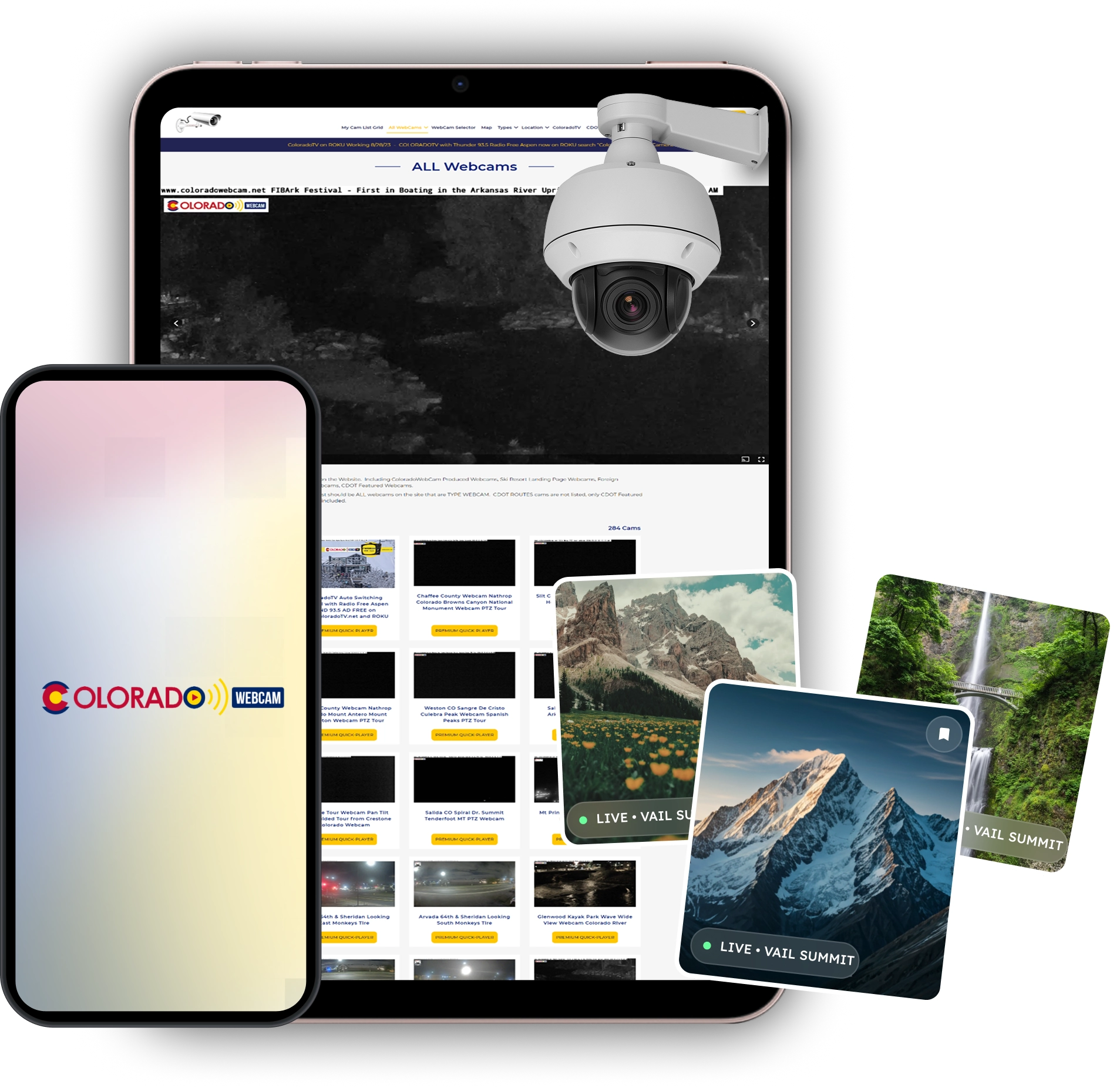
- Live IP Camera Network
- Real-Time Stream Aggregation
- PTZ Camera Control
- Multi-Format HLS/RTSP
- CDOT Integration
- Subscription & Access Management
- Geo-Tagged Map Interface
About the Project & Business Goal
Colorado Webcam is a live-streaming camera network platform in the Rocky Mountain region. This platform is mainly focused on recording real-time videos from America’s most complex geographical regions. It helps in streaming live footage from areas like ski resorts, higher elevation ranges, I-70 traffic spaces, and wildlife habitats through a single web interface system. The project’s goal is to develop a low-latency streaming infrastructure able to manage hundreds of IP camera connections, mixed protocols, PTZ (Pan-Tilt-Zoom) camera modes, & viewer experience under extreme conditions.
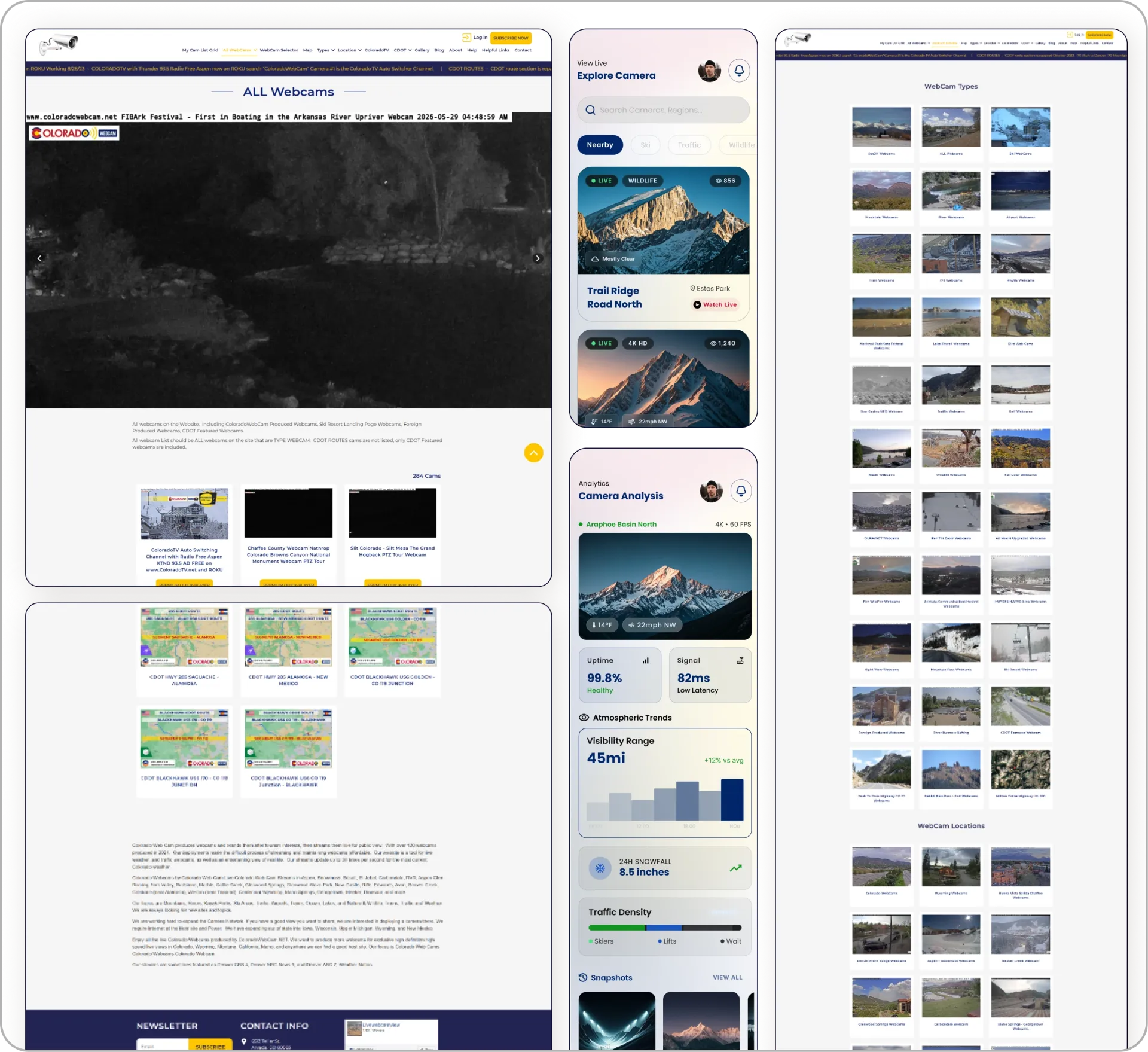
Key Results from Building Colorado Webcam
A Unified Stream Network Across 200+ Cameras
We developed a live-streaming camera network platform that coordinates IP camera video recordings, capturing scenes from river corridors, CDOT traffic, wildlife spaces, ski resorts, and other locations with more than 200 camera setups, delivering delay-free outputs.
Real-Time PTZ Control at High Altitude
PTZ (Pan-Tilt-Zoom) controlled setups were implemented for the far remote areas & higher altitude mountain ranges. Along with this setup, there is very little delay of about 2 second while streaming, and it also helps in overcoming topical complexity.
Subscription Platform with Personalized Cam Lists
With the personalized cam list management system, there is a great conversion from a static mode to a live tracking platform that consists of a grid section, personally saved views, and proper accessibility controls that helps in enhancing the subscriber retention.
Key Metrics Behind the Platform
We developed this live-streaming camera network platform on a geographically expanded, auto-scaling architecture that helps maintain lower latency in the video delivery process. Additionally, proper PTZ control & multi-protocol feeds across more than 200 camera setups can be incorporated through the platform spanning mountain ranges, wildfire zones, and other extreme regions
Simultaneous Live Streams Served
The platform serves 200+ concurrent IP feeds spanning ski resorts, mountain passes, highways, wildlife zones, and wildfire monitoring sites through load-balanced streaming infrastructure.
Camera Categories Across Network
From ski resort summits and traffic cams to stargazing and UFO observation feeds, the platform supports 30+ camera categories with real-time filtering and location-based discovery.
Stream Network Uptime Achieved
During blizzards, wildfire alerts, and peak ski season traffic surges, the platform’s auto-scaling stream architecture maintains near-perfect uptime across the camera network.
Higher Watch Time
Stream Uptime
Stream Start Time
Concurrent Streams
Core Platform Challenges
We needed to build a platform that can perform its operations across extreme geographical terrains, where there are normally 12,000-foot ranges, remote regions, & also for the government-operated roadways. This is generally considered a different issue from the standard one.
Low-Latency Feed Aggregation
Normalizing mixed camera protocols without buffering or stream dropouts required an adaptive relay architecture and real-time protocol translation.
High Altitude Cameras with Unstable Connectivity
Remote mountain cameras required intelligent failover, bitrate degradation, and frame buffering to maintain continuous streaming reliability.
Concurrent Pan Tilt Zoom Camera Management
Shared PTZ cameras required command prioritization to prevent conflicts while ensuring responsive control for authorized users.
CDOT & External Camera Infrastructure Integration
Integrating state-operated camera feeds required custom ingest adapters handling non-standard APIs, rate limits, and refresh behaviors.
Demand Surges During Weather & Wildfire Events
Extreme weather traffic surges required auto-scaling infrastructure capable of expanding stream capacity ahead of demand spikes.
Custom Camera Management at Scale
Persistent custom camera grids required lightweight state management without impacting real-time streaming across user devices.
Engineering Solutions Behind Colorado Webcam
For this platform, we developed using three non-negotiable constraint types like stream continuity under poor upstreams, sub-second viewer response, & onboarding camera sources without a platform redeployment process.
For maintaining a good consistency for the HLS output for the viewer experience, there is an incorporation of the protocol-agnostic layer that actually streamlines the HLS, RTSP, and MJPEG feeds with stability. Additionally, the associated relay layer helps in controlling bitrate adaptation and also prevents blank screens.
For detecting any kind of signal degradation in terms of upstreaming and poor quality, there is an integrated adaptive failover system that we incorporated while creating a seamless operation with the platform. This also assures that there is a proper frame catching while having different transitions.
For managing different priorities and controlling any kind of conflicts that often occur due to PTZ operations for sessions, we developed a server-sized adaptive PTZ setup that can categorize all premium to general users and also debounce effects leading to smooth operations for the cameras.
A CDOT ingest layer was incorporated in this platform for different types of refresh intervals, API authentication process, and also in the image delivery process. While having a third-party abstract along with that, the platform is managed in such a way that any new government or any ISP-hosted camera setting can be operated with just a code.
We developed an auto-scaling relay server feature for smooth streaming, which tends to help in dealing with scenarios like weather alerts, ski resort inaugurations, & in wildfire reports. Additionally, this also helps in controlling the uptime during the platform’s crucial operations.
We developed a tiered subscription system with persistent user profiles and geographically tagged infrastructure that helps in making the subscription more customized. Along with this, cam management is also improved with the integration of this system, which tends to make seamless playback & recordings with smart grid customization.
Built for Real-World Streaming Conditions. Engineered for Continuous Live Delivery
Live-streaming camera network platforms fail when remote connectivity drops, traffic surges spike, or incompatible camera protocols collide. We engineered a resilient streaming infrastructure capable of aggregating geographically distributed IP camera feeds with low-latency delivery, adaptive failover, and uninterrupted viewer access across extreme environmental conditions.

Four-Layer Streaming Infrastructure of Colorado Webcam
Each layer of this live-streaming camera network platform needed to maintain a reliable live-streaming process while operating independently, ensuring that any issue would not affect the entire streaming cycle or create platform-wide outages.

Ingest & Protocol-Based Layer
Retrieves RTSP, HLS, and MJPEG feeds with health monitoring, automatic reconnection, and viewer-optimized HLS stream delivery. Ensures consistent playback continuity across geographically distributed live camera sources.

Discovery & Map Layer
Geo-tagged camera registry enables interactive maps, real-time filtering, and seamless switching across 30+ camera categories instantly. Supports location-based discovery across highways, ski resorts, wildlife zones, and mountain corridors.

Adaptive Delivery Layer
CDN-backed delivery layer with edge caching, auto-scaling relays, and multi-bitrate streaming for seamless playback across connections. Optimized for high-demand weather events and peak concurrent viewer traffic.

Access & Subscription Layer
Tiered subscriptions with token-gated access, premium feeds, and persistent cam lists without interrupting sessions. Personalization operates independently from core streaming infrastructure.
Security, Governance & Infrastructure Standards
This platform is developed to support secure, resilient live streaming operations across distributed networks of camera setups, which helps to establish reliable delivery, protected accessibility & stability under higher demand scenarios.


Technology Stack Powering up Colorado Webcam
Here, in our platform, we developed it on the basis of 3 operational constraints like lower latency live streaming approach across different geographic regions, reliable multi-protocol ingest from remote high elevation places & resilient autoscaling infrastructure. These give a great user experience in extreme environments.
- FFmpeg
- HLS (HTTP Live Streaming)
- RTSP
- MJPEG
- WebRTC
- Nginx RTMP
- Adaptive Bitrate Streaming
- Node.js
- Python (FastAPI)
- Express.js
- Stream Relay Services
- Protocol Normalization Layer
- React.js
- Video.js
- hls.js
- Google Maps API
- Drupal CMS
- Real-Time Feed Interfaces
- AWS EC2
- AWS S3
- AWS CloudFront
- AWS Elemental MediaLive
- Cloudflare CDN
- Auto Scaling Groups
- PostgreSQL
- MySQL
- Redis (Session & Stream State)
- Feed Metadata Management
- JWT Token-Gated Streams
- OAuth 2.0
- Stripe (Subscription Billing)
- Role-Based Access Control (RBAC)
- Prometheus
- Grafana
- PagerDuty
- Custom Feed Health Dashboard
- Stream Uptime Monitoring
- CDN Edge Caching
- Load Balancing
- Auto-Failover Systems
- Multi-Region Stream Distribution
Our Approach for Building Colorado Webcam
We followed a field-first development approach as an IoT software development company, involving streaming infrastructure validated against real camera hardware in higher elevations and remote environments prior to the viewer’s experience. Also, real-world terrain & connectivity cannot be replicated in the staging environment.
Camera Network Audit & Stream Architecture Design
Documented camera sources, protocols, connectivity constraints, and engineered ingest architecture aligned with CDOT integration requirements.
UX Design & Platform Information Architecture
Designed distinct UX flows for commuters, ski viewers, and subscribers, managing personalized multi-camera viewing grids.
Streaming Infrastructure & Protocol Integration
Built transcoding pipelines, adaptive failover systems, CDN delivery architecture, and third-party camera ingest adapters.
Peak Event Simulation & Load Testing Process
Simulated extreme traffic spikes, optimizing auto-scaling, cache timing, and relay infrastructure for uninterrupted stream delivery.
Subscriber Platform Launch & Expanded Camera Networks
Rolled out subscriptions, PTZ access, and regional camera onboarding without requiring platform redeployment or service interruptions.
Tracking, Feed Health Ops & Network Growth
Implemented feed monitoring dashboards, automated alerts, and configuration-driven onboarding for scalable regional network expansion.
What Our Client Says
Every engineering decision was driven by three priorities: uninterrupted live stream reliability, low-latency delivery across remote camera networks, and resilient infrastructure capable of scaling during extreme weather events and peak viewer traffic.




Building a live camera network across Colorado means your infrastructure has to perform hardest when conditions are worst, like blizzards on Vail Pass, wildfires in the San Juans, and opening weekend at Aspen. Excellent Webworld built a platform that handles all of it without us thinking twice about uptime. That’s the only outcome that matters when your viewers are making real decisions based on what they see.
We understand the infrastructure complexity of multi-source live streaming — from protocol normalization and adaptive delivery to subscriber access control and PTZ management at scale. Let’s talk.