Blog Synopsis: AI Agents in logistics and supply chain use cases are increasing. From dynamic pricing to freight forecasting, this is the evolution of the AI and automation revolution in the logistics and transportation sector. It’s real-time tracking and analyzing previous demand to predict supplies; everything has been an AI agent-led process. Discover the best AI agent use cases for logistics and why it’s high time for you to utilize the right one!
Having been in conversations with the logistics & supply chain managers, their major concern is that operations face constant disruptions: shipment delays, missed carrier appointments, inventory imbalances, supplier issues, and inefficient routes. It’s critical to manage these challenges and often requires teams to monitor multiple systems, identify exceptions, make decisions, and coordinate actions manually. By the time an issue is identified and resolved, it can already impact costs, delivery timelines, inventory, and customer satisfaction.
Traditional automation helps streamline repetitive, rule-based tasks, but it often falls short when situations change or require context-based decisions. This is where AI agent solutions can make a difference.
AI agents in logistics can continuously monitor operations, understand what is happening, identify potential issues, and determine the appropriate next action. Accordingly, they can execute tasks across connected logistics systems. From transportation and inventory to sourcing and risk management, they can help organizations respond faster, reduce manual effort, and improve operational efficiency.
This guide explores practical AI agent use cases in logistics and supply chain, how they work, their benefits, and key considerations for implementation.
What are AI Agents in Logistics?
AI agents in logistics are autonomous software systems that monitor the business conditions in the supply chain, think through a variety of data sources, and take actions. So, it works within defined business guidelines. This fills the gap in coordinating tasks, such as the management of shipments, inventory, replenishment, sourcing, and compliance. So, AI agents improve operational efficiency and responsiveness throughout the logistics and supply chain management cycles.
Why Enterprises Use AI Agents for Logistics
With AI agents and autonomous workflows, the logistics industry is moving toward more intelligent and automated operations. By combining AI-native models with seamless data pipelines, businesses can build connected logistics systems that support faster decision-making and more efficient workflows.
HJM & Camtrack are pioneering examples of how Excellent Webworld engineers have completed logistics projects. So, a collaborative effort between experts and technology brings the best AI agents to the logistics industry.
Logistics companies are using artificial intelligence to handle operational decisions previously handled by humans. With systems such as TMSs, WMSs, ERPs, and telematics, AI agents can detect and analyze exceptions and trigger workflows. Accordingly, this allows teams to respond more quickly and reduce manual coordination.
1. Faster Decision-to-Action Cycles
Traditional logistics software surfaces data; a human still has to read the alert, judge the situation, and act. 62%, of supply chain leaders confirm that AI agents are embedded into operational workflows. Well, this accelerates speed to action, speeding up decision-making, recommendations, and communications. So, the gap between “we saw the problem” and “we fixed it” shrinks from hours to minutes seamlessly.
2. Lower Logistics and Operating Costs
EY highlights that supply chains account for nearly 70% of operating costs for many organizations, making cost reduction crucial across demand planning, procurement, network strategy, automation, and inventory visibility. AI agents can optimize routes, carrier choices, load utilization, inventory movement, freight invoices, and other operational decisions. However, as the key areas where AI-enabled supply chain transformation can create value.
3. Built-In Resilience Against Disruption
Supply chains built on static assumptions break the moment conditions change. AI agents are architected for variability by default. So, they monitor risk signals (supplier reliability, weather, geopolitical events), assess impact, and reroute or rebalance before a disruption becomes a missed delivery.
4. Continuous Monitoring Replaces Periodic Planning
Legacy logistics systems run on planning cycles: weekly forecasts, daily route plans, and static schedules. AI agents replace that model entirely, continuously sensing conditions (traffic, weather, carrier capacity, demand shifts) and adjusting in real time. So, this is a legacy software modernization approach that prevents waiting for the next planning cycle to catch up.
5. Coordination Across Previously Siloed Functions
With the acceleration of planning, procurement, warehousing, and last-mile delivery, you have traditionally operated as disconnected systems. Each has been operated with its own dashboard and blind spots, with the AI agent-backed system filling the gap — a good example of data Integration vs workflow orchestration working together rather than as separate problems. You can simply say that AI fixes logistics bottlenecks, enabling the sharing of context across all of them in real time. Accordingly, the demand for AI agents for logistics spikes up. The automation process throughout the warehousing and routing adjustment eliminates the need for human intervention at each point.
Moving to the AI use cases for logistics, each use case defines the different aspects of logistics. These are the most in-demand and essential ones to adapt automation
8 AI Agent Use Cases—How Are AI Agents Being Used in Logistics & Supply Chain
AI agents are transforming the logistics sector by enabling autonomous, decision-driven operations across the supply chain. Unlike traditional AI, which primarily provides forecasts or recommendations, AI agents can perceive real-time conditions, make decisions within defined guardrails, and execute multi-step workflows. Accordingly, from dynamic AI route optimization and inventory rebalancing to automated documentation and exception management, they help logistics organizations improve agility, efficiency, and responsiveness.
1. Dynamic Freight Pricing
A pricing agent analyzes shipment demand, carrier capacity, historical pricing, and current market conditions to generate faster, more competitive freight quotations. Moreover, it is particularly valuable in LTL operations where bids must balance load factors against profitability in real time.
Strategic Considerations:
- Requires clean, real-time integration with TMS and rate management systems to avoid quoting on stale data
- Pricing logic needs defined guardrails before granting autonomous quoting authority
- Most effective in high-volume, high-frequency pricing environments, lower ROI for low-volume, relationship-based contract pricing
- Should be paired with human review for large or strategic accounts, even once automated for standard volume
2. Intelligent Route Planning and Optimization
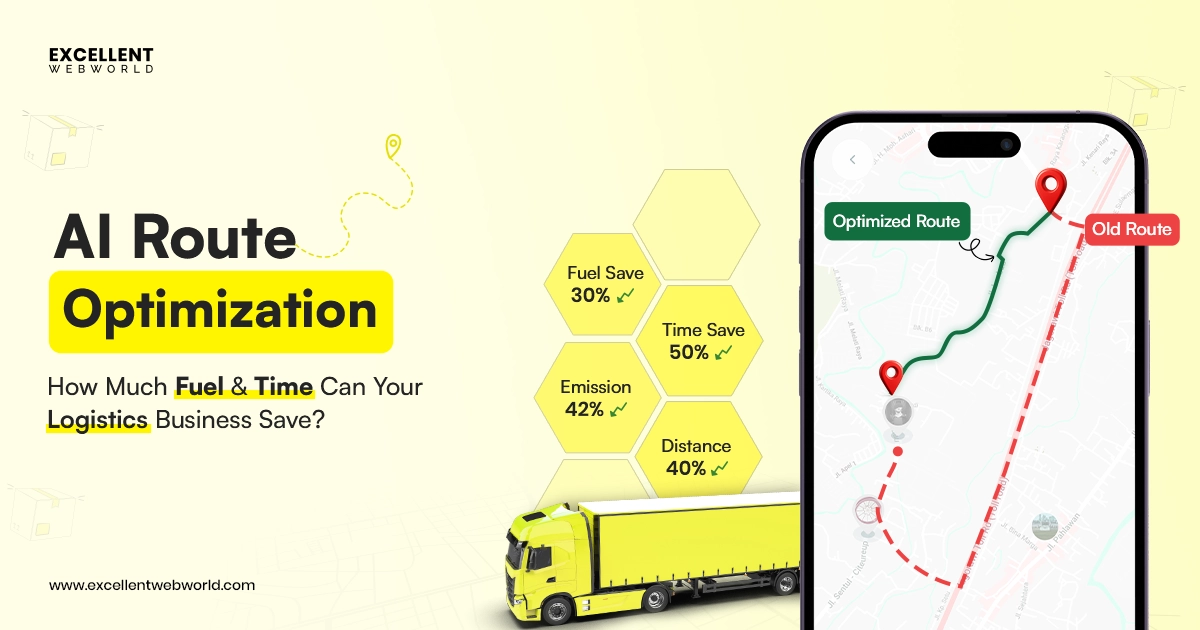
A route-planning agent continuously evaluates traffic, weather, vehicle load, delivery deadlines, road disruptions, fuel considerations, and service-level commitments, recommending or, where authorized, initiating route changes as conditions shift. Rather than locking routes to assumptions made at dispatch, it’s the more intelligent and seamless way.
Strategic Considerations:
- Depends on reliable real-time data feeds (traffic, weather, GPS); data gaps directly degrade agent decision quality
- Organizations must decide the autonomy threshold: recommend-only vs. auto-execute route changes
- Works best integrated with fleet telematics and driver communication systems.
- Requires clear escalation logic for edge cases (accidents, road closures) that fall outside historical patterns
3. Real-Time Shipment Tracking and Exception Management
A shipment-tracking agent monitors checkpoints, identifies anomalies, and triggers exception workflows in logistics software automatically. While a companion delivery-exception agent coordinates downstream actions like rescheduling, customer communication, or refund processing. So, it’s turning tracking from a passive dashboard into an active operational capability.
Strategic Considerations:
- Value depends entirely on connected checkpoint data; sparse tracking coverage limits exception detection accuracy
- Exception workflows need pre-defined resolution paths (reschedule vs. refund vs. escalate) to avoid inconsistent customer outcomes
- Customer communication triggered by the agent should be reviewed for tone and brand consistency before full automation
- Strong candidate for phased rollout: start with anomaly detection and alerts, then layer in autonomous resolution
4. Intelligent Carrier Selection
Well, AI in logistics adds the layer of evaluating carrier capacity, cost, reliability, historical performance, and delivery commitments to recommend the best-suited carrier per shipment. So, it’s shifting the objective from lowest-cost selection to best service-cost tradeoff.
Strategic Considerations:
- Requires a maintained, accurate carrier performance database; decisions are only as good as historical data quality
- Business rules must define how to weigh cost vs. reliability for different shipment priorities (standard vs. time-critical)
- Carrier relationships and contractual commitments may need to be encoded as constraints
- Useful checkpoint: Periodically audit agent-carrier selections against actual delivery outcomes to catch model drift
5. AI Agents for Warehouse Slotting & Operations
A slotting AI agent analyzes product velocity, historical picking activity, and warehouse layout to recommend or continuously adjust storage locations. It reduces unnecessary travel time, improving picking productivity and easing congestion, which is particularly valuable where product velocity shifts frequently.
Strategic Considerations:
- Physical re-slotting has real labor costs; agents should weigh the cost of moving inventory against the productivity gain
- Best suited to high-volume fulfillment centers with meaningful velocity variance; lower impact in stable, low-SKU environments
- Requires integration with Warehouse Management Software to execute recommendations
- Seasonal or promotional velocity spikes need separate handling logic from steady-state slotting
6. Load planning & optimization with AI agents
Next up is the load-optimization agent, which considers cargo dimensions, weight, delivery deadlines, and vehicle or container constraints. Therefore, this can generate more efficient loading plans, increasing vehicle utilization and reducing unnecessary trips and cargo-handling risk.
Strategic Considerations:
- Load planning software brings accuracy depending on precise cargo dimension/weight data at the time of load planning. This works for bad input data undermines the whole plan
- Loading constraints (fragility, stacking limits, hazardous separation) must be explicitly modeled, not assumed
- Works best combined with route and carrier optimization agents rather than operating in isolation
- Measure success against both utilization rate and downstream damage/claims rate
7. Freight Capacity Forecasting
A freight-capacity agent analyzes historical shipping volumes, sales trends, and seasonal patterns. This will estimate future capacity requirements, helping logistics teams reduce the risk of being underbooked or overbooked. Moreover, this forecasts that demand fluctuates due to seasonality, promotions, or market shifts.
Strategic Considerations:
- Forecast accuracy depends on clean historical data spanning multiple demand cycles; new product lines or markets have limited baseline data
- Should incorporate external signals (promotions calendar and market trends) alongside internal shipment history
- Requires a defined process for humans to override forecasts during known anomalies (new product launches, one-off events)
- Best measured against both overbooking and underbooking cost, since the two failure modes have different financial impacts
8. AI Agents for Last-Mile Delivery Optimization
Last but not least, AI agents for last-mile delivery, or the last-mile agent, allocate deliveries to drivers, optimize drop sequences, and account for real-time traffic conditions, continuously coordinating delivery execution in accordance with changing conditions instead of relying on a fixed route plan that has been set up at the beginning of each day.
Strategic Considerations:
- Highest-impact zone for customer experience; errors here are the most visible to end customers
- Needs tight integration with driver-facing mobile apps for real-time re-sequencing to actually reach the driver
- Should account for delivery-window commitments and customer preferences, not purely route efficiency
- Consider a human-override option for driver-reported ground conditions the agent’s data feeds might miss
Unlock the Full Potential of AI Agent Use Cases for Logistics & Supply Chains!
Basically, it is not necessary to transform your entire operation overnight. Consider one use case at a time, measure the results, and then expand from there. The Artificial intelligence agents for logistics are already being used in operations beyond the experimental stage. As a result, businesses that apply them now will be better positioned to build faster, smarter, and more resilient supply chains in the future. You can discuss your AI strategy with the AI agent development service provider and deploy realistic future scenarios as part of your AI implementation.
FAQs
AI agents add the judgment layer on top, reasoning through changing conditions and deciding what action to take next. So, it gives logistics teams both efficiency and adaptability.
No. Agents handle routine execution; humans shift toward oversight and exceptions. Teams spend less time on manual monitoring and more time on judgment calls that still need human expertise.
Clean, real-time data from your TMS/WMS/fleet systems; clear rules for what agents can decide autonomously versus escalate;; and human oversight built in, especially for high-impact decisions.
AI agents optimize routes in real time using traffic, vehicle availability, delivery priorities, and operational constraints. So, they reduce empty miles, fuel costs, and delays and simultaneously improve fleet utilization.
Start with high-volume, repetitive workflows such as shipment tracking, exception management, carrier communication, appointment scheduling, and document processing. These typically deliver the fastest measurable efficiency gains.
Measure cost savings, labor productivity, on-time delivery, exception resolution time, fleet utilization, error reduction, and automation rates. Compare these gains against implementation and operating costs to determine ROI and payback period.
A few of the key use cases include dynamic route optimization, predictive ETAs, exception management, demand forecasting, capacity optimization, carrier selection, document automation, and warehouse optimization, etc.

Article By


Paresh Sagar is the CEO of Excellent Webworld. He firmly believes in using technology to solve challenges. His dedication and attention to detail make him an expert in helping startups in different industries digitalize their businesses globally.