AI agents in banking are automating repetitive processes such as customer service, KYC, loan processing, fraud detection, compliance, financial recommendations, and document handling. The blog explains how these agents work, their benefits, key technologies, risks, and practical steps banks can follow to implement them securely and effectively.
Manual documentation checks eat hours. Onboarding steps repeat at every stage. Transaction reviews pile up faster than teams can handle. These are the real pain points in banking operations, and no strategy document can fix them on its own.
That’s the gap AI agents in banking are trying to fill. Unlike a scripted chatbot, an AI banking agent can read a loan file, a KYC document, or a flagged transaction, decide the next course of action, and carry forward that banking workflow to completion, without any kind of human intervention.
The hard data proves it. According to Accenture’s Top Banking Trends for 2026, 57% of banking IT executives expect AI agents to be fully embedded in compliance, risk, and fraud detection in the next three years. It clearly signals that AI in banking is moving from a customer-facing assistant to the core function that controls banking automation.
AI in fintech is driving this shift in new-age banking operations. In this piece, I’m analyzing seven core banking processes where this shift is delivering measurable results and how an experienced fintech app development company can help you build these capabilities into your core banking systems, without breaking compliance or your existing infrastructure.
What are AI Agents in Banking and How Do They Work?
AI agents in banking are intelligent software systems that can autonomously perform complex and multi-step banking operations using data, APIs, and predefined business logic. They can understand the context, make decisions within the defined guardrails, take correct action, and move exceptional queries to the compliance team.
AI Agents vs. Chatbots vs. Traditional Automation
For banking leaders, the difference between these three technologies comes down to the amount of work the technology can handle on its own.
Here’s a parameter-based comparison of AI agents, chatbots, and traditional automation that will help you understand this perspective better:
| Parameter | AI Agents | Chatbots | Traditional Automation |
|---|---|---|---|
| Primary Purpose | End-to-end business processes | Customer conversations | Repetitive rule-based tasks |
| Decision-Making | Context-aware decisions within guardrails | Basic intent recognition | Fixed if/then rules |
| Workflow Handling | Understands the context, makes correct decisions, and hands over exceptions to the compliance team | Generally handles one customer interaction at a time | Follows the predefined sequence and set of rules |
| Data Access | Multiple systems, APIs, documents, and databases | Limited knowledge sources | Connected systems |
| Exceptions | Investigates and escalates when needed | Frequently hands off | Often stops or fails |
| Human Intervention | Judgment calls for complex and high-risk edge cases | Customer support | Setup & exception monitoring |
How AI Agents in Banking Work
You can think of banking AI agents as digital workers that operate inside your existing banking ecosystem. Here’s how they work in a step-by-step manner to reduce the manual workload on your compliance and operations teams:
| Step | What the Agent Does | Business Impact |
|---|---|---|
| Understand the Task | Analyzes the customer’s request, understands its context, business objective, and required course of action. | Reduces manual triage and speeds up banking operations |
| Collect Relevant Data | Retrieves customer, account, transaction, document, and third-party data. | Reduces data-entry-related repetitive work and removes fragmented information. |
| Analyze the Information | AI agents in financial services assess rules, history, risk signals, and exceptions. | Facilitates faster, more accurate, and consistent decision-making. |
| Take Correct Action | The agentic AI technology executes the approved tasks across the banking ecosystem. | Reduces processing time and operational workload. |
| Verify the Result | Confirm whether the required actions were successfully executed and the relevant compliance controls were satisfied. | Reduces errors, rework, and compliance risk. |
| Escalate Complex Cases | Routes sensitive, ambiguous, and high-stakes edge cases to the compliance team. | Keeps a prominent role for human judgment while also supporting intelligent banking automation. |
Note: An experienced Agentic AI development services provider can help leading banks integrate these workflows with existing systems and deploy AI-powered banking solutions.
7 Banking Processes AI Agents Can Automate
If you’re evaluating where AI agents can deliver measurable operations ROI for your banking operations, then I would recommend that you begin with processes that are consuming your most time, creating friction among customers, or adding compliance and risk burden on your teams.
Here are the seven core banking processes that AI agents can automate while improving accuracy, speed, scalability, and customer experience:
1. Customer Service & Query Resolution
Current Bottleneck:
- The support team spends hours answering repetitive queries about account services, balance, money transfer, cards, transactions, and fees, work that AI Customer Service Agents are increasingly built to absorb.
What AI Agents Automate:
- Answers routine banking questions about transactions, cards, accounts, and fees.
- Fetches relevant account information from connected systems.
- AI customer service in banking workflows provides personalized responses based on customer context.
- Escalates fraud concerns, disputes, and complex cases to the support team.
Business Impact:
- Lower support team workload
- Faster response time
- Consistent customer experiences
- Compliance teams can focus on complex cases
Where It Fits:
- For projects related to mobile banking app development where you can embed these AI agents into in-app support.
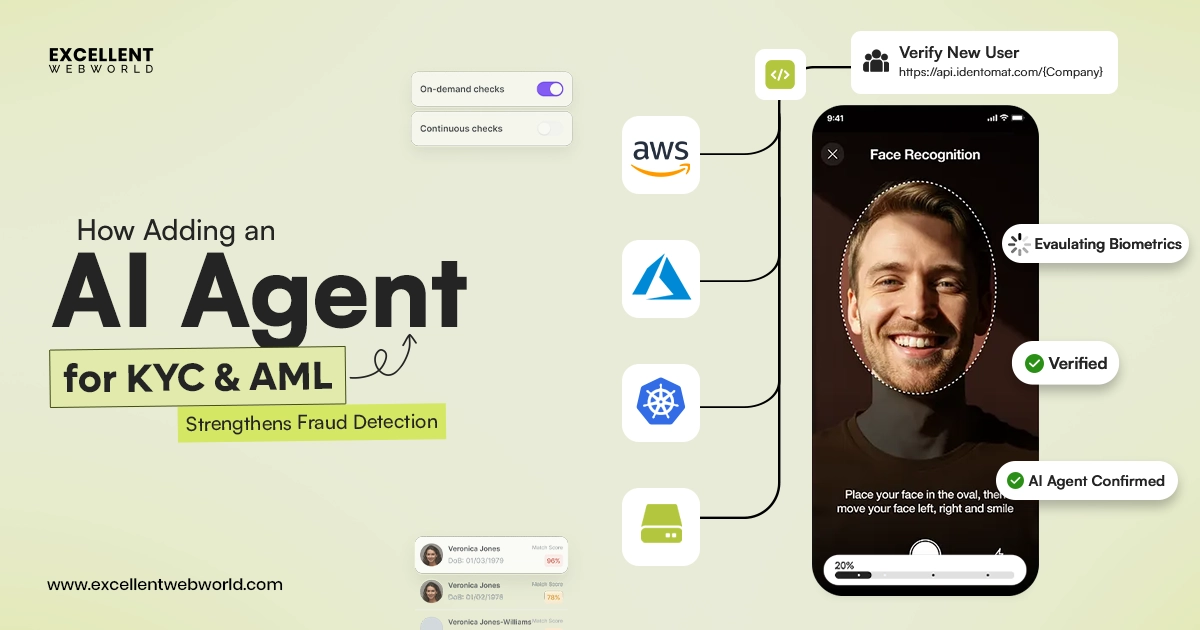
2. KYC & Customer Onboarding
Current Bottleneck:
- Manual data entry, identity verification, and document checks consume compliance resources and slow the account opening process.
What AI Agents Automate:
- Collects customer information and application details.
- Extracts data from IDs and supporting documents using OCR.
- AI-powered KYC workflow verifies identities and application information.
- Flags inconsistent, incomplete, or suspicious activities for compliance review.
Business Impact:
- Lower verification workload
- Faster account opening
- Reduced onboarding friction
- Consistent compliance process
Where It Fits:
- For neobank app development projects, you can integrate these AI agents directly into the digital account-opening workflow
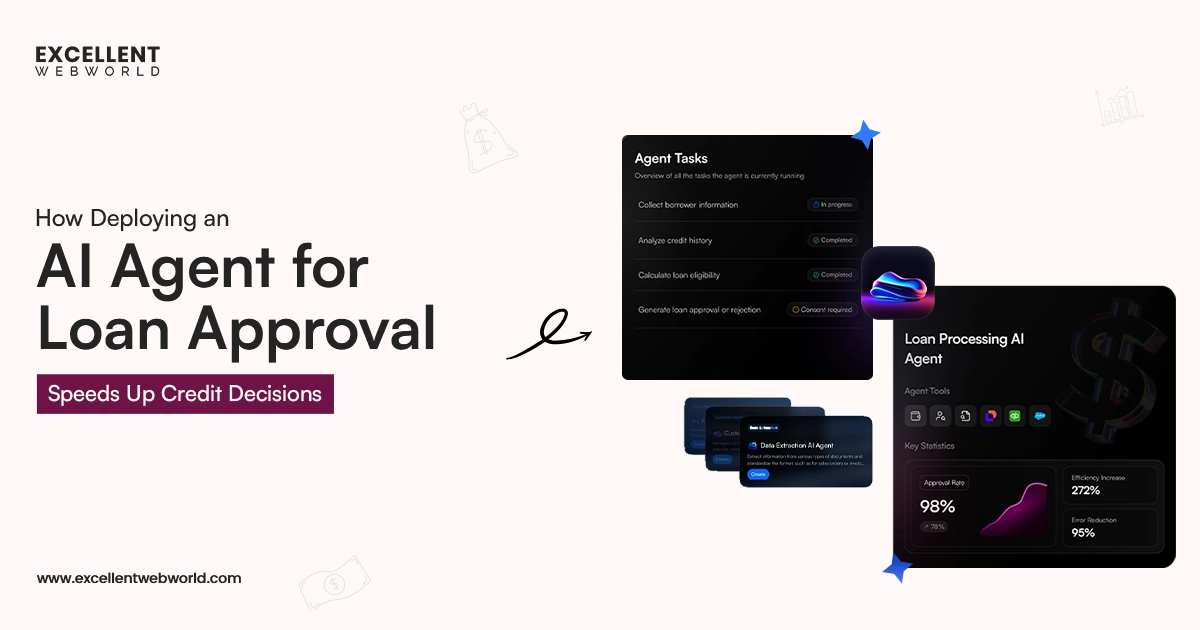
3. Loan Processing & Underwriting
Current Bottleneck:
- Loan officers spend a significant portion of their work hours collecting documents, verifying borrower information, checking eligibility, and handling routine tasks.
What AI Agents Automate:
- Collects loan applications and supporting documents.
- Verifies borrower information against available records.
- AI loan processing workflow performs eligibility and affordability checks.
- AI agents for loan approval route qualified, incomplete, or high-risk applications to the relevant teams.
Business Impact:
- Less administrative work
- Short loan turnaround time
- Higher processing capabilities
- More time for judgment-heavy edge cases
Where It Fits:
- For projects related to money lending app development, you can embed these AI agents into loan origination and borrower application workflows.
4. Fraud Detection & Transaction Monitoring
Current Bottleneck:
- Fraud detection teams have to deal with thousands of alerts and growing transaction volume, which makes the investigation process slow and creates alert fatigue.
What AI Agents Automate:
- Continuously monitors transactions across accounts and channels.
- AI fraud detection workflow detects unusual spending and behavioral patterns.
- AI transaction monitoring workflow correlates transaction history, risk signals, and customer behavior.
- Prioritizes alerts and collects relevant evidence for the fraud investigation team.
Business Impact:
- Reduced alert fatigue
- Quicker fraud response
- Faster fraud investigations
- Optimized use of fraud investigation team
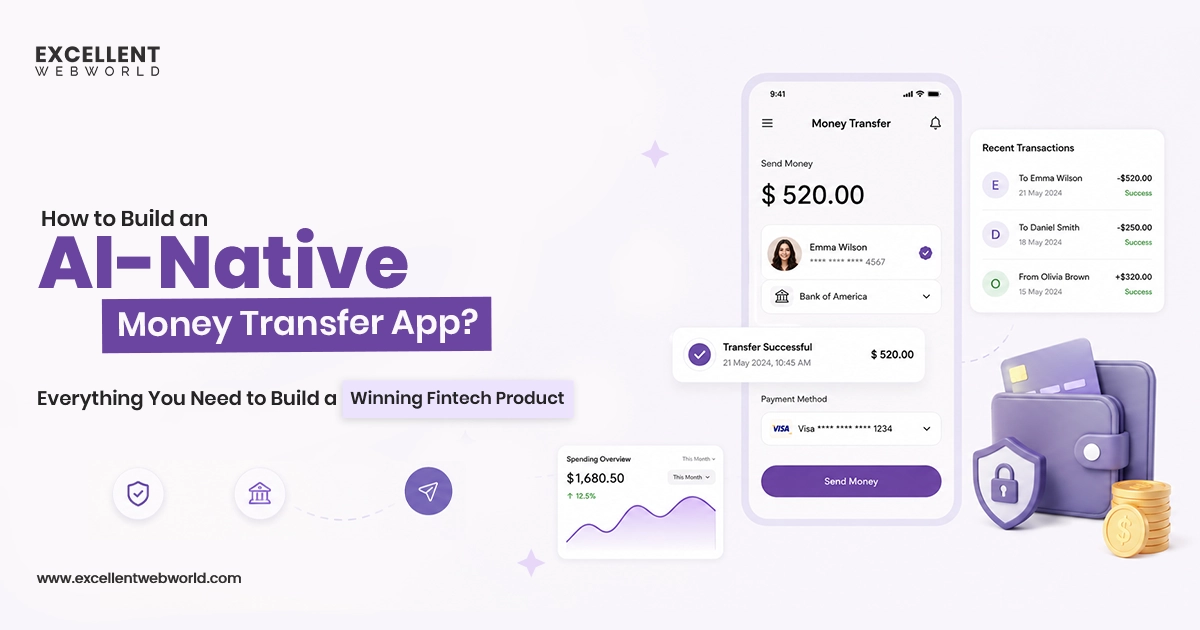
Where It Fits:
- For money transfer app development projects, you can incorporate these AI agents into transaction verification, exception handling, and fraud screening workflows.
5. Compliance & Regulatory Reporting
Current Bottleneck:
- Compliance teams need to manually collect data, monitor workflows, prepare detailed reports, maintain audit trails, and investigate potential issues across several fragmented systems.
What AI Agents Automate:
- Collects and organizes compliance data from multiple systems.
- Monitors regulatory tasks, deadlines, and workflow status.
- Generates recurring reports and maintains supporting audit trails.
- AI compliance automation workflow identifies potential issues and triggers follow-ups.
Business Impact:
- Faster reporting cycles
- Lower compliance workload
- Consistent compliance process
- Better audit readiness
Where It Fits:
- For any fintech projects, you can integrate these AI agents into the payment gateway workflows as it passes the transaction data to compliance workflows, based on which they identify compliant and non-compliant cases.
6. Personalized Financial Recommendations
Current Bottleneck:
- Banks have a massive amount of customer data, but they can’t convert spending, cash-flow, and savings patterns into timely, relevant recommendations.
What AI Agents Automate:
- Analyzes savings, cash flows, and spending behavior.
- Identifies relevant banking products based on eligibility and customer needs.
- Generates savings and budgeting suggestions based on financial patterns.
- AI financial advisory workflow delivers a personalized financial guide by analyzing each
Business Impact:
- More relevant recommendations
- Stronger customer engagement
- Deeper customer relationships
- Better financial guidance
Where It Fits:
- For wealth management software development projects, you can embed these AI agents into investment and wealth management workflows, which provide personalized recommendations.
7. Back-Office & Document Processing
Current Bottleneck:
- Employees spend a lot of time on document handling, data entry, reconciliation, internal requests, and administrative tasks that are repetitive.
What AI Agents Automate:
- AI document processing workflow extracts and validates information from banking documents.
- Navigates verified information into internal systems.
- Processes and routes employees’ requests to the relevant teams.
- Handles reconciliation and routine administrative workflows.
Business Impact:
- Fewer manual errors
- Lower back-office workload
- Faster internal processing
- Greater operational scalability
Where It Fits:
- For BNPL app development projects, you can integrate these AI agents into document processing, customer verification, reconciliation, and exception handling workflows.
What are the Key Technologies Powering AI Agents in Banking
For any banking leader, the challenge is not limited to adding AI to their existing workflows. It’s more about making AI work reliably across legacy systems, fragmented data, customer channels, and compliance controls.
The technologies discussed below provide the foundation for that, enabling AI agents to move from customer-facing assistants to executing multi-step banking tasks within defined guardrails.
| Technologies | How It Powers AI Banking Agents |
|---|---|
| Large Language Models (LLMs) | LLMs in banking act as the communication and reasoning layer, helping agents understand instructions, maintain context, decide the next course of action, and generate appropriate responses. |
| Natural Language Processing (NLP) | NLP in banking facilitates agents to understand customer conversations, identify intent, extract relevant information, and turn banking requests into actionable tasks. |
| Machine Learning | Machine learning in banking enables agents to identify patterns, detect anomalies, assess risk, and support fraud detection, predictive decisions, and transaction monitoring. |
| Optical Character Recognition (OCR) | OCR in banking facilitates agents in extracting information from bank statements, IDs, forms, and other financial documents for lending, compliance, KYC, and back-office workflows. |
| Banking APIs | Banking APIs provide agents with controlled access to core banking, CRM, and third-party systems so they can fetch data and execute actions. Online payment APIs can extend these capabilities to payments and transaction workflows. |
| Robotic Process Automation (RPA) | RPA in banking allows agents to interact with legacy apps that lack modern APIs, helping them automate repetitive back-office tasks, system navigation, and data entry tasks. |
| AI Orchestration | AI orchestration creates seamless coordination between data, models, API, business rules, and automation tools so AI agents can execute a multi-step workflow. |
None of these technologies can work on their own. They require data engineering services for supporting reliable data flows, and cloud services for enabling scalable infrastructure.
What are the Benefits of Automating Banking Processes With AI Agents
The benefits of AI in banking go beyond replacing manual tasks. They can help your operations teams process work faster, optimize budgets, reduce errors, and respond to customer queries quickly. Here are some of the key benefits that you should know about:
| Benefit | Business Impact for Your Bank |
|---|---|
| Faster Processing | AI agent can complete repetitive workflows in minutes instead of waiting for manual interventions, which reduces turnaround time across operations. |
| Reduced Operational Costs | AI automation in banking reduces employees’ time spent on repetitive work, helping banks handle higher volumes without increasing team size. |
| Fewer Manual Errors | Automated verification, data entry, and workflow execution reduce mistakes and create consistency in results. |
| 24/7 Customer Support | AI agents can handle service requests and routine questions 24*7, meeting the new-age mobile banking trends that customers expect as the norm. |
| Improved Employee Productivity | Employees will spend more time handling exceptions, customer needs, risk decisions, and judgment calls instead of administrative work. |
| Faster Loan & Onboarding Processes | Automation can speed up verification, eligibility checks, document collection, and routing, thereby reducing customer drop-off and application delays. |
| Better Customer Experience | AI-powered banking facilitates faster, more personalized interactions across channels, allowing your bank to deliver seamless customer journeys. |
| Scalable Operations | AI agents can handle spikes in transactions, applications, service requests, and alerts with utmost ease. |
| Consistent Execution | AI agents work on standardized workflows that increase banking operational efficiency and create predictable execution, while keeping your bank aligned with the latest fintech trends. |
Risks and Compliance Considerations You Need to Keep in Mind for Banking AI Agents
For banking IT leaders, putting AI into production without strong governance can convert your win into a costly compliance or operational issue. Here are AI banking challenges, risks, and compliance considerations that you need to keep in mind:
| Risk/Compliance Consideration | What the Risk Means for Your Bank |
|---|---|
| Data Privacy & Financial Data Security | AI compliance in banking requires careful handling of sensitive financial and customer information because poor data practices can create security, privacy, and regulatory exposure. |
| AI Hallucinations & Incorrect Output | Banking data security is affected when agents produce inaccurate information or take the wrong action while handling financial data. |
| Algorithmic Biases & Fairness | AI model bias can cause unfair or inconsistent outcomes across various customer groups, especially in lending, fraud, and eligibility decisions. |
| 24/7 Customer Support | AI agents can handle service requests and routine questions 24*7, meeting the new-age mobile banking trends that customers expect as the norm. |
| Regulatory Compliance | Automated workflows that can’t meet financial regulations can cause penalties, compliance queries, remediation costs, and reputational damage. |
| Faster Loan & Onboarding Processes | Automation can speed up verification, eligibility checks, document collection, and routing, thereby reducing customer drop-off and application delays. |
| Explainable AI for Important Decisions | Explainable AI in banking matters the most when compliance teams or auditors need to understand how AI agents reached a particular decision. |
| Audit Trails & Decision-Logging | Clear logging of agent actions and decisions makes it easier for compliance teams to investigate compliance, errors, and disputes. |
| Human-in-the-Loop for High-Risk Decisions | Human-in-the-loop becomes essential when autonomous agents are making high-impact decisions involving large transactions, regulatory exceptions, lending, and fraud. |
| Role-Based Access & Secure API Integration | Excessive agent permissions can expose your sensitive financial system or allow actions beyond the required workflow, which can create potential damage. |
How to Implement AI Agents in Banking Successfully
Successful AI adoption starts with understanding the business problem, not technology. Here’s how you can implement AI agents in banking successfully in a step-by-step manner:
| Implementation Step | What It Involves |
|---|---|
| Step 1: Identify Repetitive, High-Volume Processes First | Begin with repetitive workflows where AI agent implementation can deliver measurable time and cost savings. |
| Step 2: Define Automation Goals and Measurable KPIs | Define targets for accuracy, cost reduction, processing time, and employee hours saved as part of your banking automation strategy. |
| Step 3: Assess Existing Banking Infrastructure | Before choosing the AI banking solutions, review legacy systems, data sources, workflows, and integration gaps. |
| Step 4: Prepare Data and Knowledge Sources | Clean, organize, and validate the data and business knowledge on which your AI agents will work. |
| Step 5: Integrate APIs and Core Banking Systems | Connect required systems with the help of banking API integration so that your AI agents can access data and execute validated actions. |
| Step 6: Build and Test the AI Agent | Follow a controlled AI agent development process to test accuracy, workflows, edge cases, and failure scenarios. |
| Step 7: Add Security, Compliance, and Human Oversight | Your banking AI implementation should have access control, monitoring, escalation, and compliance checks built into the ecosystem. |
| Step 8: Launch a Controlled Pilot | Test one workflow or business area to validate AI banking integration before expanding further. |
| Step 9: Monitor Performance and Scale Gradually | Track KPIs, outcomes, and exceptions, and if everything signals growth, then expand fintech API integration to the most relevant fintech API use cases. |
Build AI Agents for Banking With Excellent Webworld
AI agents should enhance your banking teams, not replace them entirely. The real win for banking leaders would be to take employees off repetitive work and give them more time to handle customer needs, exception handling, and judgment calls for complex issues.
However, to translate this win into reality, you need an experienced tech partner that has worked with plenty of banks and automated their core processes. That’s where the role of Excellent Webworld, a top-rated AI agent development company, comes into the picture.
Here’s what you will get by partnering with us:
- 15+ years of experience working with the financial IT ecosystem and delivering 100+ customized fintech platforms.
- 120+ payment and banking APIs integrated, helping fintech leaders connect intelligent workflows with existing financial systems.
- 300+ financial workflows automated, reducing repetitive work across complex financial operations.
- Core AI and AI agent expertise across KYC/AML, fraud detection, document processing, underwriting, and reconciliation.
Maridady Motors, an automotive finance platform, is the best example of this expertise and capabilities, where we converted complex finance workflows into an AI-powered, scalable platform. For this client, we brought repayments, lending, KYC, and portfolio management into one connected ecosystem. It helped the client achieve 38% higher loan approvals, 31% lower defaults, 2.1x faster underwriting, and 100% automated KYC.
So, ready to automate core banking processes with AI agents? Connect with our fintech experts and get a roadmap of banking areas where AI agents can make the most impact.

Article By


Mayur Panchal is the CTO of Excellent Webworld. With his skills and expertise, he stays updated with industry trends and utilizes his technical expertise to address problems faced by entrepreneurs and startup owners.