Chronic Disease Management Software
We engineer custom Chronic Disease Management Software (CDMS) platforms that help healthcare organizations stay connected to patients and coordinate ongoing care delivery through longitudinal health data, AI-powered insights, and integrated clinical systems.
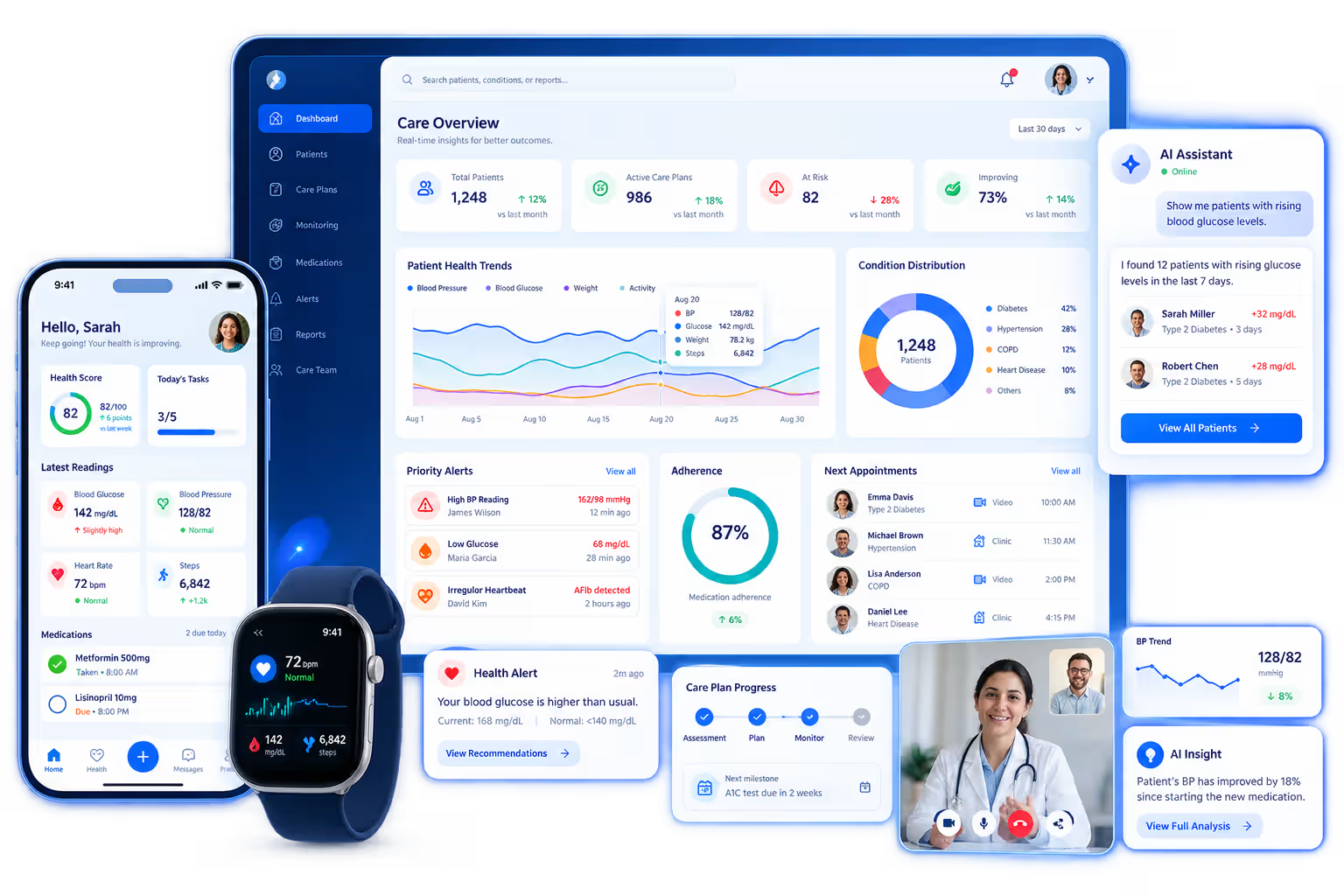


Understanding Chronic Disease Management Software
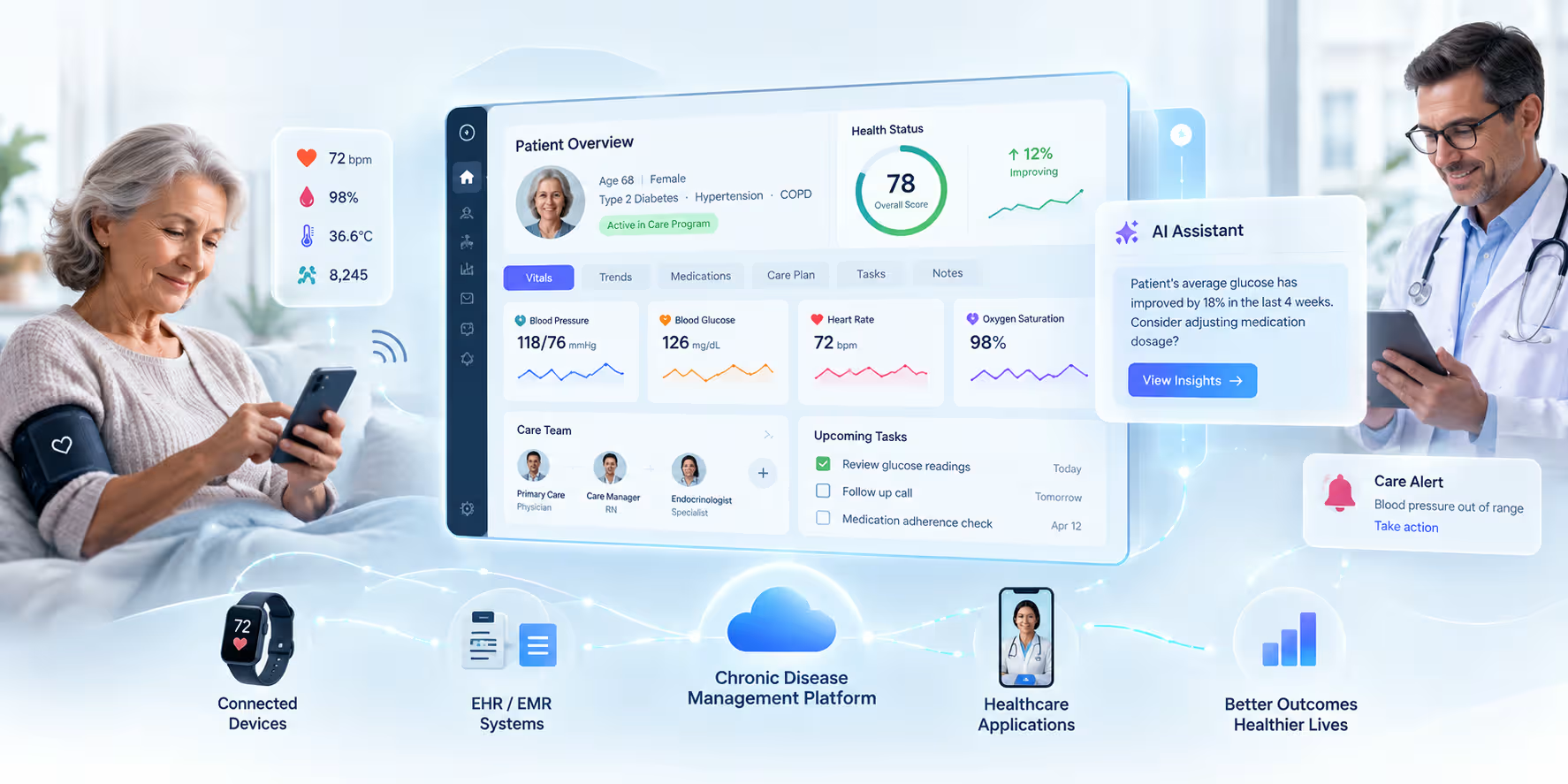
Chronic disease management software (CDMS) is a digital care platform facilitating the continuous management of patients with chronic conditions. CDMS is often a part of a connected care ecosystem involving EHR/EMR systems, connected medical devices, and healthcare applications that help care teams manage patients between visits and make informed interventions.
As your technology partner, we help you develop custom chronic disease management software that enhances your care delivery workflows through connected data, remote patient monitoring, intelligent automation, and AI-powered insights. With a dedicated compliance and security team on board, we ensure your chronic care management software aligns with applicable regulatory frameworks, including Medicare CCM guidelines for US healthcare organizations.
What We Build Around
Every CDMS we engineer is built around three things: keeping patients engaged in their own care, giving providers early visibility into risk, and making sure the software holds up under real clinical and regulatory scrutiny, not just a demo.
Key Integrations
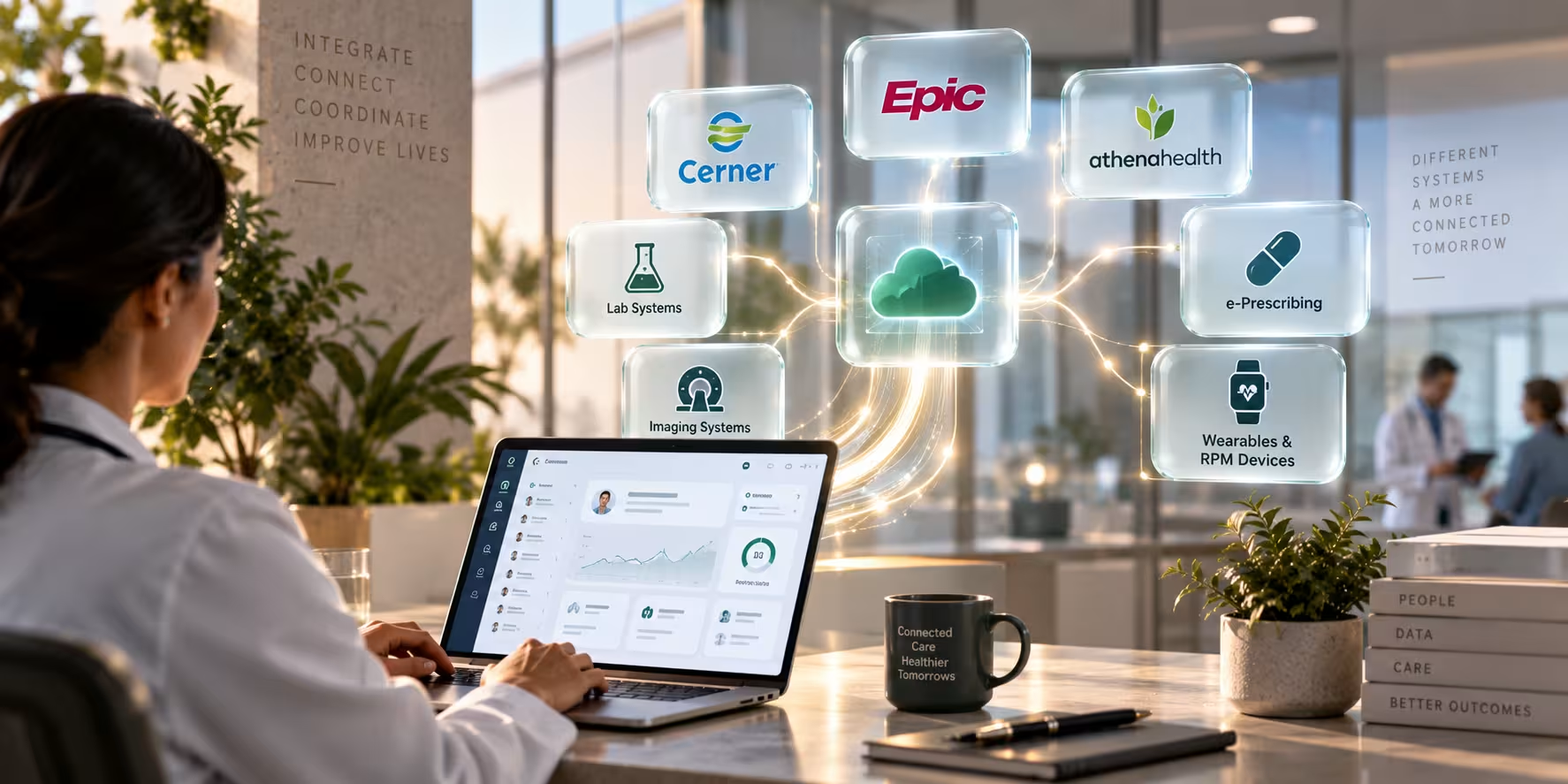
- EHR / EMR Systems
- Smart Connected Devices & Wearables
- RIS (Radiology Information Systems)
- LIS (Laboratory Information Systems)
- e-Prescribing Platforms
RPM Impact
of surveyed healthcare executives reported measurable improvements in patient outcomes after implementing remote patient monitoring (RPM) programs.
Development ROI
of healthcare executives reported positive ROI from their digital health development investments, signaling that ROI concerns are no longer the primary blocker to adoption.
Core Capabilities
The Care Management Market Is Becoming Software-Led
As chronic conditions grow more prevalent, care increasingly depends on what happens between visits rather than during them, a shift that’s drawing sustained investment toward software built to support that continuity.
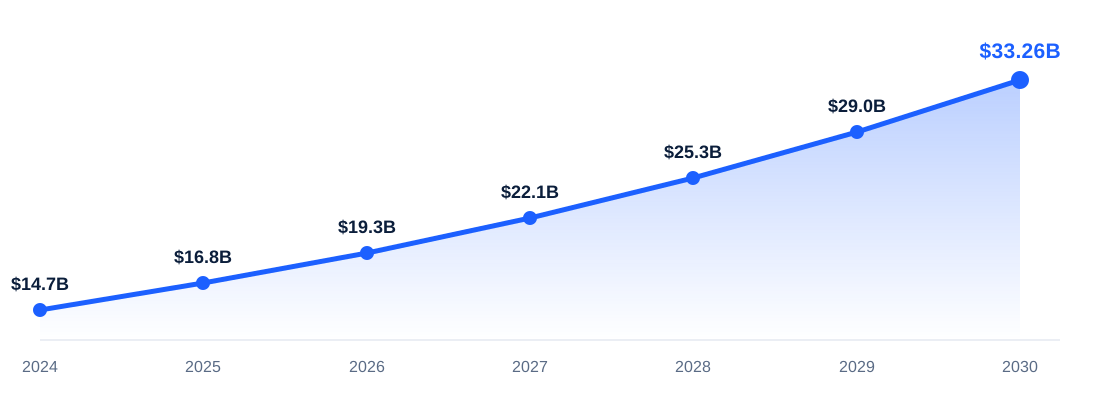
Care Management Is a $14B+ Market
Research estimates the global care management solutions market at $14.67B in 2024, with the market projected to more than double by 2030 at a 14.8% CAGR.
Projected Global Market by 2030
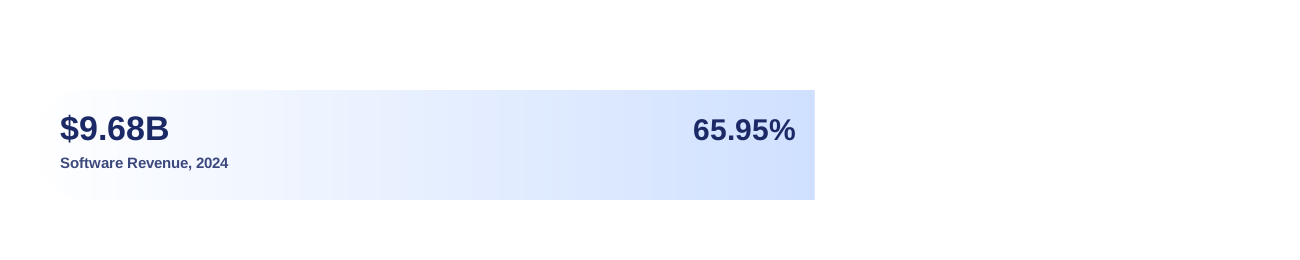
Software Drives Care Management Growth
Software already represents the largest and fastest-growing component of the care management solutions market, generating $9.68B in revenue in 2024.
Of Global Market Revenue
North America Leads the Market
North America generated the largest share of global care management solutions revenue in 2024, with the region projected to grow at 14.2% CAGR through 2030.
Of Global Market Revenue in 2024

Solving Operational Challenges in Chronic Care
Gaps in data, coordination, and workflow make chronic care harder to manage at scale. Our CDMS solutions bring these moving parts into a more connected system.
| Challenge Area | What’s Happening | How We Solve The Challenge | ||
|---|---|---|---|---|
|
Fragmented Patient Data
|
What’s Happening | Even for a single patient, care teams may have to pull information from EHRs, lab systems, and other sources to build a complete clinical picture. | How We Solve The Challenge | Your custom CDMS connects clinical systems via healthcare APIs and interoperability standards, giving your teams a more cohesive chronic care system. |
|
Limited Visibility Between Visits
|
What’s Happening | The episodic nature of conventional care can make it difficult to identify changes in a patient’s condition between encounters or before they become acute. | How We Solve The Challenge | By integrating RPM and patient-generated data into your CDMS, we help you get ongoing visibility into patient health and emerging changes between visits. |
|
Manual Care Coordination
|
What’s Happening | Care teams often rely on manual follow-ups and disconnected workflows, making chronic care harder as patient volumes and multidisciplinary teams grow. | How We Solve The Challenge | We automate recurring workflows and bring coordination into unified dashboards, helping teams prioritize tasks and keep interventions moving across care teams. |
|
Complex Documentation & Time Tracking
|
What’s Happening | Manually tracking and documenting billing activities across care interactions often leads to gaps in records, billable time, and CCM compliance. | How We Solve The Challenge | Your CDMS is equipped with automatic activity capture functionality for timestamped audit trails, making billable time and documentation easier to track. |
|
Difficulty Prioritizing High-Risk Patients
|
What’s Happening | Growing patient populations make it harder to identify subtle risk patterns and determine which patients need attention before their condition worsens. | How We Solve The Challenge | We apply AI-driven risk models and predictive analytics to identify emerging risk patterns, helping care teams prioritize patients for earlier intervention. |
Is Custom CDM Software Right For You?
If chronic care is central to your strategy, we can help you assess where off-the-shelf software stops fitting and where a custom CDMS starts making more sense.
- Map your organization’s chronic care workflows
- Assess your existing system integration needs
- Define your AI-powered chronic care roadmap
- Evaluate your custom CDMS development scope
Core Features of a Chronic Disease Management Platform
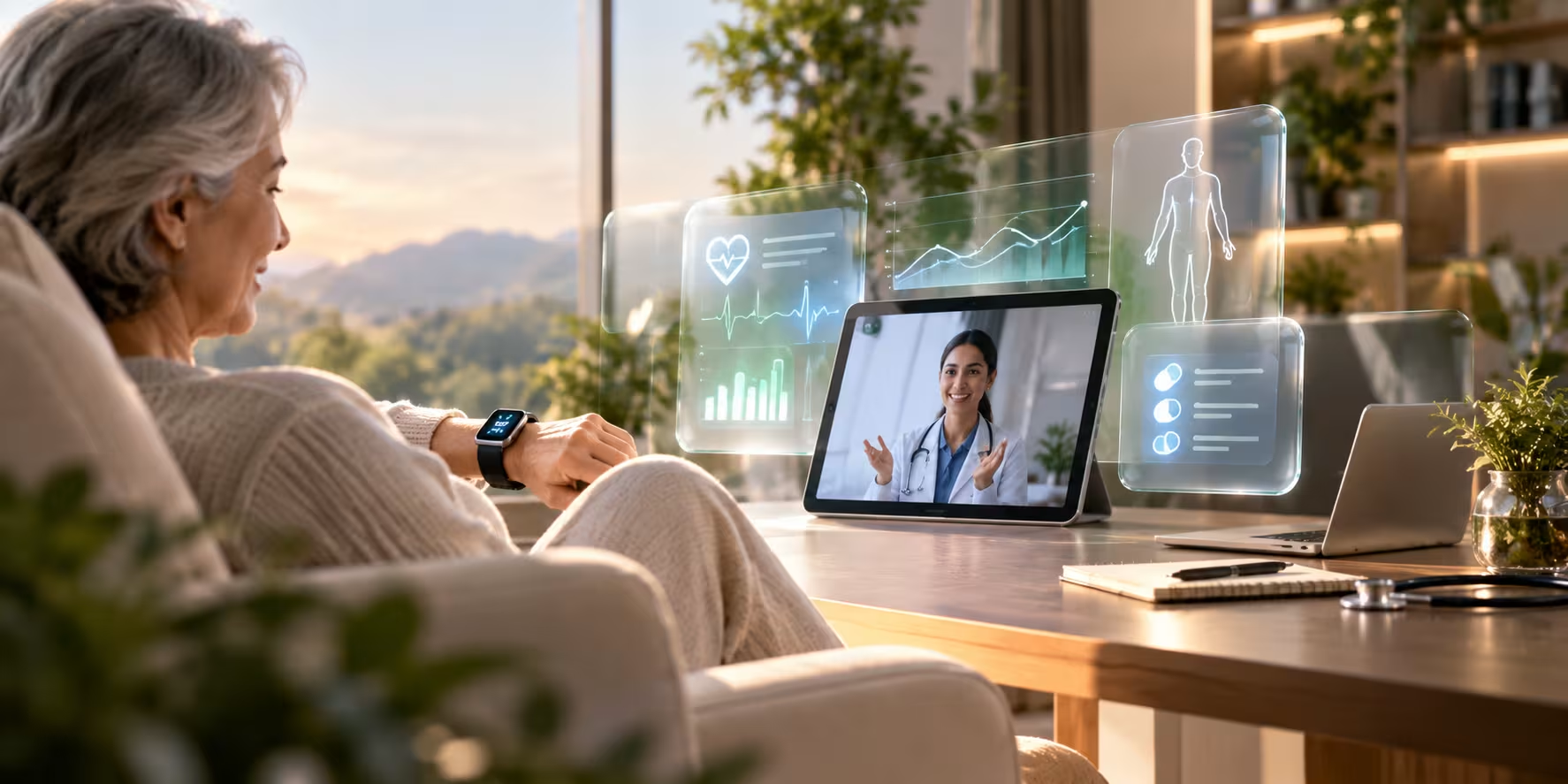
We group CDM features into seven areas that reflect how care teams and patients actually use the software day to day, rather than a generic feature checklist.
Patient Self-Management
- Symptom and vital sign tracking for patients
- Medication schedules and adherence tracking
- Personalized care plan access for patients
- Condition-specific patient education tools
Remote Monitoring & Devices
- RPM and wearable device integration support
- Real-time monitoring of patient vital signs
- Synchronization across connected devices
- Automated alerts for abnormal vital readings
Care Team & Provider Tools
- Risk-stratified patient lists for care teams
- Care plan creation and management workflows
- Structured coordination across providers
- Task and follow-up assignment tracking tools
AI & Predictive Analytics
- Early-warning risk scoring across patients
- Predictive models for medication adherence
- AI-driven patient risk stratification tools
- Detection of health trends and anomalies
EHR/EMR & Interoperability
- HL7 and FHIR-based clinical data exchange
- Integration with Epic, Cerner, athenahealth
- Lab and medical imaging system integration
- Connectivity with e-prescribing platforms
Patient Engagement
- Automated reminders and patient outreach
- Secure messaging between patients and teams
- Progress and medication adherence tracking
- Multichannel patient communication tools
Documentation & Billing
- Detailed CCM activity and time tracking logs
- Documentation of ongoing care activities
- Audit-ready documentation and recordkeeping
- Direct support for billing and reimbursement
Need All Seven, Built Around Your Workflow?
We scope which features matter for your conditions and care model to build a custom CDMS.
CDM Software Services Across Strategy, Development & Integration
We offer custom CDM engineering services spanning the work between an initial technology strategy and a production-ready chronic care management software.
CDM Software Consulting and Strategy
Right from workflow assessments to the pivotal architecture decisions, our healthtech leaders map out the strategy to take your CDM software from concept to development.
Custom CDM Software Development
When existing platforms fall short of your requirements, we architect purpose-fit chronic disease management software around your workflows, users, and technology environment.
Self-Management Apps for Patients
Our custom patient engagement app solutions benefit your patients by giving them access to care plans and medical schedules, and wearable integrations to track their vitals.
Care Team Dashboard Development
A unified care-team dashboard with AI capabilities for risk stratification and care plan management brings your connected chronic care workflows into a single working view.
EHR, RPM, and System Integrations
We make healthcare interoperability an embedded standard when integrating EHRs, RPM devices, and other care systems, facilitating accurate and compliant data exchange.
CDM Analytics and Predictive Modeling
Using AI-driven risk models and predictive health analytics, we help turn raw vitals into care decisions impacting population health trends and intervention strategies.
Condition-Specific Chronic Disease Management Solutions We Build
Chronic care doesn’t follow a one-size-fits all approach. We develop CDM solutions that adapt to those realities instead of forcing your workflows into a template.
Diabetes
- CGM and continuous glucose monitoring
- Insulin dosing and medication records
- A1C progress and outcome reporting tools
- Diet and carbohydrate intake tracking
Cardiometabolic Disease
- Blood pressure trend monitoring alerts
- Weight and lipid trend monitoring tools
- Cardiac risk scoring and alert workflows
- Medication titration support workflows
Respiratory Disease
- Spirometry capture and trend analysis
- Inhaler adherence alerts and tracking
- Pulse oximeter data integration support
- Respiratory flare-up risk detection
Chronic Kidney Disease
- eGFR trend monitoring and risk alerts
- Fluid balance and dietary tracking plans
- Dialysis schedule coordination workflow
- Kidney lab results and trend integration
Behavioral & Mental Health
- Mood and symptom journaling support
- Therapy session scheduling workflows
- Medication adherence tracking tools
- Crisis escalation and response workflows
Obesity & Weight Management
- Weight and activity tracking metrics
- Nutrition plan and care goals management
- Coaching and check-in scheduling tools
- Progress milestones and reward tracking
Custom Chronic Disease Management Software Integrations
With a custom CDMS, you get the flexibility to select the integrations that fit your healthcare ecosystem instead of working around a preset combination of systems.
01
EHR / EMR Systems
EHR/EMR integration is practically non-negotiable, bringing together longitudinal clinical records for care-gap analysis and decision support.
02
RPM & Medical Devices
Wearables and connected devices feed vitals into the CDMS, where AI predictive models can detect changes and flag patients needing attention.
03
Laboratory Systems
We integrate lab and diagnostic data into longitudinal patient records, using DICOM-compliant workflows for medical imaging exchange.
04
Health Information Exchange
Modern CCM relies on ePHI from multiple systems and care teams. We consolidate it for AI models to analyze a more complete patient picture.
05
Billing & RCM Systems
CCM activities, time records, and clinical documentation can be connected with RCM workflows to support CPT-based billing and reimbursement.
The Interoperability Layer Behind Your CDMS Integrations
Standards-Based Exchange
HL7 and FHIR structure clinical information for consistent exchange between the CDMS and connected healthcare systems.
API Connectivity
REST APIs create integration pathways across EHRs, RPM devices, laboratories, pharmacies, telehealth platforms, and patient apps.
Two-Way Data Flow
Information can move between the CDMS and connected systems, allowing patient data to be contributed, updated, and retrieved across care workflows.
Secure Application Access
SMART on FHIR enables authorized applications to securely access FHIR-based clinical data within the connected healthcare environment.
Medical Imaging Exchange
DICOM supports the exchange and storage of medical imaging data, allowing relevant diagnostic information to become part of the longitudinal record.
Designed Around the Healthcare Technology You Already Rely On




Technologies We Use to Engineer Custom CDM Software
Our engineering and healthcare specialists select technologies around the demands of the chronic disease management solution rather than prescribing a fixed stack.
Frontend Technologies
- HTML5
- CSS3
- JavaScript
- TypeScript
- React
- Next.js
- Angular
- Vue.js
- Nuxt.js
- Tailwind CSS
Backend Technologies
- .NET 8
- ASP.NET Core
- Java
- Spring Boot
- Node.js
- Express.js
- Nest JS
- Python
- FastAPI
- Golang
Mobile Technologies
- Android
- iOS
- Flutter
- React Native
- Swift
- Kotlin
- .NET MAUI
- Progressive Web Apps (PWA)
Cloud & DevOps
- Amazon Web Services (AWS)
- Microsoft Azure
- Google Cloud Platform (GCP)
- Docker
- Kubernetes
- Terraform
- Jenkins
- GitHub Actions
- GitLab CI/CD
- Ansible
Databases & Data Engineering
- PostgreSQL
- MySQL
- MongoDB
- Redis
- Elasticsearch
- Amazon DynamoDB
- Apache Cassandra
- Neo4j
- Snowflake
- Google BigQuery
- Apache Spark
- Databricks
- Apache Kafka
AI & Machine Learning
- OpenAI
- Google Vertex AI
- Hugging Face
- LangChain
- LlamaIndex
- PyTorch
- TensorFlow
Healthcare Interoperability
- HL7
- HL7 FHIR
- SMART on FHIR
- HAPI FHIR
- Mirth Connect
- Redox
Security & Identity Management
- Okta
- HashiCorp Vault
- AWS KMS
- OAuth 2.0
- OpenID Connect (OIDC)
- JSON Web Token
Healthcare Compliance for Chronic Disease Management Software
We architect CDM software around privacy, security, interoperability, and regulatory requirements that apply across your target markets and intended use cases.
HIPAAThe primary US law safeguarding protected health information in healthcare software. |
HITECHStrengthens HIPAA’s breach notification and security requirements for CDM software. |
FDA SaMDComes into play when CDM functionality qualifies as a regulated medical device. |
HL7Standardizes clinical data exchange between EHRs, CDM software, and other systems. |
FHIRBuilt on modern APIs, FHIR simplifies interoperability across connected systems. |
SOC 2Verified through independent audits covering security and confidentiality controls. |
GDPRThe EU’s regulation governing patient consent and cross-border data transfers. |
PHIPAGoverns personal health information handling for CDM platforms operating in Canada. |
CPTStandard codes used to bill medical services through CDM-connected systems. |
GxPQuality guidelines required for CDM platforms using pharma or clinical trial data. |
XDS/CDS-IEnables secure sharing of clinical documents and images across care settings. |
DICOMMaintains data integrity when CDM platforms transmit and store medical images. |
Off-The-Shelf vs. Custom CDM Software: Evaluating Your Options
The comparison isn’t about declaring one approach universally better than the other. The right choice depends on how central chronic care is to your organization and how closely existing software fits your requirements.
| Criteria | Off-The-Shelf CDM Software | Custom CDM Software |
|---|---|---|
|
Deployment
|
Faster to deploy. | Development and implementation require time. |
|
Workflows
|
Predefined and configurable. | Workflow logic mapped to operational requirements. |
|
Condition Support
|
Limited to vendor-supported conditions. | Condition-specific modules and workflows. |
|
Interoperability
|
Standard EHR and system connectors. | Specific HL7/FHIR/API architecture tailored to requirements. |
|
AI & Predictive Analytics
|
Vendor-defined models and intelligence features. | Models tailored to your data and care workflows. |
|
Compliance & Security
|
Standard security and compliance framework. | Security controls embedded into the software architecture. |
|
Legacy Systems
|
Compatibility depends on available connectors. | Integration with existing legacy environments. |
|
Product Roadmap
|
Features follow the vendor’s roadmap. | Development follows organizational priorities. |
|
Investment
|
Subscription, licensing, and implementation costs. | Development, integration, and implementation costs. |
Off-the-shelf CDM software can be the right engineering and business decision when chronic care management is primarily a supporting function and your practice’s requirements are already well covered by an existing platform.
You might mainly need to operationalize conventional CCM workflows around patient identification, consent, care plans, coordination, documentation, and billing. You can likely find an existing chronic care management software covering those requirements without taking on the engineering effort of a full-fledged platform.
Conversely, if CDM is a more integral part of your care-delivery or technology strategy, the limitations of an off-the-shelf product can become consequential. A custom chronic disease management software may then be a more favourable option.
If you need deeper bidirectional EHR integration, condition-specific workflows, RPM and adjacent care-management capabilities, sophisticated analytics, or an AI-native architecture, custom CDM software development gives you greater control over how those capabilities fit together and how security, compliance and interoperability are embedded into the underlying architecture.
Not Sure Which Side of the Line You’re On?
Who Benefits Most From Chronic Disease Management Software?
A CDMS creates value at both ends of care delivery, helping organizations run programs more effectively while giving care teams greater control over daily care.
For Healthcare Organizations
- Standardize chronic care management workflows
- Scale CCM enrollment across patient panels
- Lower administrative overhead across programs
- Simplify CCM billing and claims documentation
- Enable data-driven chronic care management
- Support personalized chronic care delivery
- Strengthen patient engagement and adherence
- Track CCM program performance in real time
For Care Teams
- Reduce time spent locating patient records
- Cut down on manual documentation work
- Automate recurring chronic care activities
- Respond to patient messages more quickly
- Coordinate seamlessly across care providers
- Prioritize and act on high-risk patients
- Track patient progress between office visits
- Manage recurring care tasks in one place
Healthcare Engineering Solutions We’ve Delivered For Our Partners
Our healthcare software development experience spans AI, virtual care, telemedicine, and remote monitoring, with solutions shaped around the needs of each client.
AI virtual health assistant case study
The client, a leading hospital chain, wanted a smarter way to collect patient data and support their staff. After deep...
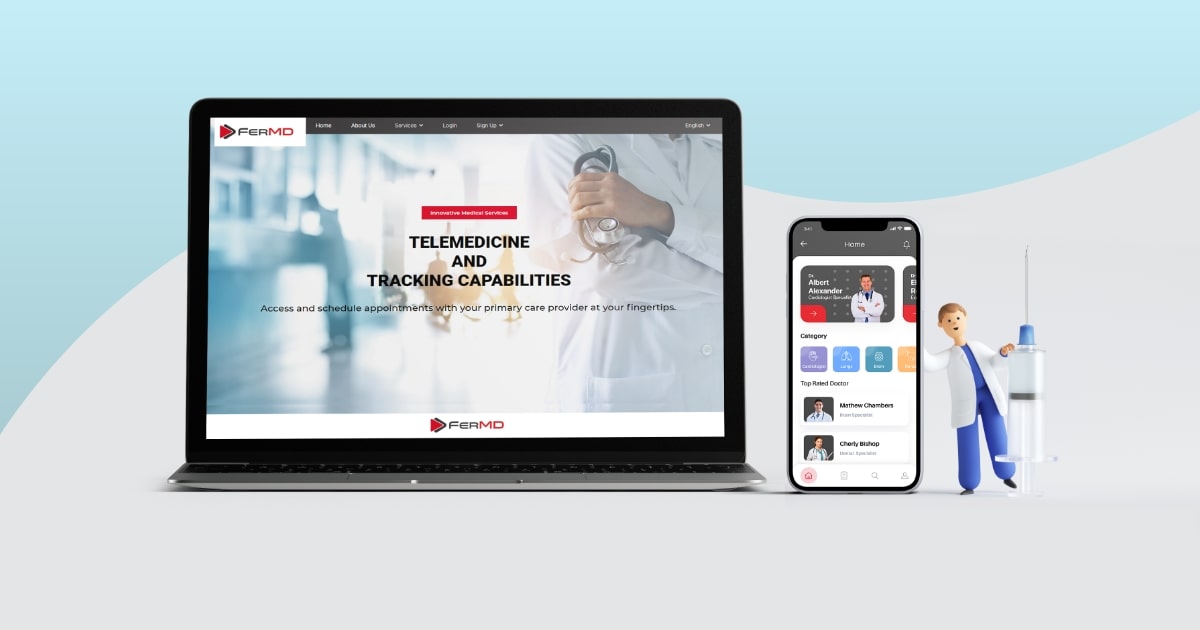
TeleMedicine App For Patients and Doctors To Connect
Build a Telemedicine App & Doctors Appointment Booking Platform for Your Patients
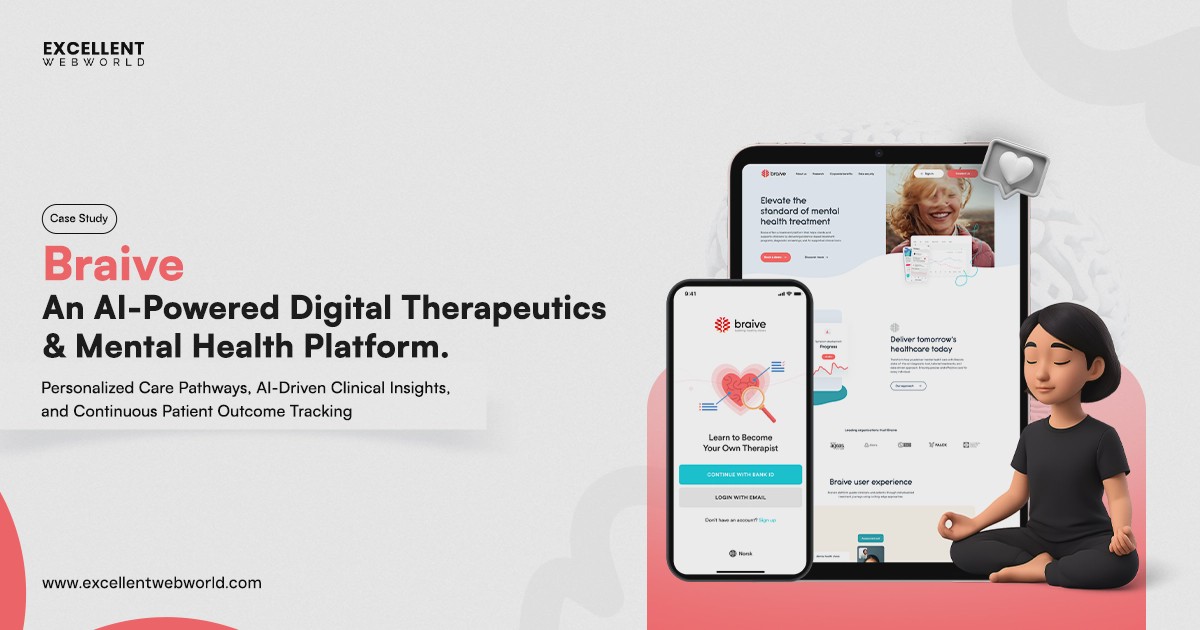
Braive
A digital mental health platform with guided programs, clinician tools, and progress tracking. Expands access to care and improves patient...
TeleMedicine App For Patients and Doctors To Connect
Build a Telemedicine App & Doctors Appointment Booking Platform for Your Patients
Award-Winning Excellence in Healthcare Software Engineering
With awards from trusted global platforms, our healthcare engineering teams hold direct expertise validated by real deployments, not just client testimonials.
Clutch Healthcare IT Ranking
Healthcare Apps Delivered
Healthcare Clients Served
Years of Healthcare Engineering
Clutch 100 Fastest Growing Company 2026
Top Health & Wellness App Development Company
Top IT Services Company Medical Dubai
Top Artificial Intelligence Company Salt Lake City 2026
Top Systems Integration Company Dubai 2026

Top IT Services Company Government Dubai
Recognized by Clutch, Again
Clutch has repeatedly named Excellent Webworld a top technology partner, recognition earned through delivered work and verified client reviews, not self-reported claims. That same standard of engineering rigor carries into every healthcare project we take on.
What Our Clients Are Saying
Hear from our clients about their experience working with us to build secure, reliable, and patient-centered healthcare software. Read more client testimonials from across our healthcare and software engineering work.

Abdulaziz Alotaibi

I chose Excellent Webworld for its quality, fair pricing, and collaboration. They treated my app ‘Move Coins’ like their own, ensuring success.

Thomas Devito

I’ve been working with Excellent Webworld for over 10 years and have received dozens of web productions for small businesses.

Nick Wright

The designers took the challenge to redesign my app and website from scratch and give my brand a newly updated identity.
Still Piecing Together Chronic Care Manually?
One CDM platform for patient monitoring, care coordination, and clinical documentation, built around your specialties and compliance requirements.
The Team and Principles Behind Every CDM Platform We Ship
A custom CDMS isn’t a list of specifications for engineers to fulfill. Clinical, AI, and compliance expertise work together from day one, guided by principles we won’t compromise on.
Who’s On Your Build
Healthcare Domain Lead
A dedicated healthcare specialist leads the project, translating care models and clinical workflows into specific and tangible project requirements.
AI & ML Engineer
Our leading AI & ML engineer assumes hands-on responsibility for architecting and validating the predictive models behind early-warning alerts and adherence tracking.
Compliance & Security Specialist
With a compliance specialist on board, HIPAA, HITECH, and FDA SaMD requirements are embedded inside the architecture from day one, not as a final review.
Integration Architect
The integration lead maps EHR, RPM device, and lab system connections early so write-back and data mapping don’t become late surprises.
How We Approach The Build
01
AI With a Defined Clinical Purpose
AI capabilities are tied to specific clinical and operational needs, ensuring models support meaningful decisions instead of being added simply because they can be.
02
Clinician-in-the-Loop Design
Every AI-generated note, alert, or recommendation remains reviewable and correctable by clinicians, keeping human judgement at the center of care.
03
Interoperability From Day One
EHR and device integrations are scoped and prototyped early to ensure that interoperability is built into the platform rather than added after core development.
Developed With Healthcare in Mind, Engineered for What Comes Next
Healthcare expertise shapes our engineering practices, while experienced leadership brings the perspective needed to navigate complex healthcare software projects.

Paresh Sagar
CEO & Co-Founder
Healthcare delivery, engineering scale, and operational accountability.

Mayur Panchal
CTO & Co-Founder
Chronic disease management software architecture, technical strategy, and platform build.

Mahil Jasani
COO & Co-Founder
Healthcare market strategy, product direction, and compliance positioning.
- 15+ years of healthcare software delivery
- 300+ specialists in cloud, AI, DevOps, UX & data
- Software & AI engineering, one delivery team
- Cloud-native CDM built around your EHR & budget
- Healthcare engineering across GCC, US, UK & EU
- Mission-critical delivery for Dubai Govt & Amazon
What Sets Our Engineering Apart
Your CDMS is too important for a team learning healthcare on the job. We bring proven healthcare engineering experience to every build, from architecture to delivery.
Frequently Asked Questions
There is no fixed price for a custom CDMS because the investment depends on what you need the platform to accomplish and how deeply it must connect with your existing environment. A focused care-management platform and an enterprise system spanning EHR, RPM, AI, billing, and multiple care teams will have very different development scopes.
The timeline depends on the complexity of the workflows, integrations, compliance requirements, and the level of customization involved. We typically approach larger CDMS builds in phases, allowing core workflows to be validated early while more advanced integrations and intelligence capabilities are developed progressively.
Yes. A custom CDMS can be integrated with the EHR infrastructure your organization already relies on rather than requiring care teams to work from a disconnected system. Using standards such as HL7 and FHIR alongside healthcare APIs and bidirectional data exchange, relevant patient information can move between the CDMS and existing clinical systems.
A CDMS can support the operational workflows behind Medicare Chronic Care Management, from identifying eligible patients and capturing consent through care-plan management, documented care activity, time tracking, and billing support. For US organizations, the platform can be designed around applicable CMS requirements and CCM coding workflows, with current rules verified during implementation.
AI becomes most useful when it is tied to a defined clinical or operational purpose. Within a CDMS, longitudinal patient data can be analyzed to surface emerging risk patterns, identify potential care gaps, support risk stratification, and bring relevant insights to care teams—while keeping clinical review and judgment in the loop.
Start with how chronic care is actually delivered across your organization rather than starting with a feature list. The right architecture should accommodate your existing clinical systems and workflows while giving you room to expand into remote patient monitoring, AI, new care programs, and changing regulatory requirements as the platform evolves.