Quick Summary
AI in healthcare statistics make it clear that the industry is changing in a big way. Healthcare executives, CTOs, and health tech leaders can no longer afford to ignore it. We have worked directly with leading healthcare organizations to implement AI solutions. From these projects, and industry studies and data, we have collected important numbers. These numbers reveal a simple truth: Artificial Intelligence is driving efficiency, cost cutting, and improvements in clinical workflows across the industry. The statistics around artificial intelligence in medicine tell an equally compelling story, one that spans diagnostics, drug discovery, surgical robotics, and everything in between.
Now that we’re halfway through 2026, it’s clear that Artificial Intelligence is gaining supremacy across numerous fields. More importantly, AI has already made a significant impact on the healthcare industry.
We’re living in a time where machines are constantly evolving, helping doctors diagnose crucial diseases, perform surgery, and support healthcare in ways we couldn’t imagine just a few years ago.
In modern healthcare, every patient encounter generates a pile of data, from medical images, and lab results to clinical notes. This data alone is overwhelming for professionals to analyze quickly. AI algorithms step in by quickly identifying patterns and predicting health outcomes. They can even suggest personalized treatment options based on this data.
Now AI Impact is not just limited to AI healthcare chatbots anymore. In 2026, the AI healthcare market is moving beyond simple tools to include areas like clinical decision support, improving diagnostic imaging, automating tasks, and creating personalized medicine. New frontiers like agentic AI, which can independently carry out a series of healthcare and administrative tasks, are also becoming some of the fastest growing AI applications in healthcare alongside generative AI and robotics.
That’s why we’ve gathered some of the most interesting AI healthcare statistics for you. With these numbers, we’re sure you’ll know how AI is changing the healthcare industry.
AI in Healthcare Market Size and Industry Overview
As we mentioned above, AI has changed many aspects of the healthcare industry, even our perspective on treatment and diagnosis. As a result, almost every medical organization worldwide is trying to reap the maximum benefits of AI.
Let’s look at some lucrative statistics of AI in healthcare.
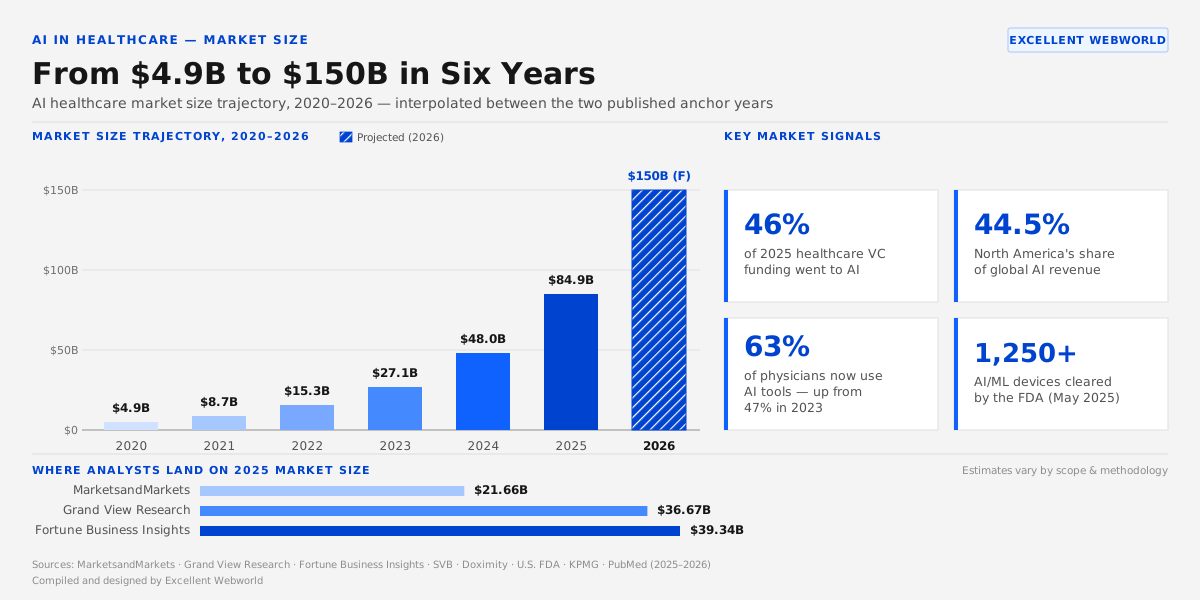
To start with, it’s essential to look at the market size that AI in healthcare occupies and the growth trajectory that it is currently tracing. These AI in healthcare facts and figures paint a picture of a market that is not just growing but fundamentally reshaping how healthcare is delivered, financed, and experienced. Let’s take a look at the numbers:
| Source | Market Size (as of 2025) | Later Forecast |
|---|---|---|
| MarketsandMarkets | $21.66 Billion | $110.61 Billion by 2030 with a CAGR of 38.6% |
| Grand View Research | $36.67 Billion | $505.59 Billion by 2033, following a CAGR of 38.90% |
| Fortune Business Insights | $39.34 Billion | $1,033 Billion by 2034, exhibiting a CAGR of 43.96% |
The market size numbers change from source to source based on the research publisher and the scope they defined. Every publisher defines the AI in healthcare market a little differently, whether that means the technologies included, the regions covered, or the forecasting model being used. Still, these reports give a fairly strong picture of where the market stands right now and where analysts expect it to head over the next decade.
Now, let’s examine the deeper layer of insights:
- Fortune Business Insights also reports North America as being the largest regional market. It accounts for 44.5% of the global revenue and is further expected to climb to $24.78 billion by 2026.
- Asia Pacific is emerging as the fastest-growing regional market for AI in healthcare, driven by rising digital health investment across China, Japan, South Korea, and India, alongside strong government-backed initiatives to modernize clinical infrastructure.
- AI, in itself, attracted 46% of the entire healthcare venture investment in 2025. And there are no signs of slowing down as the Q1 2026 digital funding hit $4 billion already, the strongest it’s been since the pandemic peak.
- Machine learning holds the highest AI healthcare market share in terms of technology.
- Software solutions hold 48.67% of the AI healthcare market, making them the largest segment by component, while services are expected to rise the fastest through 2033. (Fortune Business Insights)
- As per Doximity’s 2026 State of AI in medicine Report, the percentage of physicians adopting AI tools jumped remarkably, going from 47% in March 2023 to 63% as of January 2026.
- Around 80% of hospitals are now actively using AI in at least one clinical or operational function, with 65% reporting moderate-to-high ROI from AI investments as of 2025.
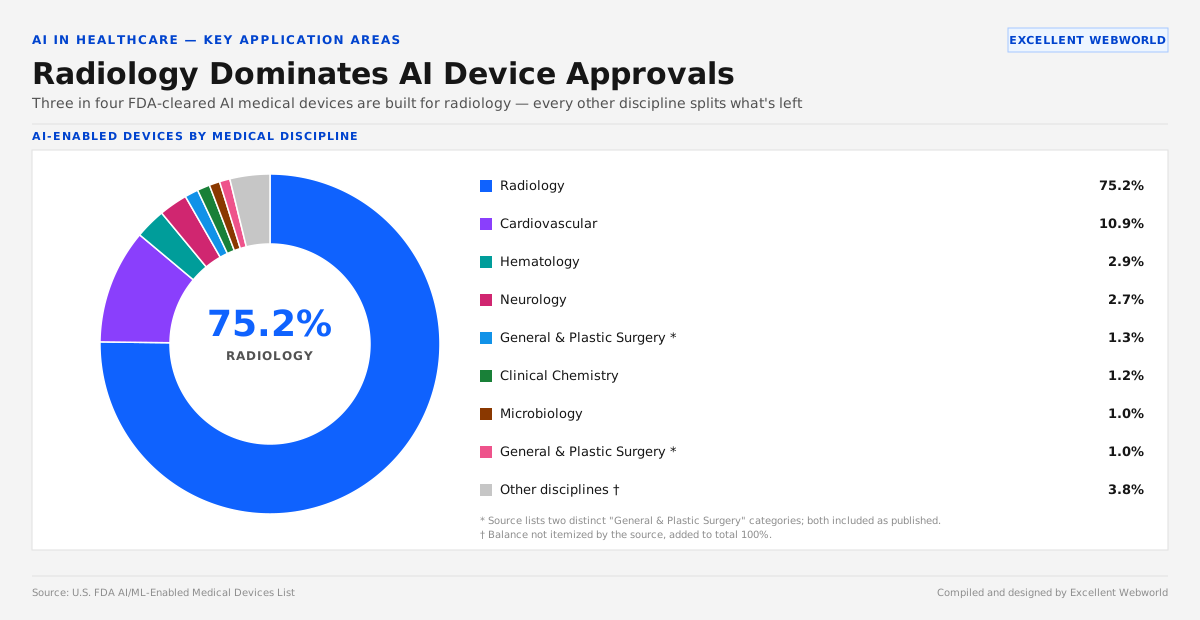
- As of May 2025, The U.S. FDA has cleared and/or approved 1,250+ AI/ML-enabled medical devices across different specialties. Radiology-related devices lead the specialties list by a large margin. You can even see the full catalog on the official FDA website.
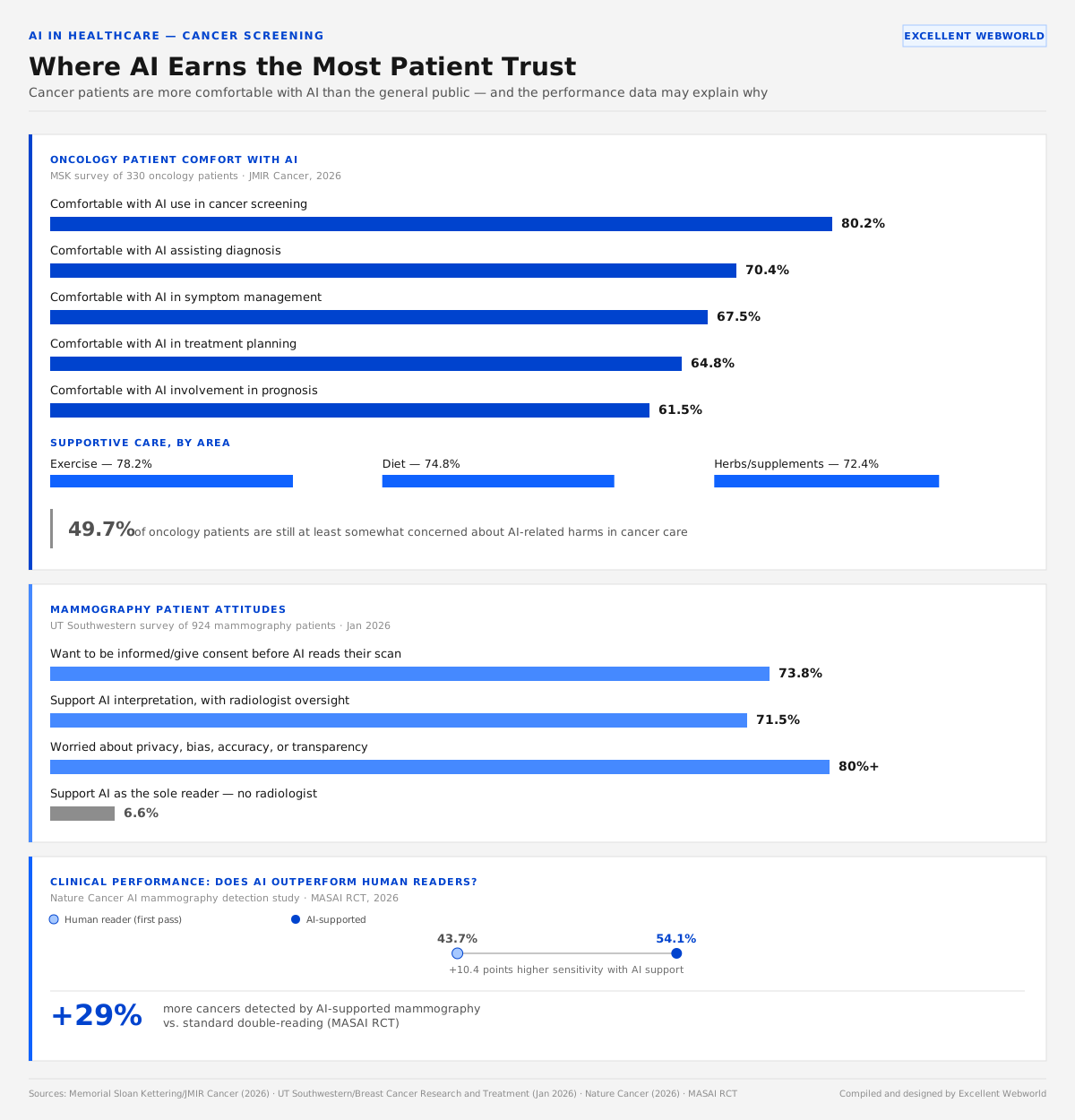
- A breast cancer screening study published on Pubmed found that AI-assisted mammography showed a higher sensitivity (84.1%) than radiologists working alone (80%) and increased cancer detection rates from 5.7 to 6.7 cases per 1,000 screenings.
Source: Data referenced from the Doximity State of AI in Medicine 2026 Report, the Official FDA AI/ML Devices Catalog, and a Breast Cancer Screening Study published on Pubmed.
Key AI Trends in Healthcare and Revenue Insights
Let’s drill down some of the most important AI trends, facts, and figures that you should know about artificial intelligence in the healthcare industry.
- McKinsey names generative AI as the most widely adopted AI technology in healthcare adoption. Beyond basic automation, healthcare organizations are also investing in the cutting-edge use cases of speech recognition, agentic AI, machine learning, and robotics.
- Foundational AI technologies including deep learning, natural language processing, and computer vision continue to underpin many of these applications, powering everything from radiology analysis to real-time clinical documentation.
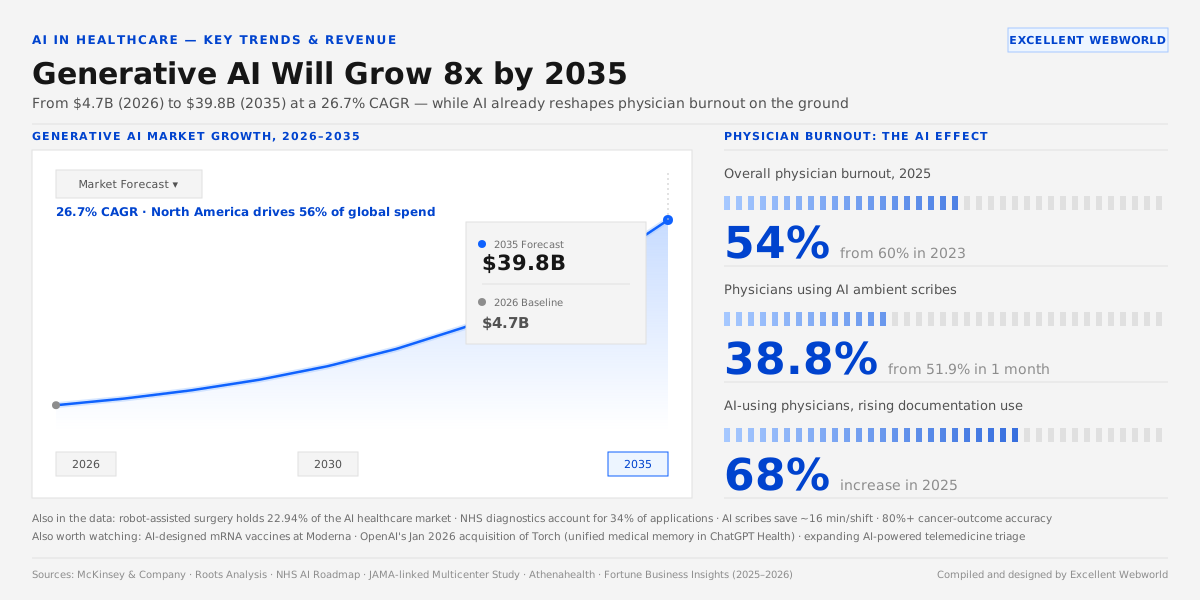
- Roots Analytics predicts generative AI in healthcare to grow from $4.7 billion (2026) to $39.8 billion (2035) at a 26.7% CAGR. Geographically speaking, North America spends about 56% of the global gen AI expenditure. And categorically, treatment planning and clinical documentation are the use cases driving that growth.
- Fortune Business Insights revealed that robot-assisted surgery held 22.94% of the AI healthcare market share in 2026, making it the biggest application segment just behind medical imaging and diagnostics.
- As per the NHS AI Roadmap report, diagnostic technologies account for nearly 34% of all AI healthcare applications in its database and it is the single largest use case of any category.
- 2025 saw 54% of the U.S. physicians’ reporting frequent feelings of burnout, a decline from the earlier 60% which is also partly attributed to AI. A JAMA-linked study strongly supported this when it found burnout rates, among clinicians using ambient AI scribe, drop from 51.9% to 38.8% in just one month.
- Naturally, AI-driven documentation is gradually becoming the norm. 68% of physicians already using AI confirmed their increased use for clinical documentation in 2025, per Athenahealth.
- AI scribes are cutting documentation time by around 16 minutes per 8-hour patient day.
- Researchers developed an AI/NLP model that predicted cancer patient survival outcomes with over 80% accuracy based on initial oncology consultation.
Some recent developments worth noting alongside these numbers:
- AI gave Moderna a boost by enhancing its COVID-19 vaccination — AI-designed mRNA vaccines.
- OpenAI acquired healthcare startup Torch in January 2026, integrating a ‘unified medical memory’ feature into ChatGPT Health. The feature aggregates lab results, medications, and visit recordings, marking a clear signal of Big Tech’s growing commitment to clinical AI.
- AI powered telemedicine is making remote consultations more effective and helping healthcare providers reach more patients than before. The telemedicine segment specifically is seeing deeper AI integration, from real-time diagnostic support during virtual visits to AI-driven triage tools that help clinicians prioritize remote patient needs.
For a deeper look at how this technology is being built, our telemedicine app development guide covers the full picture.
Source: Data referenced from McKinsey & Company’s Gen AI in Healthcare Insights, the Roots Analysis Generative AI in Healthcare Report, the NHS AI Roadmap Methodology and Findings Report, a JAMA-linked Multicenter Study, and the 2025 Physician Sentiment Survey by Athenahealth.
AI in Healthcare Statistics by Patient Acceptance
Okay, we have discussed AI-powered technology in healthcare scenarios based on its revenue, market growth, AI tools, and more. But how many patients are comfortable with the treatment using these technologies?
It is a fact that when it comes to patients or users, accepting new technology for treatments might sound scary. Patients’ hesitancy around AI in healthcare is indeed well documented.
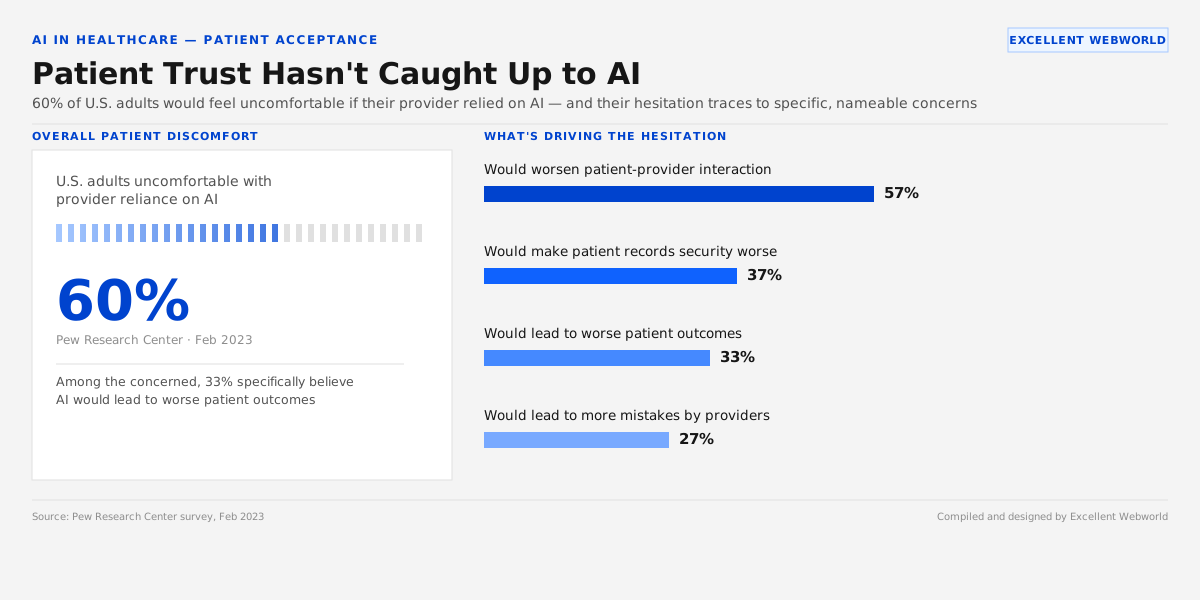
According to a Pew Research Center survey, patient opinions around AI in healthcare still remain mixed despite the rapid growth of these technologies.
- 60% of U.S. adults said they would feel uncomfortable if their healthcare provider relied on AI to diagnose diseases and recommend treatments, with 33% even thinking it would lead to worse outcomes
- 27% of people are of the view that AI would lead to more mistakes made by healthcare providers than usual
- They even showed concerns for health records security, with 37% believing AI in health and medicine would make patient records security worse
The wide concern for AI in health and medicine is that it will impact the personal connection between patients and healthcare providers. Approximately 57% say that AI use in diagnosis and treatment recommendations would worsen patient and healthcare-provider interaction.
Wait, things do not end here.
There are patients who see significant positives. 38% think AI in health and medicine would lead to better health outcomes for patients. And this is especially true when you look at specific use cases.
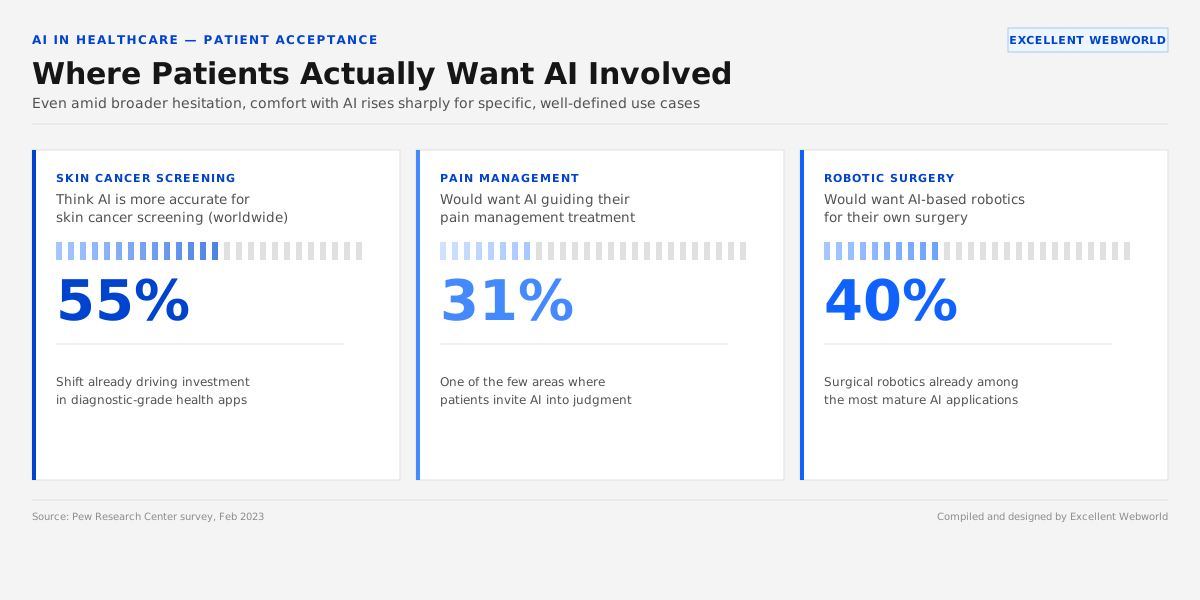
One of the areas where people find AI to be much useful is skin cancer screening.
- Approximately 55% of the respondents worldwide think skin cancer screening via AI technology is more accurate than traditional screening. These shifts in patient perception have pushed providers to invest in more reliable healthcare app development services that align with diagnostic accuracy & clinical usability.
- 31% would want AI guiding their pain management treatment
- 40% would want AI-based robotics for their own surgery
Physicians on AI: Where the Sentiment Actually Stands
While patient acceptance of AI in healthcare remains mixed, the sentiment among providers (physicians, clinicians, organizations) leans towards a more positive side and the data backs that up:
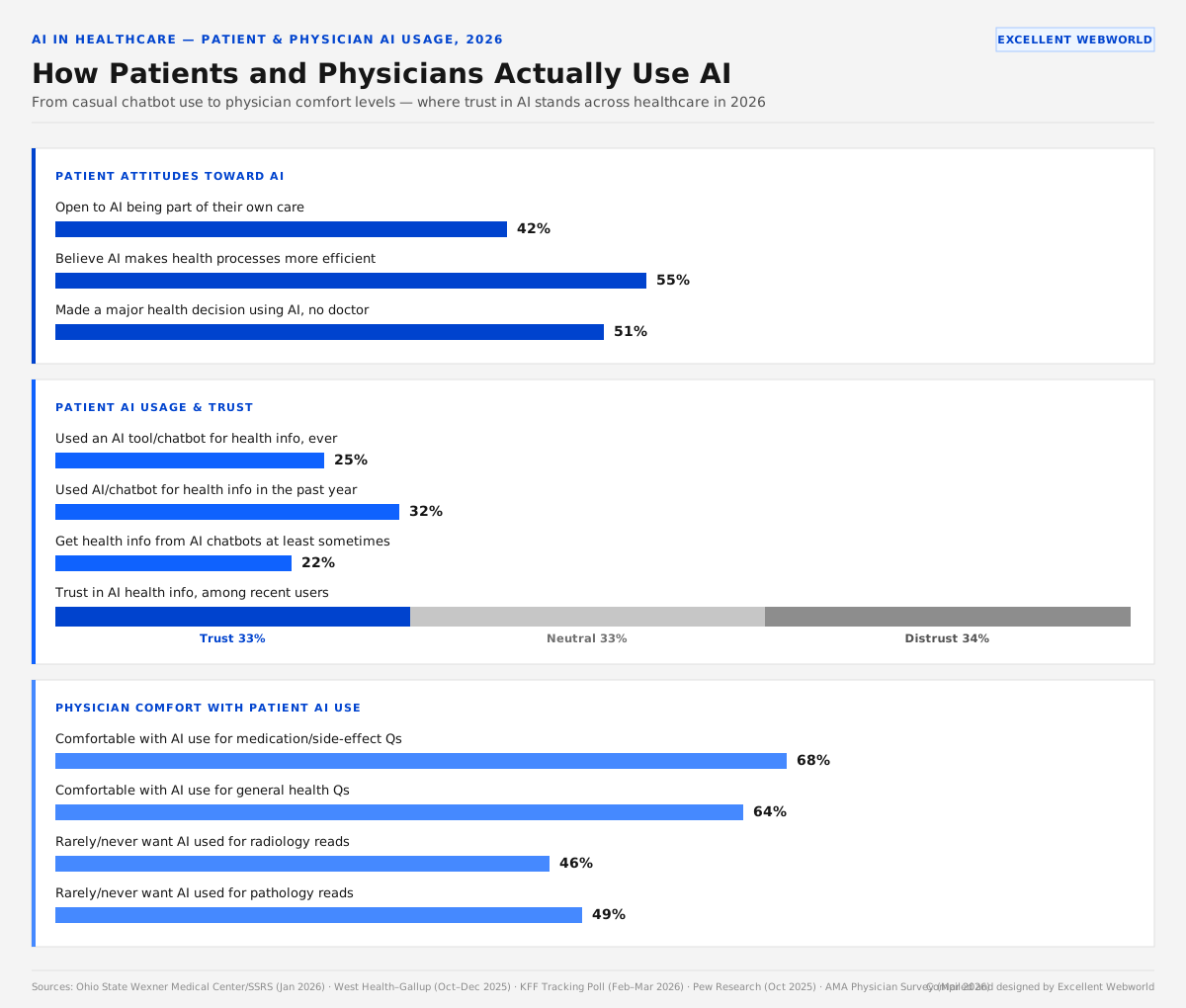
- The Optomed Physician AI Sentiment Report 2025 found that 68% of physicians now recognize at least some advantage of AI in patient care, up from 63% in 2023.
- The sentiment is strongest for low-risk, high volume administrative tasks. Physicians remain optimistic about the efficiency of AI in scheduling, documentation, and patient message triaging while they are more cautious regarding AI-assisted clinical judgement or diagnosis. (This caution reflects a broader consensus in the medical community: AI is seen as a tool that augments clinical judgment rather than one that replaces it, and most physicians are clear about wanting to keep that boundary intact.)
- Athenahealth’s physician sentiment data adds important context here: 83% of physicians believe AI holds real potential for addressing persistent industry challenges, particularly administrative overload and burnout.
Source: Data referenced from the Optomed Physician AI Sentiment Report (2025) and the Athenahealth Physician Sentiment Survey (2025).
AI in Healthcare Statistics by Key Application Areas
AI for Cost Reduction in Healthcare
Artificial intelligence can shift the whole healthcare system from an active to a proactive approach. Algorithms can work with large amounts of data and predict diseases and their potential treatments.
In some healthcare settings, patient no-show and cancellation rates can exceed 20%, and a single missed appointment can cost providers hundreds of dollars depending on the specialty and type of care involved.
According to an Accenture report, clinical AI tools could save the US healthcare system $150 billion per year by 2026 by cutting waste in diagnostics, billing, and patient management.
- A study published in the Annals of Internal Medicine found that physicians spend nearly 49% of their office day on EHR and administrative tasks. As a result, workflow automation and AI-powered administrative tools have become a major investment priority across the healthcare AI sector.
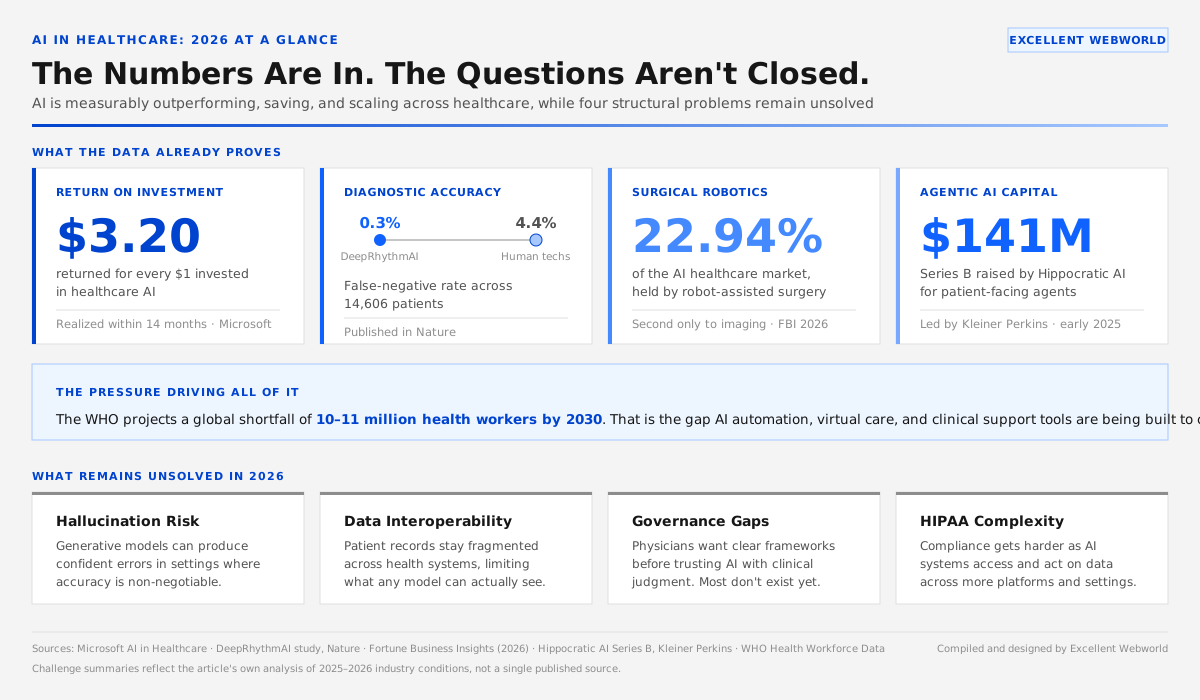
- The numbers back that up. According to Microsoft, the ROI on AI in healthcare averages $3.20 for every $1 invested, with returns typically realized within 14 months.
Source: Data referenced from the Accenture AI in Healthcare Report, an Annals of Internal Medicine Study published on Pubmed, and the Microsoft AI in Healthcare Blog.
AI in Drug Discovery and Development
Developing a new drug is one of the most challenging formulas to invent. It requires a lot of research and accuracy to get the needed results. And that’s the reason why scientists have begun to use AI in drug discovery.
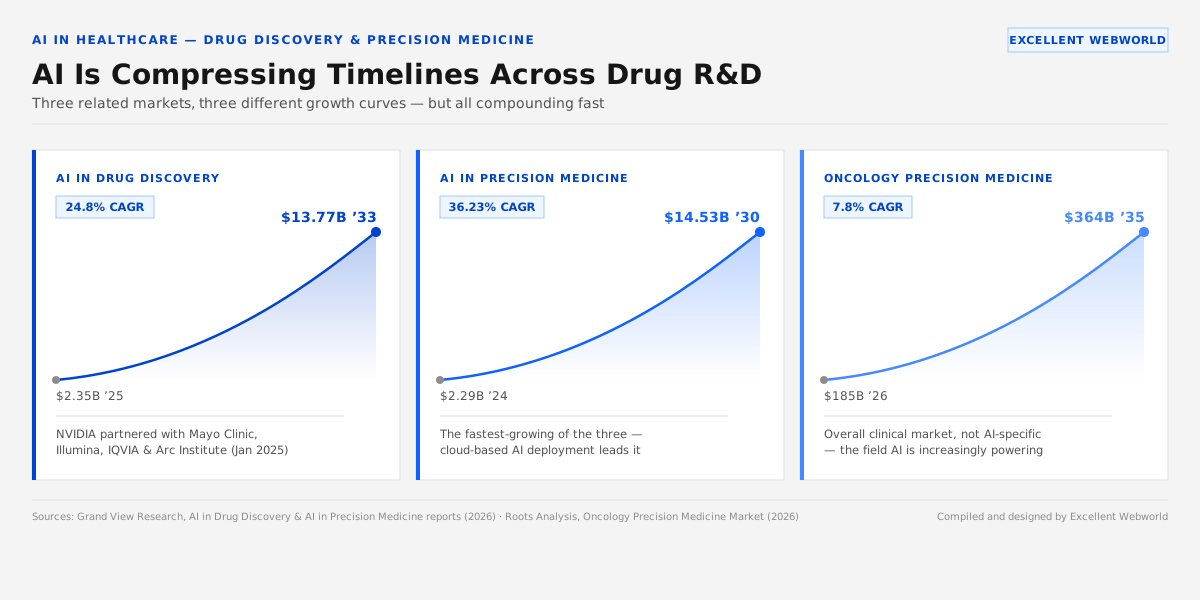
- According to Grand View Research, drug discovery is forecast to grow at a CAGR of 24.8% through 2033, making it one of the fastest-growing segments across the entire AI healthcare market. AI platforms built for genomic data interpretation and proteomic analysis are already reducing research timelines considerably.
- In January 2025, NVIDIA announced a collaboration with Mayo Clinic, Illumina, IQVIA, and Arc Institute to scale AI models across the healthcare sector, with drug research and diagnostics as the primary focus areas.
If AI and machine learning can be used to create new antibiotics quickly, it would be one of the biggest wins the healthcare industry has seen in decades.
AI in Precision Medicine and Personalized Care
Artificial intelligence-infused AI-medical tools boost research by leveraging interfacing techniques and advanced computation. This is possible by analyzing vast amounts of patient data, including genetic information, medical history, lifestyle factors, and environmental influences. AI algorithms identify patterns, correlations, and predictive models that guide personalized medical decisions.
Grand View Research projects the AI precision medicine market will reach $14.5 billion by 2030, with cloud-based AI deployment emerging as one of the fastest-growing delivery models in this segment.
Oncology and Neurology are among the most prominent areas where AI is making a measurable difference in precision medicine. Roots Analysis puts the global oncology precision medicine market at $185 billion in 2026, growing to $364 billion by 2035, a reflection of how central targeted, data-driven treatment has become in cancer care.
AI in Medical Imaging and Diagnostics
Medical imaging takes the help of a range of technologies to diagnose the human body for various medical conditions.
AI adoption in medical imaging is driven by many aspects like the growing volume and complexity of medical data, increasing demand for early diagnosis of disease, and improvement in healthcare efficiency.
The numbers represent the growth of this specific use case example of AI in healthcare:
- Precedence Research puts the AI in medical imaging market at $2.57 billion in 2026, while the radiology AI segment specifically is projected to grow from $794.12 million in 2025 to $4.62 billion by 2033.
- The U.S. FDA has cleared over 1,250 AI-enabled medical devices to date, with radiology accounting for the largest share of those approvals by a considerable margin.
- In October 2024, Aidoc Medical received FDA clearance for an AI algorithm designed for early detection of pancreatic cancer on CT scans, one of the more difficult cancers to catch at an actionable stage.
- Back in 2022, NVIDIA announced the launch of the Clara Holoscan MGX for Medical Instruments, a platform built to accelerate AI-powered medical device development for real-time surgical and diagnostic applications.
- A study published in Nature found that DeepRhythmAI achieved a false-negative rate of just 0.3% across 14,606 patients, compared to 4.4% for human technicians.
Source: Data referenced from Precedence Research’s AI in Medical Imaging Market Report and Radiology AI Market Report, along with the DeepRhythm AI study published in Nature.
AI-Enabled Robotics in Surgery and Patient Care
Healthcare is on track to become the second-largest AI industry by 2026. Robot-assisted surgery already holds a 22.94% share of the AI healthcare market in 2026. The World Health Organization projects a global shortfall of 10-11 million health workers by 2030, and that pressure is accelerating interest in AI-enabled automation, virtual care, and clinical support tools as practical responses to the gap.
Looking at it from the care receivers’ perspective, 54% of respondents in a PwC survey across Europe, the Middle East, and Africa indicated a willingness to engage with AI and robotics for their healthcare needs.
In fact, these numbers are already turning into real-world action as healthcare organizations and governments begin testing and using AI-powered healthcare tools.
- In February 2025, Cedars-Sinai began testing the Aiva Nurse Assistant, an AI mobile app built to reduce administrative burden on nurses and free up more time for direct patient care.
- South Korea’s Ministry of Health announced plans in May 2025 to develop an AI-driven surgery assistant robot capable of handling repetitive tasks during complex procedures, supporting surgeons without replacing their judgment, per Grand View Research.
Source: Data referenced from WHO Health Workforce Data, the PwC AI and Robotics in Healthcare Report, and the AI in Healthcare Market Analysis by Grand View Research.
Agentic AI in Healthcare: The Next Frontier (2025-2026)
The meteoric rise of agentic AI in healthcare during 2025-2026 represents an important paradigm shift. These are AI systems that can autonomously plan, initiate, and complete multi-step tasks with minimal human input. Unlike passive tools, agentic AI possesses autonomous capabilities, managing complex clinical workflows end-to-end.
Use cases are expanding rapidly and span automated prior authorization, clinical trial enrollment screening, patient follow-up sequencing, and multi-step EHR data extraction and summarization.
- In January 2025, HealthSage AI launched an open clinical platform using Large Language Models to simplify physician workflows, covering administrative tasks, billing precision, and data exchange.
- Hippocratic AI completed a $141 million Series B round in early 2025, backed by Kleiner Perkins, to scale patient-facing generative AI assistants for hospital administrative workloads.
- CVS Health is experimenting with generative agents across pharmacy and patient experience initiatives, a signal that agentic AI adoption is moving well beyond traditional hospital settings.
Key Takeaways from AI in Healthcare Statistics
By examining these numbers, we navigate the ever-evolving landscape of healthcare. It is evident that AI is not just a trend but a transformative force reshaping the industry. The numbers speak for themselves, showcasing the immense potential of AI in healthcare.
The AI-integrated healthcare industry comes with numerous benefits, but the challenges are real and worth acknowledging. In 2025-2026, these include AI hallucination risks in clinical settings, fragmented patient data interoperability across health systems, and the absence of clear governance frameworks that physicians need before fully trusting AI for clinical judgment. HIPAA compliance adds another layer of complexity, particularly as AI systems increasingly access, process, and act on sensitive patient data across multiple platforms and care settings.
As we close this chapter on AI in healthcare, let us remember that behind every statistic lies a story of impact, a narrative of progress, and a vision of a healthier world. Let us continue to embrace AI’s possibilities, pushing boundaries, challenging norms, and shaping a future where technology and compassion intersect to redefine healthcare for generations to come.
FAQs
The estimates for the current AI in healthcare global market size vary across research firms and publishers owing to their choice of scope and methodology. Precedence Research projects the market at $36.96 billion, Mordor Intelligence estimates $53.61 billion, and Fortune Business Insights puts it at $56.01 billion. However, these differences are more unique stances than disagreements. As you can see, every major forecast points towards exponential growth through the early 2030s.
Federal health IT survey data shows that adoption of predictive AI tools in U.S. hospitals climbed from 66% in 2023 to 71% in 2024, reflecting a steady surge rather than a sudden spike.
Broadening the lens slightly, ONC data says roughly 80% of hospitals now report using AI in at least one clinical or operational function as of 2024-25.
A separate study published in JAMA Network Open found that nearly 31.5% of hospitals had already moved into early adoption of generative AI specifically.
The AI healthcare market is growing faster than most technology sectors. Grand View Research and Fortune Business Insights project CAGRs of 38.90% and 43.96% respectively through the early 2030s, and the variance between them comes down to scope rather than disagreement on momentum.
On the adoption side, the Doximity State of AI in Medicine Report 2026 found that physician use of AI tools jumped from 47% in March 2025 to 63% by January 2026, a 16 percentage point climb in under a year, which by any measure is a fast-moving adoption curve.
Radiology and medical imaging sit at the top by a clear margin. The FDA has cleared over 1,250 AI-enabled medical devices to date, with radiology accounting for the largest share of those approvals across all specialties. Precedence Research puts the radiology AI market at USD 794.12 million in 2025, on a trajectory toward USD 4.62 billion by 2033.
Beyond imaging, oncology, cardiology, and hospital administration are all significant adopters. Agentic AI platforms are also beginning to cut across departmental lines, handling workflow automation that doesn’t sit neatly within any single specialty.
- Agentic AI is moving from pilot programs into active deployment for multi-step clinical and administrative workflows.
- Generative AI is getting embedded directly into EHR documentation, with AI scribes cutting documentation time by around 16 minutes per 8-hour patient day across large academic health systems, per a study published in PubMed.
- Big Tech has made its presence in clinical AI hard to ignore. OpenAI acquired healthcare startup Torch in January 2026 to bring unified medical memory into ChatGPT Health, while Microsoft has partnered with Apollo Hospitals on AI-driven cardiovascular care coordination.
- FDA-cleared AI medical devices have crossed the 1,250 mark with radiology leading approvals, a signal that regulatory infrastructure is catching up with clinical demand.
- Governance is becoming a serious operational priority. Hallucination risk management, data interoperability, and clearer frameworks for physician trust are no longer peripheral concerns.
Agentic AI is a cluster of AI systems that can autonomously complete multi-step tasks with minimal human intervention. In a healthcare context, that means things like scheduling follow-ups, processing prior authorizations, extracting and summarizing EHR data, and managing routine patient inquiries without requiring a human to initiate each step.
What separates agentic AI from conventional AI tools is its ability to manage entire workflows end-to-end rather than responding to individual prompts. In 2025, it emerged as one of the fastest-growing AI application categories in healthcare, reflecting a broader shift from passive, query-based tools toward proactive systems that are integrated directly into clinical and administrative workflows.

Article By


Mahil Jasani began his career as a developer and progressed to become the COO of Excellent Webworld. He uses his technical experience to tackle any challenge that arises in any department, be it development, management, operations, or finance.