EHR system development has been one of the top-ranked, most profitable healthcare business ideas to explore in 2026. If you’re a healthcare provider, hospital & healthcare organization, public health official, or a healthcare startup weighing the benefits of EHR systems, you’re at the right place.
In simple terms, one of the answers to the popular question “what are the benefits of using an EHR?” is that implementing an EHR system in a healthcare organization is the key to building a smart business over getting stuck with outdated papers. Building an EHR system not only enhances patient comfort via faster coordinated care and easier access to their healthcare data. It also boosts profitability for healthcare providers by streamlining workflows, improving billing accuracy, and minimizing errors.
Having successfully built EHR software for 100+ leading healthcare providers, we’ve got the right authority to help you understand the advantages of EHR system development. In this article, we’ll explore the benefits, along with how EHR system development contributes to healthcare software modernization effectively.
What is an EHR System?
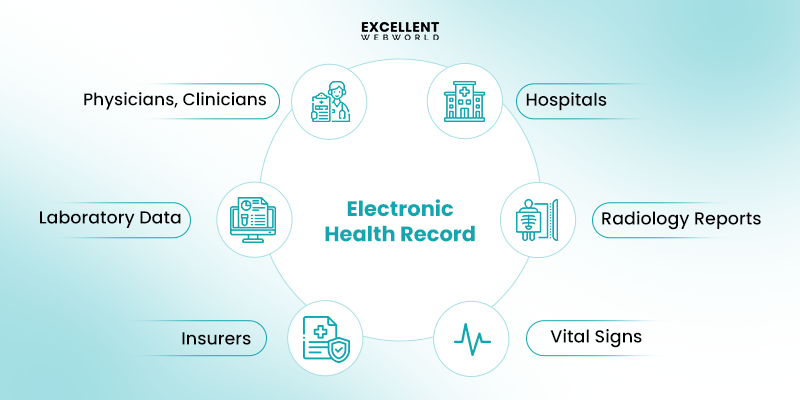
An EHR system (Electronic Health Record system) is a digital repository that centralizes all patient data in one secure, easily accessible place.
Everything, including patient history, diagnoses, medications, lab results, imaging reports (X-rays, MRIs, etc.), clinical notes, and treatment plans, is updated automatically. So, doctors and providers have access to the most recent information about patients through EHR.
What Are the Benefits of Using an EHR System in Healthcare?
The real advantages of an Electronic Health Record (EHR) system include many factors other than the record-keeping of data digitally. The EHR system demonstrates the core benefits of custom software development in the healthcare sector. Let’s explore the top seven benefits of EHR implementation.
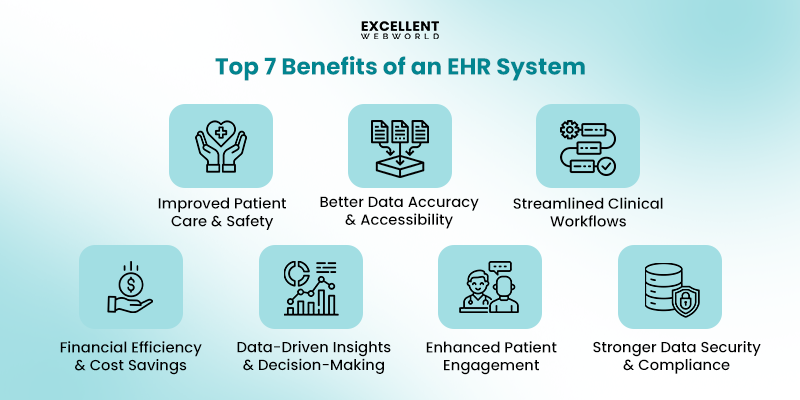
1. Improved Patient Care and Safety
An EHR system can digitally record all the patient data, and it provides healthcare professionals with instant access to the most recent and accurate patient history. This way, medical errors are reduced, and the possibility of duplicate tests is eliminated. The patient health clarity from EHR allows doctors to make faster, data-backed decisions that enhance overall treatment quality and patient outcomes.
Key benefits of using EHR for patient care and safety include:
- Reducing medication errors.
- Avoiding duplicate diagnostic tests.
- Facilitating timely and informed clinical decisions.
- Providing alerts for allergies and drug interactions.
Example: You can check Cerner or Epic as popular real-world examples of EHR systems that ensure patient care and safety at their best.
2. Better Data Accuracy and Accessibility
Centralized EHR system development is meant to organize patient records in a structured and AI-powered real-time format. This makes it easy for healthcare providers to access lab results, imaging reports (X-rays, CT Scans, MRIs), and treatment histories whenever needed to ensure care is consistent and very informed. The benefits of EHR over paper charts are evident in improved accessibility and efficiency. Integrating IoT in healthcare further enhances this by providing real-time patient data from connected devices.
Having accurate data also helps reduce misdiagnoses and prevents the duplication of tests, which can save both time and resources while enhancing patient outcomes.
Expert Insight: “Accurate and accessible data is the backbone of modern healthcare decision-making; that’s why EHR systems matter the most.”
3. Streamlined Clinical Workflows
EHR systems help to free up valuable time for healthcare staff by automating routine tasks such as documentation, appointment scheduling, and prescription tracking. This allows them to utilize precious time focusing on patient care rather than administrative work, and it increases efficiency across various departments.
Seamless workflow integration through EHR ensures that patient information moves quickly between doctors, nurses, and specialists. These benefits of EHR interoperability improve collaboration, reduce delays, and guarantee that every team member is working with the most current information. Observing telehealth trends can provide further insights into optimizing remote patient care.
4. Financial Efficiency and Cost Savings
Among all the benefits of EHR in healthcare, this one reduces redundant tests, billing errors, and manual record handling, which ultimately leads to substantial cost savings. Over time, this efficiency in healthcare organizations translates into better resource utilization and improved financial health.
| Challenges Without an EHR System | How the EHR System Solves It | Cost Benefits of EHR System |
|---|---|---|
| Manual Billing Errors | Enabling Automated Billing & Coding in Medical Billing Software Development | Reduces Revenue Losses |
| Redundant Diagnostic Tests | Centralized Patient Data Storing | Cuts Unnecessary Expenses |
| Administrative Overhead | Streamlining Healthcare Workflows | Frees Staff for Patient Care |
5. Data-Driven Insights and Decision-Making
EHR systems come equipped with analytics tools that help healthcare organizations identify patient trends, evaluate treatment outcomes, and predict potential risks. These powerful insights make care more proactive rather than reactive.
By leveraging AI-powered real-time patient data, providers can implement evidence-based practices, allocate every resource very efficiently, and improve long-term health results.
For instance, new approaches are already using AI in healthcare app development to improve electronic health records by helping to organize and synthesize the massive amounts of data generated. EHR-driven data analytics is a powerful tool for hospitals that aim to elevate both care quality and operational efficiency.
6. Enhanced Patient Engagement
EHR systems mostly include patient portals, allowing patients to access their own medical history, track progress, and communicate with their healthcare providers directly.
This type of transparency with EHR system integration fosters trust, encourages patients to be proactive in their health issues and their care, and strengthens the overall patient-provider relationship.
Overall, Patient portals with EHR systems in patient engagement software make healthcare more transparent and interactive. These benefits of EHR systems include:
- Allowing patients to view their medical records and test results online.
- Enables them to track treatment progress in real time.
- Patients can directly message and connect with their healthcare providers.
- Empowering patients to make informed health decisions on the basis of accurate data.
- EHR-integrated chatbots in healthcare systems manage patient data and provide 24/7 support.
7. Stronger Data Security and Compliance
This one from the benefits of EHR systems is about data security and ensuring compliance. EHR system development integrates advanced security features like encryption, access controls, and audit trails that ensure patient data remains completely protected.
Regulatory compliance like HIPAA helps healthcare organizations avoid legal penalties and maintain patient trust. For organizations looking to build software, opting for HIPAA compliant app development is crucial.
What Are the Role-Specific Advantages of Using EHR Systems for Healthcare Professionals?
Electronic Health Record (EHR) systems do not just improve the capabilities of healthcare overall; they provide targeted advantages for every single role in a healthcare organization. From doctors to patients and administrators to IT teams, each stakeholder experiences measurable enhancement in work efficiency, accuracy, and outcomes.
By understanding these EHR software benefits for healthcare professionals, organizations can see how EHR implementation is essential for modern healthcare operations. It also shows why it becomes one of the best benefits of mHealth apps for healthcare professionals.
| Healthcare Sector Roles | Key Benefits of EHR Systems |
|---|---|
| Benefits of EHR for Doctors/Clinicians |
|
| Advantages of EHR for Nurses/Care Staff |
|
| EHR Software Benefits for Administrators/Billing Teams |
|
| EHR System Advantages for Patients |
|
| EHR Implementation Benefits for IT/Compliance Officers |
Leveraging the benefits of the EHR systems in healthcare app development empowers every stakeholder’s roles and responsibilities to work more effectively. Whether it’s about enhancing clinical outcomes for doctors, reducing administrative burden for staff, or giving patients more control over their healthcare histories and current status, role-specific advantages demonstrate the holistic impact of EHR adoption.
What Are the Common Challenges of Implementing an EHR System, and How Can You Overcome Them?
While there are significant advantages of EHR systems, implementing and using them effectively can come with challenges. Recognizing these hurdles and knowing how to overcome them is key to unleashing the full power and benefits of implementing EHR software.
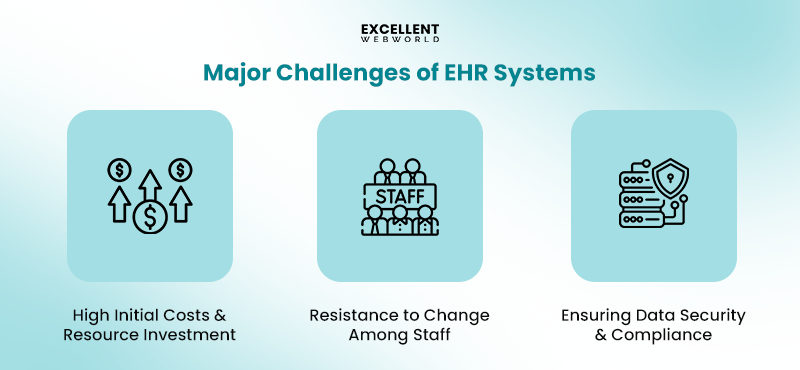
1. High Initial Costs and Resource Investment
EHR system development requires upfront investment in medical software, hardware, and staff training. Smaller practices may find this highly difficult.
Solutions to Overcome This Challenge and Maximize Benefits:
- Start with a scalable system that grows with your business practice.
- Leverage cloud computing in healthcare industry to fully realize the benefits of cloud-based EHR solutions and reduce hardware costs.
- Train staff thoroughly to ensure smooth EHR system adoption and minimal disruption.
2. Resistance to Change Among Staff
Healthcare staff have gotten used to paper records or legacy systems from years of use; that’s why they may resist transitioning to digital workflows.
Solutions to Overcome This Challenge and Maximize Benefits:
- Involve staff from the beginning in the selection and implementation process.
- Provide hands-on training and ongoing support to the healthcare staff.
- Highlight efficiency gains and time saved to encourage more EHR adoption.
3. Ensuring Data Security and Compliance
Protecting sensitive patient data while remaining compliant with HIPAA and other regulations is highly important.
Solutions to Overcome This Challenge and Maximize Benefits:
- Implement strong data encryption and access control measures to protect privacy.
- Conduct regular security audits and compliance checks to prevent cyberattacks.
- Collaborate with cybersecurity services providers like Excellent Webworld to prevent cyberattacks and integrate compliance securely.
What Makes EHR Systems a Game-Changer for Modern Healthcare?
Electronic Health Record (EHR) systems have transformed how healthcare organizations operate and help patients and providers. As we’ve seen, understanding what are the benefits of EHR systems is key. The benefits include improved efficiency, accuracy, and patient satisfaction. From seamless data access to enhanced coordination between departments, EHRs have become the backbone of modern medical practices. As a provider of software development services, we know an EHR system’s true potential is still unlocked only when designed with a focus on usability, security, and scalability, ensuring that every click leads to better care outcomes.
As a leading healthcare software and healthcare app development company, we believe the future belongs to those who invest in intelligent, interoperable EHR solutions today. Whether you’re a startup clinic or an established hospital wanting to build a customized EHR system, we are your one-stop solution. We help you craft an EHR system that can give you the competitive edge to deliver superior patient experiences while meeting compliance and innovation goals. The healthcare industry is evolving fast, and now is the time to evolve with it. Connect to grab the opportunities with the EHR system benefits.
Frequently Asked Questions (FAQs) About EHR Systems
Opting for an in-house EHR or buying an existing EHR system completely depends on your needs. Building an in-house EHR system offers customization and control, while ready-made solutions are faster to deploy and cost less upfront.
EHRs provide instant access to complete patient histories, reduce errors, and help doctors make informed, data-driven treatment decisions without confusion.
Doctors, nurses, administrators, patients, and IT/compliance teams all benefit from improved healthcare organization workflows, accurate data, and streamlined communication.
Yes, modern EHR systems use data encryption, access controls, and audit trails to ensure HIPAA and GDPR like healthcare compliance and protect sensitive patient data.
Absolutely. By reducing manual workload, avoiding duplicate patient tests, and improving medical billing accuracy, EHR systems help save time and healthcare organization operational costs.

Article By


Mahil Jasani began his career as a developer and progressed to become the COO of Excellent Webworld. He uses his technical experience to tackle any challenge that arises in any department, be it development, management, operations, or finance.