Have you ever lost a sale because your store showed an item in stock, but your warehouse said otherwise? That’s the daily chaos of modern eCommerce order management.
As a software development company, we’ve helped over 100+ online brands streamline their operations. We’ve seen how an inefficient eCommerce order management software can slow fulfillment, confuse teams, and disappoint customers.
With omnichannel sales, real-time inventory sync, and rising customer expectations, managing orders is no longer just about tracking shipments; it’s about ensuring seamless coordination across every platform.
Most growing businesses struggle with disconnected systems, one for storefronts, another for warehouses, and a third for returns. The result? Delays, manual errors, and poor customer experiences.
By 2026, the global eCommerce order management software market is projected to surpass billions in value, driven by the rise of automation, AI-driven inventory tools, and cross-channel integration demands.
In this guide, we’ll break down how to choose the best eCommerce order management software, drawing from our client implementations, performance data, and the lessons we’ve learned helping fast-growing brands scale with confidence.
What Is an Order Management System (OMS) and Why Does It Matter
An eCommerce Order Management System (OMS)—often referred to as order management software is the backbone of how online businesses handle everything after a customer clicks “Buy.” It tracks every order from purchase to delivery, syncing data across your website, inventory, shipping, and returns.
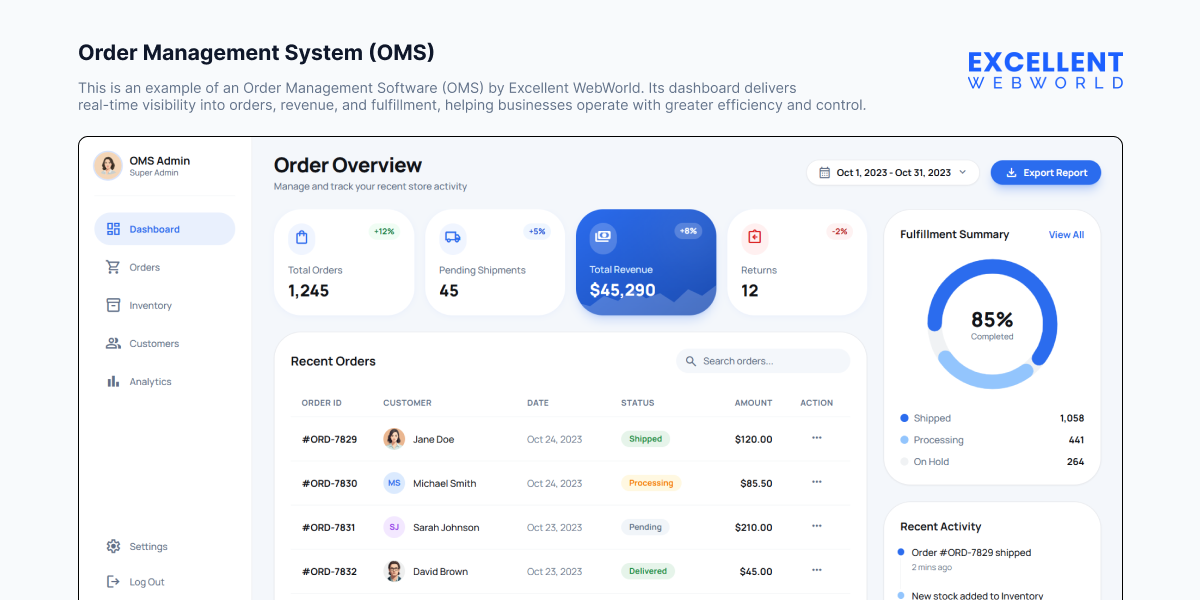
In simple terms, eCommerce OMS keeps your operations organized so you don’t oversell, lose track of shipments, or frustrate customers with delays.
In practice, an OMS bridges the gap between your storefront, warehouse, and customer.
That’s why modern eCommerce order management isn’t just a tool; it’s the system that keeps your business running smoothly behind the scenes.
Also Read: Quick Commerce vs eCommerce: What Are the Key Differences?
How We Evaluated These eCommerce OMS Platforms?
Choosing the right order management software for eCommerce isn’t about reading feature lists; it’s about understanding how each platform performs in real-world business environments. That’s why our review is based on hands-on testing, actual client feedback, and integration experience from our past implementations.
When comparing different eCommerce order management software, we focused on six key factors that truly impact day-to-day performance:
Our evaluation of order management solutions for eCommerce combines both data and hands-on experience. We’ve implemented OMS tools across retail, D2C, and logistics domains, integrating them with warehouse automation technology and ERP modules. Through our eCommerce consulting services, we’ve gained the expertise to evaluate and recommend the best eCommerce OMS platforms for diverse business models.
Also Read: Benefits of AI in eCommerce
8 Best Order Management Software Solutions for 2026
You already know what an OMS does, now it’s time to see which platforms actually deliver on those promises. Below, we’ve rounded up the best eCommerce order management software in 2026, tested and trusted by growing brands.
Here’s a breakdown of these top 8 order management software solutions, with key features, pros and cons, pricing, and ideal users.
1. Salesforce Commerce Cloud
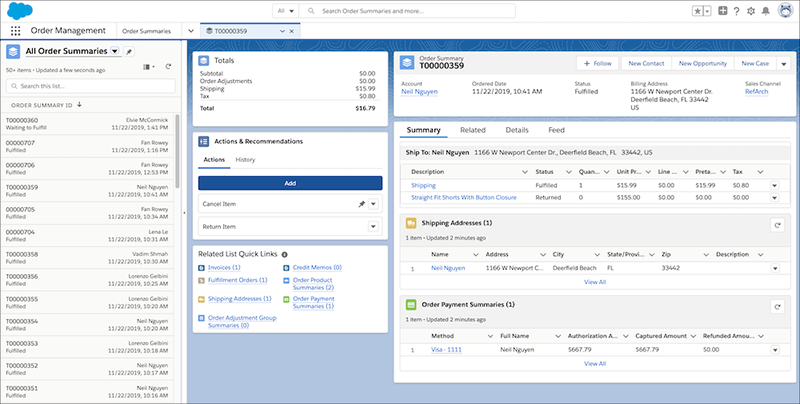
Salesforce Commerce Cloud is enterprise-grade software for ecommerce order management with AI-powered insights and omnichannel support.
Key Features:
2. Shopify
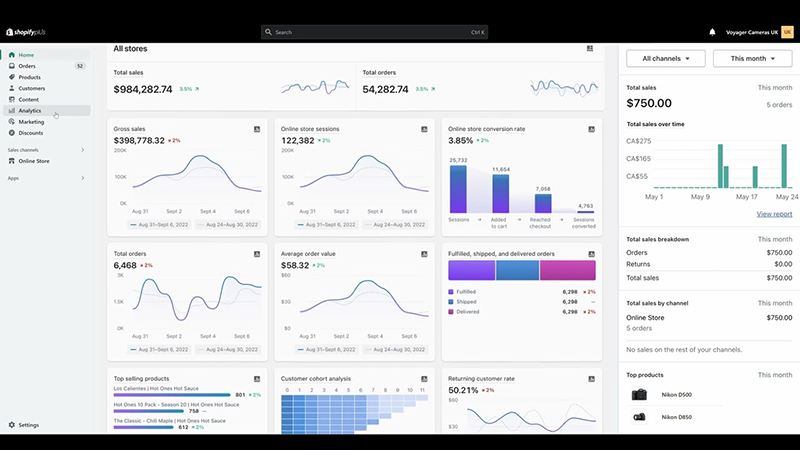
Shopify’s built-in eCommerce order management software simplifies online sales, fulfillment, and inventory tracking.
Key Features:
3. Katana
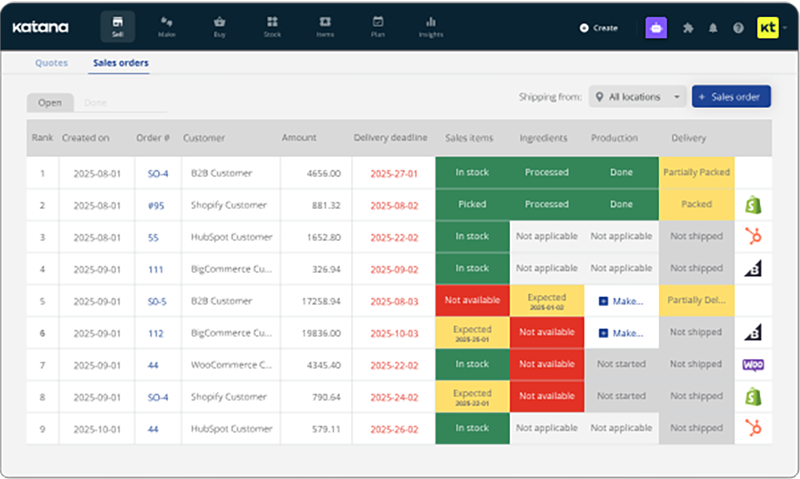
Katana is a modern order management system software for manufacturers and D2C brands.
Key Features:
4. Finale Inventory
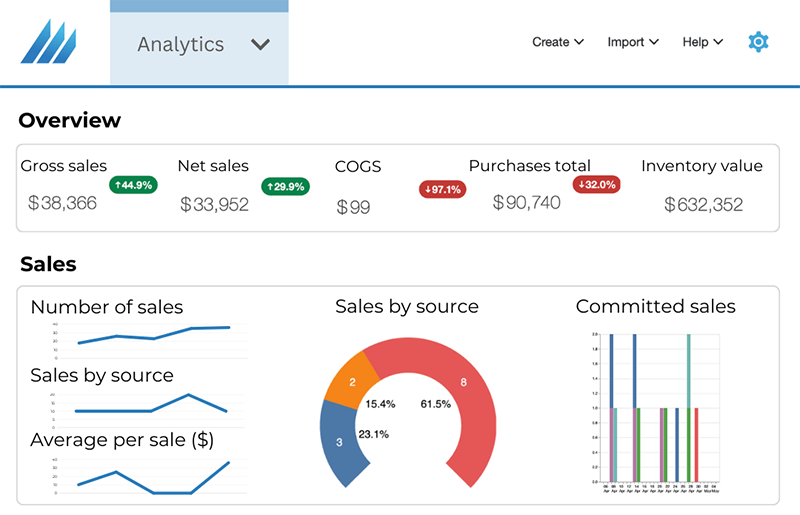
Finale Inventory is a cloud-based retail order management software that works seamlessly with any warehouse management system for high-volume sellers and warehouses.
Key Features:
5. QuickBooks Enterprise
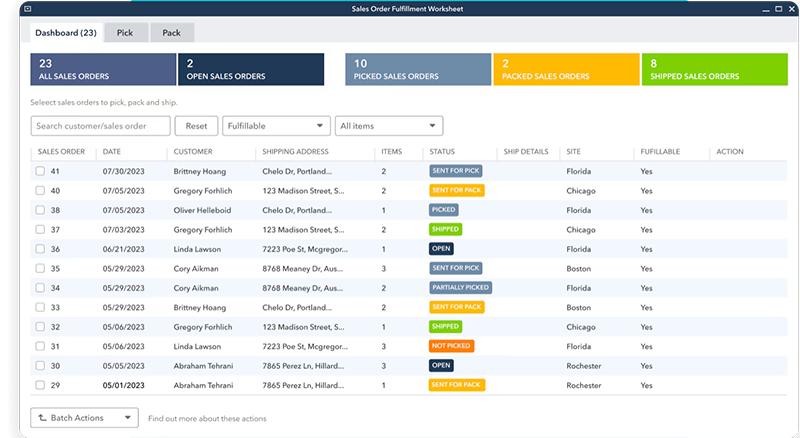
QuickBooks Enterprise combines accounting with work order management software, ideal for medium and large eCommerce businesses.
Key Features:
6. Brightpearl
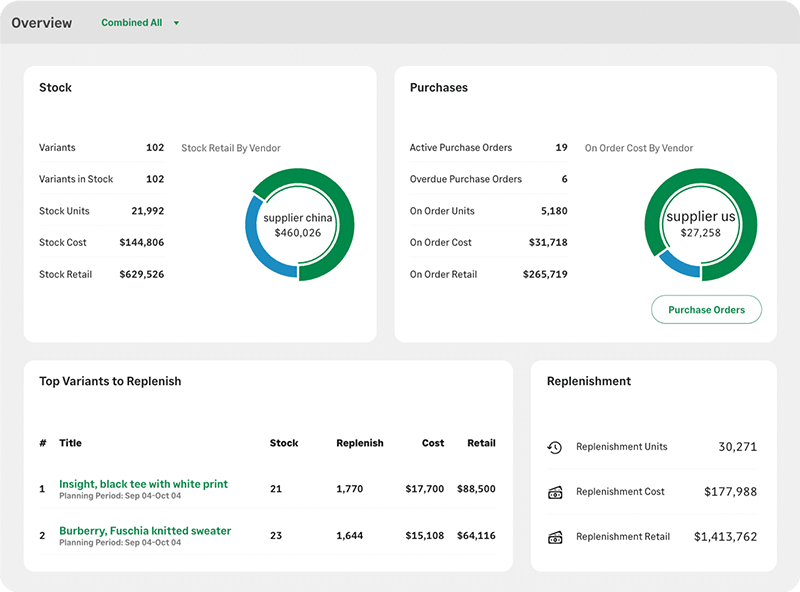
Brightpearl offers powerful retail order management software for omnichannel retailers.
Key Features:
7. ShippingEasy
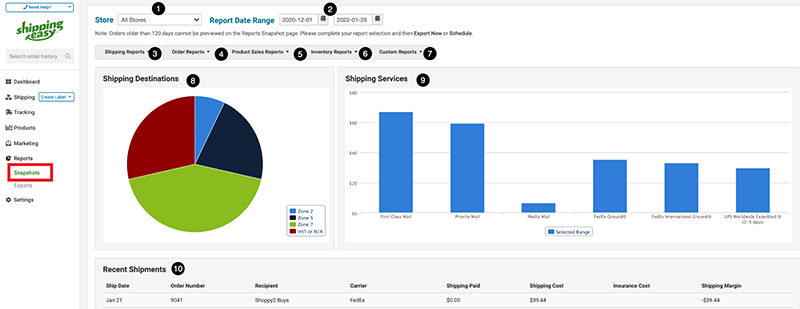
ShippingEasy is one of the best eCommerce order management software designed for small to mid-sized online stores, aligning with the latest eCommerce Trends to streamline shipping, tracking, and customer notifications.
Key Features:
8. Shippo
Shippo provides flexible supplier order management software for businesses needing automated shipping and real-time tracking.
Key Features:
Let’s chat and plan what’s best for your business.
Feature Comparison of the Best eCommerce OMS Platforms
Choosing the right software for an order management becomes easier when you compare features side by side. Below is a quick reference table highlighting the strengths, integrations, pricing, and automation capabilities of the leading OMS platforms.
Whether you’re a small retailer, a manufacturer, or an enterprise, this comparison table will help you decide which order management software fits your business needs best.
| Software | Target Business Size | Integrations | Automation & AI Capabilities |
|---|---|---|---|
| Salesforce Commerce Cloud | Mid-to-large enterprises | Salesforce CRM, ERP systems, marketing tools | AI-powered order routing, predictive analytics, and personalized commerce automation |
| Shopify | SMBs & growing eCommerce brands | Amazon, eBay, social platforms, payment gateways | Smart inventory management and automated fulfillment tracking |
| Katana | Small to mid-sized manufacturers | QuickBooks, Xero, Shopify, WooCommerce | Real-time production scheduling and purchase order automation |
| Finale Inventory | SMBs & wholesalers | Amazon, eBay, ShipStation, QuickBooks | Automated reorder points, batch tracking, and low-stock alerts |
| QuickBooks Enterprise | Small to mid-sized businesses | Salesforce, HubSpot, Shopify | AI-supported order-to-invoice automation and report generation |
| Brightpearl | Retail & wholesale businesses | Shopify, BigCommerce, Amazon, eBay | Retail order management automation and AI-based demand forecasting |
| ShippingEasy | eCommerce & retail SMBs | USPS, UPS, FedEx, Shopify, WooCommerce | Automated label printing and batch shipping workflows |
| Shippo | SMBs & logistics startups | Shopify, Wix, Squarespace, eBay | Smart carrier selection and shipment tracking automation |
Quick Takeaway:
Ready to build AI-powered order management capabilities? Check out our AI Development Services.
How to Choose the Right Order Management Software for Your Online Business
Choosing the right order management software can make or break your business operations. With so many options in the market, the key is to find one that fits your workflow, budget, and growth goals.
Here are the main factors to consider when comparing order management system software:
Decision Matrix: Choosing OMS Based on Business Type
| Business Type | Recommended Focus | Example Solution Type |
|---|---|---|
| Small Retailers | Easy setup, low cost, basic reporting | Cloud-based OMS (e.g., Zoho Inventory) |
| eCommerce Startups | Channel sync, real-time tracking | Multi-channel OMS (e.g., ShipBob) |
| Growing SMBs | Automation, integration, scalability | API-friendly OMS (e.g., Cin7, Brightpearl) |
| Enterprises | Advanced analytics, custom workflows | Enterprise OMS (e.g., NetSuite, SAP) |
Pro Tip: If you’re an SMB, start small with a flexible system that grows with you. Enterprises, on the other hand, should prioritize deep integrations and analytics for full visibility.
The right order management system software won’t just manage your orders; it will help your entire business run smarter, faster, and more efficiently.
Common Mistakes to Avoid When Selecting an OMS
Choosing the best order management system for e-commerce isn’t just about finding something that looks good or fits your budget. Many growing brands make early decisions that later limit their scalability and efficiency. Based on our real project experience, here are the most common mistakes to watch out for when selecting an ecommerce order management system:
Choosing based only on price or UI: A clean interface doesn’t always mean long-term performance. Many teams pick tools that look simple but struggle once order volumes rise or integrations grow complex.
Ignoring integration limits: An OMS that doesn’t connect smoothly with Shopify, Amazon, or your ERP can cause endless syncing errors.
We’ve had to replatform clients because their OMS couldn’t handle channel-level inventory sync
Not planning for multi-location fulfillment: If your system does not support multiple warehouses or regional shipping rules, scaling becomes painful later. It’s best to choose flexible e-commerce order management software that grows with your network.
Overlooking support and API ecosystem: A strong OMS isn’t just about features; it’s about reliable support, active API documentation, and developer flexibility. Ignoring this often leads to hidden integration costs down the road.
Build vs. Buy: When to Consider Building a Custom Ecommerce Order Management Software
As eCommerce operations expand, many businesses realize their off-the-shelf order management tools can’t keep up. These systems often struggle with complex fulfillment logic, like handling multiple brands or regions, while falling short on customization and integration needs. When your ERP, WMS, CRM, and marketplace data don’t talk to each other smoothly, efficiency takes a hit.
This is where understanding the Build vs Buy Software approach becomes crucial, knowing when to invest in a custom software development versus opting for a ready-made tool can define your operational success. A custom eCommerce order management system gives your business total control, integrating advanced technologies like IoT in logistics for real-time shipment tracking. These features not only improve visibility but also reduce manual workload and human error across your entire order management cycle in eCommerce.
Why Choose Excellent Webworld for the Best Order Management Software Solutions?
We hope this guide helped you understand what makes great eCommerce order management software and how to choose one that aligns with your business goals.
If you’re exploring tailored software development for industries like healthcare, logistics, entertainment, or eCommerce, Excellent Webworld can help you build exactly what you need through its expert ecommerce development services.
With 13+ years of experience and 900+ successful projects, our team specializes in delivering scalable and intelligent software management solutions. Let’s create a platform that simplifies your operations and accelerates your business growth.
Partner with one of the top software development companies, and let’s build your next success story.
FAQs: Expert Answers to Your eCommerce OMS Questions
In 2026, top choices include Shopify Plus, NetSuite, Brightpearl, and Zoho Inventory. But the “best” one depends on your business size, sales channels, and custom needs. Many growing eCommerce brands also prefer custom-built OMS solutions for better scalability and control.
An OMS helps you track, process, and fulfill customer orders from multiple sales channels in one place. It handles inventory updates, shipping, returns, and payments, keeping everything in sync across your store and warehouse.
An OMS focuses on managing orders and inventory, while an ERP covers your entire business, including HR, finance, and operations. Think of OMS as one part of an ERP that’s fine-tuned for eCommerce order flow.
Key features include:
Yes, if your business has unique workflows or multiple sales channels. A custom OMS gives you full control, better scalability, and seamless integration with your existing tools, unlike off-the-shelf platforms that can be limiting.
A ready-made OMS can cost 50–300 USD per month. But if you want a custom-built solution, expect anywhere from 15,000 to 80,000 USD, depending on features, integrations, and complexity.
Platforms like Shopify, Magento, WooCommerce, and BigCommerce come with basic OMS features. However, for advanced needs, like bulk order routing or multi-warehouse management, you may need a third-party or custom OMS.
Avoid these pitfalls:
If your team struggles with manual tracking, delayed updates, or channel mismatches, it’s a clear sign your current OMS has reached its limit, and it’s time to scale.

Article By


Mahil Jasani began his career as a developer and progressed to become the COO of Excellent Webworld. He uses his technical experience to tackle any challenge that arises in any department, be it development, management, operations, or finance.