Renting a home can be a bothersome affair. Listings are scattered. Owner responses are slow. Pricing is unclear. Landlords struggle to attract verified tenants and handle multiple communication channels. This is a big gap entrepreneurs can fix by building a rental search app that delivers trust, accuracy, and speed on a single platform.
Apps like Zillow, Trulia, Realtor.com, Redfin, Apartments.com, and Zumper have reshaped user expectations. Their rise proves that AI in real estate enhances the rental experience through automated fraud detection and personalized home recommendations. This trend is growing across the GCC, with digital-first property search accelerating in the UAE, Saudi Arabia, Qatar, and Bahrain.
If you are exploring how to build an app like Zumper, partnering with an experienced real estate app development company like ours can help you validate your concept, select the right tech stack, and build a platform that stands out.
This guide explains how Zumper works, highlights essential features, outlines the user workflow, and provides cost estimates to launch your rental search product.
How a Rental Marketplace Actually Works?
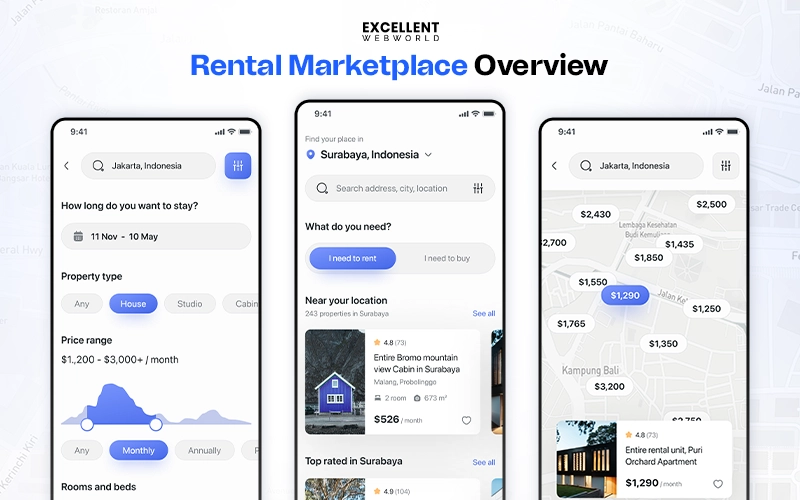
A rental marketplace apps works only when every user knows what to do, and every action moves the process forward. This section outlines a transparent workflow to help you develop a rental property app from a practical, system-level perspective.
Renter journey:
A renter opens the app, searches by budget, location, and amenities, then views verified listings. They schedule visits or send instant inquiries. The renter receives alerts, completes digital applications, and secures a unit. This is where app like Zumper development focus on trust, speed, and accuracy.
Landlord or agent journey:
They create listings, upload documents, and set pricing. They respond to inquiries, approve applications, and manage availability. For many owners, this becomes part of their digital transformation in the real estate industry, since the platform replaces manual calls and endless spreadsheets.
Admin workflow:
The admin panel keeps everything stable. Admins verify listings, review user activity, manage fraudulent reports, and maintain pricing rules. They also monitor conversations and performance analytics to ensure a smooth ecosystem, which is essential in real estate rental app development.
Zumper Rental Application — Taking the Stress Out of Renting
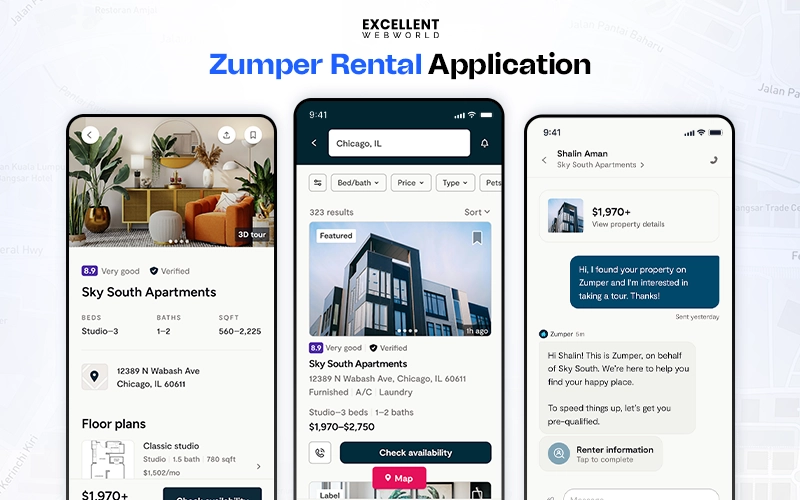
Founded in 2012 by Anthemos Georgiades, Zumper has become one of the most successful startups, having raised more than 143 million dollars in funding. The app enables tenants to search for desired homes in the regions they wish to rent. Meanwhile, the platform also provides landlords with a robust system to find millions of qualified, trusted tenants, which reflects the strengths of modern rental marketplace app development.
No doubt, the house rental app Zumper lags behind the top real estate apps in revenue. But money isn’t everything, and millions of users still rely on this app to meet their needs. This continued trust is a strong indicator of what matters when planning a rent finder app development for new products.
While comparing Zumper and Zillow on the independent review site G2, we found some notable findings worth sharing:
- Reviewers on this site rated the Zumper rental application as their preferred option for quality of service and ongoing product support.
- They also said that “Zumper meets the needs of businesses better than Zillow.”
- You can view the full Zillow vs. Zumper comparison on G2.
For teams building similar solutions, working with an experienced mobile app development company can ensure the right features, scalability, and user experience from day one.
What Makes Zumper the Best Rental Search App —Top Features
Zumper is a top choice for quality service and meets business needs. But have you ever wondered what keeps Zumper thriving? When you know this, you know the secrets of success. So, let’s reveal it.
Features Built on Customer’s Pain Points
Zumper became a leading online rental platform by solving real problems for renters and landlords. Your app should reduce friction, build trust, and simplify the rental process. Here are seven key pain points Zumper addresses.
Pain Point 1: Hard to Find Affordable, Accurate, and Verified Listings
Renters often struggle to find homes that match their budget, desired location, and lifestyle. Listings are sometimes outdated or missing key details, making the search frustrating.
Zumper’s solution:
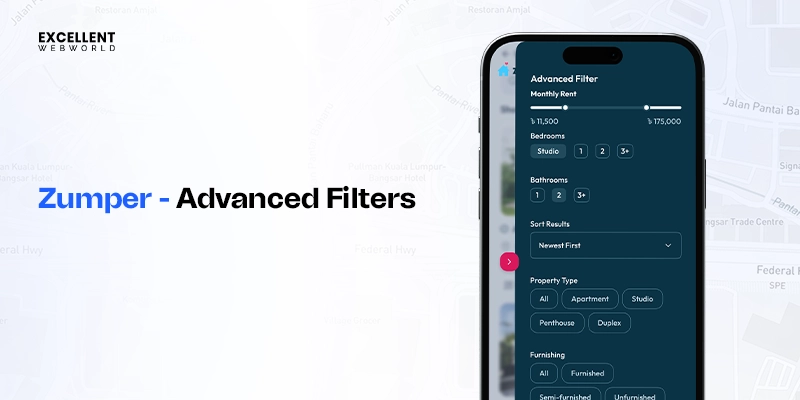
Zumper provides advanced filters, map search, and geolocation to help users explore neighbourhoods in detail. School ratings, transit, safety, and amenities are clear. Real-time listing updates provide accurate information, which is essential for apartment finder app development.
Pain Point 2: Unclear or Incomplete Property Details
Key images, floor layouts, and descriptions are often absent from listings. Poor-quality images make it difficult to assess properties and reduce platform engagement and confidence.
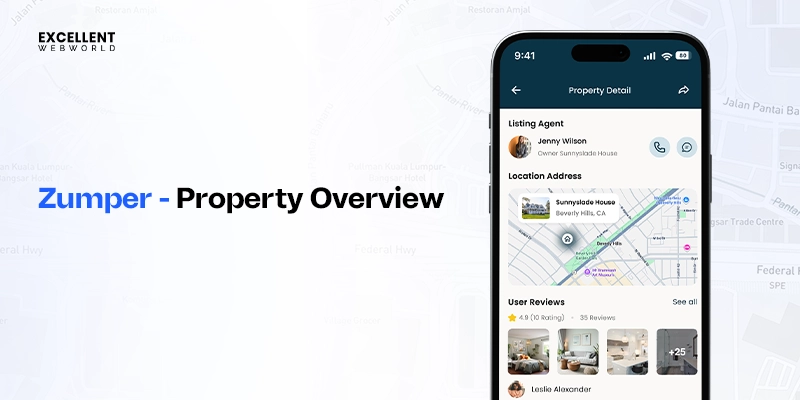
Zumper’s solution: Each property includes HD images, 3D walkthroughs, videos, and clear floor plans. Structured descriptions show amenities and key details. You make faster, informed decisions and cut unnecessary site visits when information is complete.
Pain Point 3: Slow and Scattered Communication
Renters face slow replies from landlords and agents. Missed messages add stress. This leads to frustration and lost time for both sides.
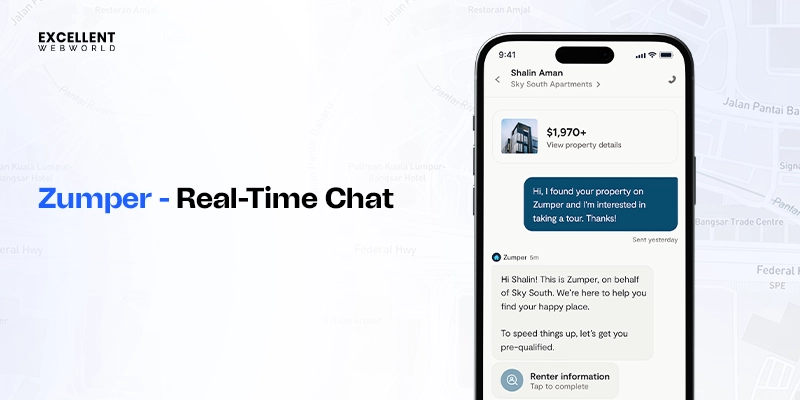
Zumper’s solution: Secure in-app messaging and real-time chat keep your communication active. You schedule tours, ask questions, and confirm availability without delays. These steps build trust and reduce drop-offs for renters.
Pain Point 4: High Fraud Risk and Safety Concerns
Fake listings and fraudulent landlords pose risks to renters. Many fear losing money or falling for scams. Trust drops when platforms fail to verify details or show clear proof.
Zumper’s solution: Zumper verifies listings and runs background checks. The platform protects deposits. Users and landlords leave reviews for each other. Admin tools track activity and flag suspicious behaviour, supporting modern standards for property listing app development.
Pain Point 5: No Easy Way to Compare or Track Properties
Renters often take screenshots or notes to remember potential homes. Managing multiple options across neighbourhoods can be confusing.
Zumper’s solution: Saved searches, favorites, alerts, and history help you track options with less effort. You compare listings faster. New listing and price-drop notifications provide quick updates so you can respond promptly.
Pain Point 6: Complex Leasing and Application Process
Paper forms slow your process. Emails delay decisions. Manual checks pull time away from real work. Renters and landlords waste hours completing tasks that should finish in minutes.
Zumper’s solution: Digital applications, e-signature support, and online deposits simplify the entire leasing flow. Users submit documents once and reuse them across multiple applications, reducing friction and accelerating decisions.
Pain Point 7: Lack of Personalization and Intelligence
Most rental apps show generic listings, forcing users to scroll endlessly. Fraud detection and recommendations are often missing.
Zumper’s solution: AI personalizes search results based on user behavior, preferences, and budget. It also flags suspicious listings and predicts price trends. Integrating AI development services ensures users get relevant, safe, and accurate recommendations.
Zumper Marketplace Business Model
Both renters and landlords can benefit from the Zumper rental application. Its goal is to transform renting by making it easy and stress-free for all. Zumper is the most profitable company because it finds and rents homes and renters with ease, enabling it to generate profits more quickly than its rivals.
Let’s explore Zumper’s real estate marketplace business model and how it generates revenue:
- Tenants make searches for a home with the Zumper app
- Renters/Tenants apply for rent in particular locations
- Zumper requests required details from tenants, including their information, rental history, and credit report
- Zumper shares the details with landlords
- Landlords check the tenants’ details and give their confirmation to Zumper
- Zumper shares the details with landlords to ensure applications are processed securely and efficiently.
- Zumper fees are paid by renters for applications and by landlords for listings, much like businesses evaluate property management software costs when choosing digital solutions.
Our software development services help businesses build similar high-performance platforms tailored to their exact workflow needs.
Reasons You Should Develop a Zumper-Like Rental App
The rental property market is changing faster than before. By 2032, the global market is projected to reach $65.90 billion, driven by urban migration, rising rental demand, and growing demand for flexible living. It’s pushing millions toward digital platforms. This is the moment to build a rental app that captures new opportunities in the future of real estate.
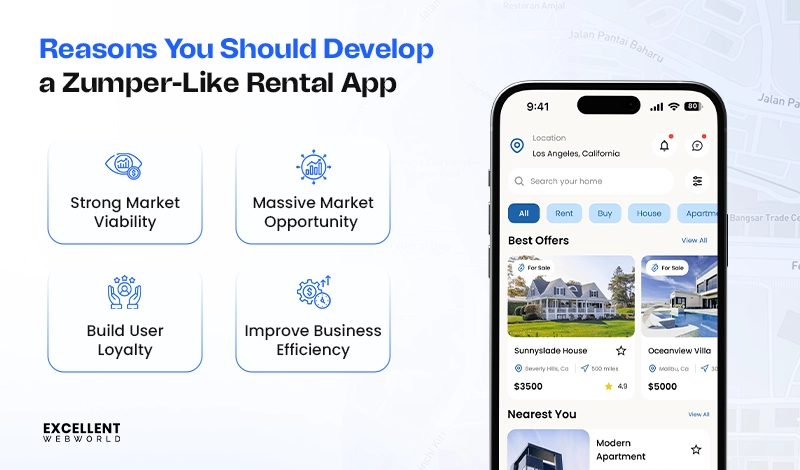
1. Strong Market Visibility
Renters and landlords will never forget your brand because people use their phones more than 100 times a day. Your logo, features, and value will stay at the forefront of users’ minds with a well-designed rental app. This continuous recall increases visibility and establishes your platform as a reliable choice.
2. Massive Market Opportunity
Urban renters move more often, so they search online for speed and clarity. Job mobility and migration push this shift. Over 60% browse and book on mobile for verified listings and simple workflows. You reach these renters faster when your platform loads quickly, shows precise details, and supports secure communication from search to booking.
3. Build User Loyalty
Renters keep apps that deliver value. You offer verified listings, fast replies, custom alerts, virtual tours, and clean communication, so users return often. This loyalty builds a decisive advantage. AI in app development adds personalization, fraud detection, and precise matching to help you increase user retention and drive steady growth.
4. Improve Business Efficiency
A rental app connects you with renters who search with intent. You get stronger leads through filters, saved searches, and alerts. You track user behavior with analytics. Centralized messages help you reply faster. Automated workflows cut manual work and reduce costs. You handle more inquiries with less effort.
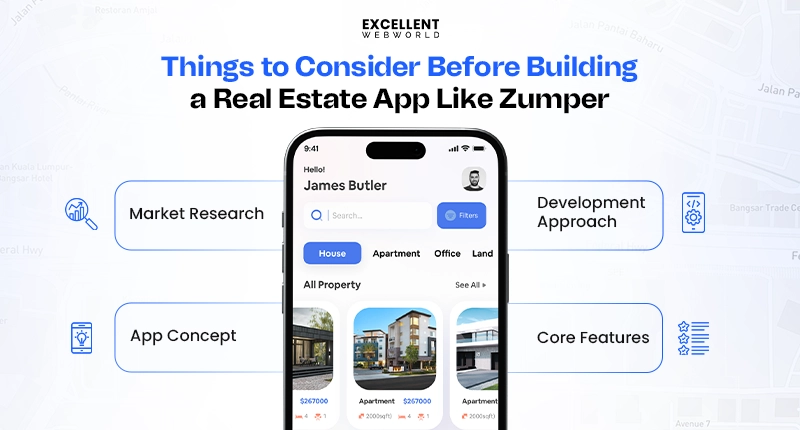
Things to Consider Before Building a Real Estate App Like Zumper
So, you are all determined to build and launch your real estate app? Building the best rental search app seems complicated at first glance, but it’s pretty easy, especially when you follow the steps given below.
1: Market Analysis
Anything without proper market analysis will result in indecision and inaction. Do you not want to know?
- Who are you creating this app for?
- What do they want to see in your app?
- What problems are they facing with other similar apps?
- How will you solve the issues?
- Unless you go through these questions, you can’t expect to build an engaging app. The best way to find solutions for all these unsolved questions is to “research.”
Research your real estate market, competitors, strengths and weaknesses, and define your audience.
List some of the greatest real estate applications, including Redfin, Trulia, apartments.com, and Realtor.com. Learn how these applications gained popularity and what distinguishes them. Now, thoroughly examine these apps and highlight the issues they fail to address for tech-savvy people.
Now, you also need to think over the solution. It could be anything: features, services, security, safety, usability, and more. Make a list of solutions; it will help you when you build a rental search app.
2: Brainstorm Over App Concept
How well your app resolves the issue will determine its success. You must decide whether to focus on a specific offering, such as a rental service, or to provide comprehensive real estate services for real estate apps. If you are clear on your real estate business idea, the app will be built around it.
But the key is what sets your app apart from competitors. This is undoubtedly not an easy part. But this is where your market research will help you differentiate your app from others. All you need to do is ensure your app addresses the issues customers have with their current real estate apps.
3: Consider Development Approach
Selecting the development strategy you want to use is the next step. The development approach should be based on your budget and time. Each development approach has its own benefits and challenges.
For example;
If you want to go with the budget optimization approach, you have two options to explore;
- Hire Freelancers
- Go with Clone Solutions
Hire freelancers: Hiring freelancers is more cost-effective; however, there will be challenges. Consequently,
- If you know how to use technology
- Recognize the specifics of developing real estate apps and effectively lead a team that works remotely across time zones.
- Ready to delay your project
Freelancers could be an option for you.
Clone Solutions: Clone app solutions are the best available option for saving money and launching your project faster. Yes, you can get a Zumper clone app development within a week, though there is some risk.
For example, if your clone solution;
- Fails to impress your target audiences
- Doesn’t have all the required features
- Has an inferior and buggy UI/UX
Clone app solutions come with a limited set of features and predefined UI/UX. With limited flexibility to add custom features, designs, or other elements, this could create issues later on.
Now, if you have the funds, time, and want to offer the most excellent app for renting flats, you can choose to use:
Development of custom apps: You get a reliable solution that lasts longer and saves money over time, but it’s somewhat expensive and time-consuming
4: Think about the Features You Need for a Rental Search App
The next most important step is deciding which features to include in your rental application. Utilize your analysis and study to incorporate the optimal feature set. Nonetheless, you might think about adding a few standard features to your app. They include;
| Tenants Panel | Landlord Panel | Admin Panel |
|---|---|---|
| Onboarding | Sign Up | Onboarding | Sign Up | Dashboard |
| Search & Filter | Add/Edit Home Information | User management |
| Location | Price | Listing database |
| Price range | Address | Complaint management |
| Rental types (condo, single, family home) | Photos | Real-time chat |
| Extra facilities (laundry, parking, pool, balcony, etc.) | Monthly rent | Notifications |
| Map | Home size, number of rooms | |
| Property in-depth information | Property type | |
| Reviews | Owner/agent description | |
| Real-time chat | List of amenities | |
| Contact us | Check the tenant’s details | |
| Collect rent | ||
| Send invoices | ||
| Notifications | ||
| Real-time chat | ||
| Contact us |
A detailed study on how digital transformation in real estate market has caused market growth.

How Much Does It Cost to Build an App Like Zumper
The cost to build an app like Zumper depends on multiple factors, like features, platforms, and team location.
- Simple MVPs with core property listings, search, filters, and basic authentication typically range from $11,000 to $50,000, depending on scope.
- Mid-level real estate apps with maps, saved searches, chat, notifications, and basic admin panels typically range from $50,000 to $100,000+.
- Full-featured, scalable marketplaces with advanced analytics, payments, AI recommendations, or virtual tours can exceed $100,000–$250,000+.
A team cost breakdown typically includes UI/UX design, frontend and backend developers, QA/testing, and project management – each priced differently by region. Hourly rates in North America are often $80–$140/hr; in Europe, around $35–$80/hr; and in Asia/India, $15–$50/hr, which directly affects rental app development costs.
If you build separately for Android and iOS, the “Android app development cost” and “iOS app development cost” add up, compared with cheaper cross-platform approaches like Flutter.
Other elements influencing price include data security/compliance, third-party integrations (maps, MLS/APIs), and ongoing maintenance (often 15–20% of the initial build per year).
Ready to Build a Zumper-Like Rental App?
As the global population grows, the demand for affordable rental housing continues to surge, creating exciting opportunities in the real estate tech sector. If you’re considering developing a rental app, now is the time to bring your idea to life. To ensure success, it’s essential to conduct thorough market research, create a clear MVP strategy, and address compliance requirements.
With the right MVP development services, you can quickly validate your concept and build a scalable platform that meets user needs. Whether you’re just starting or refining your app’s direction, we can guide you through the process.
Excellent Webworld is a leading software and mobile app development company with 15+ years of expertise and 900+ successfully delivered projects. Our proven experience have helped startups and enterprises build scalable, market-ready digital solutions with confidence. Reach out to us for a scoping call to discuss how we can turn your vision into a thriving business.

Article By


Paresh Sagar is the CEO of Excellent Webworld. He firmly believes in using technology to solve challenges. His dedication and attention to detail make him an expert in helping startups in different industries digitalize their businesses globally.