How do you turn a simple idea into the next payment revolution? You may have the same entrepreneurial fire as the founders of today’s digital payment giants. However, when you sit down to find out how to create a digital wallet, the technical maze can seem overwhelming.
But don’t you worry, as the most successful digital wallets started with simple concepts:
PayPal began in a cramped office with two programmers trying to beam money between Palm Pilots. Venmo started as a way for college friends to split dinner bills. Cash App? A simple idea to make sending money as easy as texting.
Today, they process trillions of payments globally.
Here’s what every fintech giant discovered: Creating a successful digital wallet app starts with asking the right questions, not having all the answers.
This guide contains the framework our consulting team uses with fintech startups. You’ll learn which features drive real user adoption, how AI-powered security builds instant trust, and why smart cloud infrastructure choices separate winners from failures.
What is a Digital Wallet?
A digital wallet is a software app that stores your payment cards, IDs, and tickets on your phone or computer. You pay at stores by way of tapping your device or shop online without typing the card info every time.
Think of it as your virtual wallet. Instead of carrying plastic cards, the whole lot lives in one secure app on your device.
Modern mobile wallet application development focuses on this seamless experience.
Some of the most popular digital wallets are as follows:
These success systems show that when you build a fintech app, a user-friendly layout beats complex capabilities every time.
How does a Digital Wallet Work?
Your digital wallet implementation starts with understanding the core workflow. Here’s how your users will experience transactions when you build a digital wallet:
- User Registration: Your app collects basic details and links bank accounts or cards through secure APIs
- Authentication Setup: Users create PINs, biometric locks, or passwords for transaction security
- Payment Method Addition: Credit cards, debit cards, or bank accounts get tokenized and stored securely
- Transaction Initiation: Users select a merchant, scan QR codes, or tap NFC-enabled devices
- Authorization Process: Your system verifies user identity and checks the available balance instantly
- Payment Processing: Encrypted data travels through payment gateways to complete the transaction
- Confirmation & Receipt: Both parties receive instant notifications with transaction details
Your wallet app development success depends on making these steps seamless. Each phase needs robust cloud infrastructure and AI-powered fraud detection to build user trust.
Technologies Employed by Digital Wallets for Transactions
QR Codes
- Most cost-effective option for your MVP launch
- QR code payments work on any smartphone camera without extra hardware
- Perfect for small merchants who can’t afford expensive POS systems
- Your team can integrate QR functionality within days using existing APIs
NFC (Near-Field Communication)
- NFC payments offer the fastest checkout experience for users
- Requires compatible hardware but delivers a premium user experience
- Best NFC payment apps leverage this for contactless transactions under $100
- Essential for competing with Apple Pay and Google Pay in developed markets
MST (Magnetic Secure Transactions)
- Backward compatibility with traditional card readers
- Generates magnetic signals that mimic card swipes
- Useful for markets where merchants haven’t upgraded payment terminals yet
UPI (Unified Payment Interface)
- Game-changer for Indian and similar markets
- Enables direct bank-to-bank transfers without storing card details
- Reduces your compliance burden while offering instant settlements
- Perfect foundation for your fintech ecosystem expansion plans
What are the Key Benefits of Digital Wallet Development?
Digital wallets offer game-changing advantages that directly impact your startup’s bottom line and user growth. Let me break down why investing in e-wallet development makes business sense.
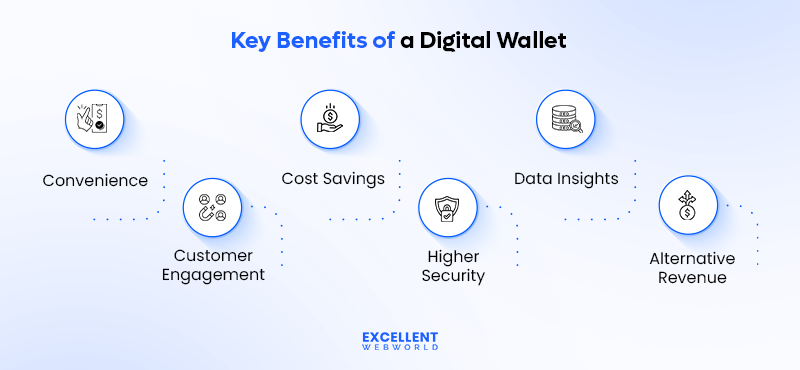
Increased Conversion Rates
Mobile conversion rates jump by 70% when you offer wallet payments. Users complete purchases more quickly without having to retype card details. This speed translates to a higher volume of completed transactions.
Convenience
Convenience drives user retention. Your customers store multiple payment methods in one secure place. They pay with a single tap, making your app their go-to choice over competitors.
Customer Engagement
Customer engagement increases through the use of push notifications and personalized offers. When users see relevant deals based on their spending patterns, they return more often. It creates a sticky user experience that rivals the best mobile payment apps.
Cost Savings
You achieve cost savings through reduced transaction fees compared to traditional payment processors. When you learn how to create a mobile wallet app, you eliminate paper receipts and manual processing costs, too.
Data Insights
Data insights help you understand user behavior patterns. You see what customers buy when they shop, and their preferred payment methods. This intelligence guides your product roadmap decisions.
Higher Security
Higher security builds trust through tokenization and biometric authentication. Mobile wallet development focuses on keeping real card numbers hidden from potential threats. This security becomes your competitive advantage.
Alternative Revenue
Alternative revenue streams emerge through partnerships with traders and the advent of top-rated features. A successful digital wallet app development monetizes through transaction costs and subscription models.
What are the Key Features to Incorporate in a Digital Wallet?
You can divide the core features of a digital wallet into three major categories:
- User Features
- Merchant Features
- Admin Features
Let’s analyze those features in detail.
User Features
These are the core functionalities that your end-users interact with daily—the features that determine whether they trust and continue using your wallet.
| Features | Description |
|---|---|
| Secure Registration & Login | Multi-factor authentication with biometric options (fingerprint, face ID) for seamless yet secure access |
| Peer-to-Peer Transfers | Instant peer-to-peer transactions between users using phone numbers, email addresses, or QR codes |
| AI-Powered Bill Reminders | Smart notifications for upcoming bill payments with automatic payment suggestions based on spending patterns |
| Intelligent Transaction History | AI-categorized transaction records with intelligent search and predictive spending insights |
| Multiple Payment Methods | Support for bank accounts, credit/debit cards optimized for cross-platform fintech apps |
| Real-time Balance Updates | Instant balance reflection across all connected accounts and payment methods |
| AI Budget Assistant | Machine learning-driven spending analysis with personalized budget recommendations and alerts |
| Smart QR Code Payments | Quick scan-to-pay functionality with AI-powered merchant verification and fraud detection |
Merchant Features
Your revenue depends on merchant adoption – these features attract businesses and drive transaction volume through your platform.
| Features | Description |
|---|---|
| Payment Gateway Integration | Comprehensive payment gateway development with support for multiple currencies and payment methods |
| AI Inventory Optimization | Machine learning-powered stock management with predictive reordering and demand forecasting |
| Intelligent Sales Dashboard | AI-driven analytics showing transaction patterns, revenue predictions, and performance optimization suggestions |
| Smart Customer Insights | Cloud-based CRM with AI customer segmentation and automated personalized marketing recommendations |
| Automated Refund Processing | AI-powered refund handling with intelligent dispute resolution and chargeback prevention |
| Dynamic Promotional Engine | Machine learning-driven discount optimization and loyalty program management with real-time adjustments |
| Multi-location Intelligence | Centralized management with AI-powered performance comparison and resource allocation suggestions |
Admin Features
A behind-the-scenes control panel that ensures smooth operations, compliance, and effective platform growth management.
| Features | Description |
|---|---|
| AI-Enhanced User Verification | Machine learning-powered digital KYC process and AML compliance with automated document verification and risk scoring |
| Intelligent Fraud Detection | Advanced AI engine monitoring suspicious activities with predictive threat analysis and auto-blocking |
| Automated Regulatory Reporting | Cloud-based compliance reports for financial authorities with AI-generated audit trails |
| Predictive Platform Analytics | Advanced dashboards with machine learning insights for user growth forecasting and revenue optimization |
| Smart Access Control | AI-driven permission management with behavioral analysis and anomaly detection for admin accounts |
| Proactive System Monitoring | Intelligent platform health monitoring with predictive maintenance and performance optimization |
| AI Transaction Review | Machine learning-powered transaction analysis with automated risk assessment and approval workflows |
How to Create a Digital Wallet App?
Here’s your step-by-step process to build a digital payment wallet that cuts through the confusion and gets you from idea to release.
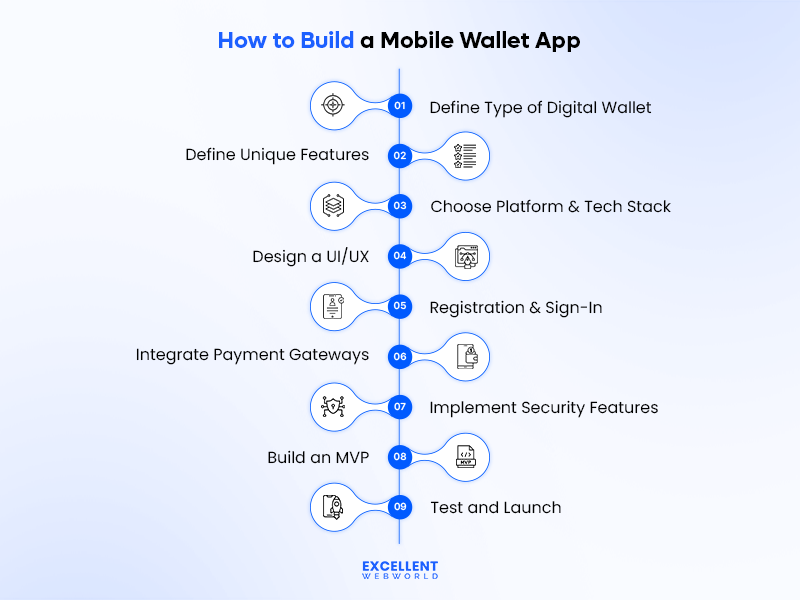
Step 1: Define the Type of Digital Wallet You Want To Build
Your type of wallet determines everything from licensing to functions. Choose based on your target market and business model.
- Open Wallet: Works with any service provider or service. Think PayPal or Google Pay. Requires the most regulatory approvals but gives the maximum flexibility.
- Closed Wallet: Only works within your ecosystem. Amazon Pay is a perfect example. Easier to launch, but limits your market reach.
- Semi-Closed Wallet: Works with partner merchants and services. Paytm started this way before becoming fully open. Good middle ground for testing markets.
- Crypto Wallet: Handles digital currencies like Bitcoin or Ethereum. Different regulatory panorama, but a growing demand from tech-savvy users. Increasingly, founders also explore how to create a stablecoin to offer a more stable, spendable digital currency experience.
Pick one type initially. You can expand later once you prove market fit.
Step 2: Define the Unique Features of Your Digital Wallet
Feature creep kills budgets and timelines. Focus on fixing one core problem notably well.
Essential features for any wallet:
- User registration and profile management
- Send and receive money functionality
- Transaction history and receipts
- Basic security features
Consider these advanced features only after MVP validation:
- NFC payments for in-store purchases
- Bill payment and utility integrations
- Loyalty programs and cashback systems
- Multi-currency support for global customers
- AI-powered spending insights and budgeting tools
A top-rated fintech app development company like us helps you to prioritize features based on consumer research, not just technical possibilities.
Step 3: Choose Platform and Tech Stack
You face a critical decision: Which technology stack is best suited for efficient wallet development?
According to industry experts, popular tech stacks include Flutter or React Native for cross-platform frontend, NodeJS or Django for backend, and integrations with Stripe, Firebase, and secure authentication protocols like OAuth 2.0.
You also need to consider this for a robust backend:
- Cloud infrastructure (AWS, Google Cloud, or Azure) for scalability
- Database solutions that handle financial transactions securely
- API architecture that supports future feature additions
- Microservices approach for easier maintenance and updates
Don’t reinvent the wheel. Use proven financial APIs and services where possible.
Step 4: Design a UI/UX
Users abandon apps that feel confusing or unsafe. Your design must inspire trust while staying simple.
Key design principles:
- Clear visual hierarchy for transaction flows
- Minimal steps for common actions like sending money
- Obvious security indicators throughout the experience
- Accessibility features for users with disabilities
Study successful wallets like Venmo, Cash App, or regional leaders for your target market. Notice how they cope with onboarding, transaction confirmations, and error states.
Test your designs with real customers before development starts. Proper prototypes save several months of rework later.
Step 5: Registration, Sign-In, and Onboarding
First impressions determine whether users complete the setup or abandon your app immediately.
Streamline your onboarding:
- Social login options reduce friction
- Progressive disclosure of information requests
- Clear explanation of required permissions
- Immediate value demonstration after basic setup
Implement robust identification verification without overwhelming new customers. Start with primary verification and upload layers as users’ interaction deepens.
KYC (Know Your Customer) requirements vary by area. Plan for different verification stages based on transaction amounts and the person’s locations.
Step 6: Integrate Payment Gateways
Payment gateway integration connects your wallets to the broader monetary ecosystem. This step determines which payment strategies you support and how speedy transactions are processed.
Popular gateway options:
- Stripe for international markets and developer-friendly APIs
- Razorpay for India-focused solutions
- Square for retail and in-person payment integration
- PayPal for established user trust and global reach
Consider multi-gateway techniques to avoid single points of failure. Different gateways are good for various regions or payment types.
Your integration architecture should handle gateway failures gracefully and provide users with alternative payment options when required.
Step 7: Implement Security Features
Security breaches ruin a person’s trust and may shut down your commercial enterprise. Invest in 360-degree security from day one.
Essential security measures:
- End-to-end encryption for all sensitive data
- Two-factor authentication for account access
- Biometric authentication where supported
- PCI DSS compliance for payment processing
- Regular security audits and penetration testing
Implement fraud detection using AI and machine learning algorithms. Monitor transaction patterns and flag suspicious activities.
Consider cybersecurity consulting services to ensure you’re not missing critical vulnerabilities.
Step 8: Build an MVP
Digital wallet MVP development focuses on the core functionality that proves your value proposition. Resist the urge to build everything right now.
Your MVP should include:
- User registration and basic profile setup
- Simple send/receive money functionality
- Transaction history viewing
- Basic security features
- One primary payment method integration
Launch with a limited user group first. Gather feedback on the user experience earlier than including complex capabilities.
Measure key metrics like user registration completion rates, transaction success ratio, and consumer retention after first use.
Step 9: Test and Launch Your Digital Wallet
Financial apps demand more rigorous testing than standard mobile applications – money movement must be absolutely flawless and cannot fail.
Testing phases:
- Unit testing for individual components
- Integration testing for payment flows
- Security testing for vulnerability assessment
- Load testing for transaction volume handling
- User acceptance testing with real money amounts
Launch in phases. Start with beta users, then restricted geographic regions, before complete market rollout.
Monitor transaction fulfilment rates, app performance metrics, and user support tickets carefully throughout early release stages.
Building a digital wallet requires balancing technical complexity with user simplicity. Focus on solving one core trouble especially well in place of crafting a feature-heavy solution that confuses customers.
How to Create a Secure Digital Wallet?
When you’re figuring out how to make a digital wallet, security must be your basis, no longer an afterthought. Here are the vital measures you must implement:
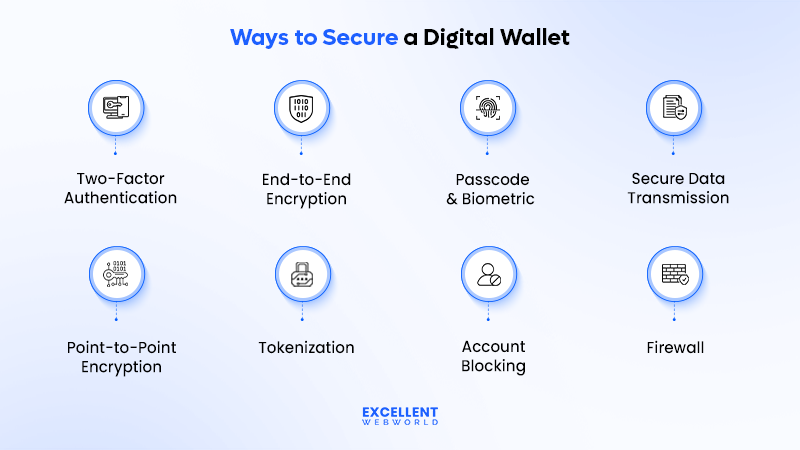
Two-Factor Authentication (2FA)
Add an extra security layer beyond passwords. Users enter a code from their smartphone or email earlier than accessing their digital wallet. This step blocks 99% of automatic attacks and suggests to customers that you’re taking safety seriously.
End-to-End Encryption
Encrypt all records from the moment they leave the consumer’s device until they reach your servers. Even if hackers intercept the records, they can’t examine them. You can use AI in fintech solutions that constantly research attack styles and automatically strengthen encryption protocols in real-time.
Passcode and Biometric Authentication
Let users unlock their wallets with fingerprints, face recognition, or PIN codes. Biometrics are tougher to steal than passwords. This feature has become standard in today’s competitive market.
Secure Data Transmission
Use HTTPS and SSL certificates for all information transfers. This protects information as it moves among your app and servers. Cloud platforms offer integrated security equipment that makes implementation straightforward for development teams.
Point-to-Point Encryption (P2PE)
Encrypt transaction data from the payment terminal to your processing system. This prevents data theft during card transactions and meets industry compliance standards that regulators demand.
Implement Tokenization
Replace sensitive card numbers with random tokens. Even if hackers access your database, they get useless tokens instead of real payment information. Smart founders who understand how to build a digital wallet app prioritize tokenization from day one rather than adding it later.
Use Account Blocking
Automatically freeze accounts after suspicious activity. Set up monitoring systems that detect unusual spending patterns and block accounts instantly. This prevents fraud before it damages your reputation or user funds.
Utilize Firewall
Install network firewalls that filter incoming traffic. They block malicious attacks before they reach your servers. Most mobile banking app development teams choose cloud-based firewalls because they’re easier to scale and manage as your user base grows.
How does a Digital Wallet Make Money?
Your digital wallet needs sustainable revenue streams to survive and scale. Here are the proven ways successful wallets generate income.
Recharge Services Revenue
You earn commissions when users top up their mobile phones through your wallet. Telecom operators pay you 1-3% for each recharge transaction.
This creates a steady income since people recharge regularly. When you build a digital wallet app, integrating recharge services becomes essential for consistent revenue.
Bill Payment Fees
Utility companies pay you small fees for processing electricity, water, and internet bill payments. These micro-transactions add up quickly with high user volumes.
Smart e-wallet app development includes automated bill reminders to increase transaction frequency and boost your earnings.
E-Commerce Transaction Cuts
You charge merchants 2-4% for each purchase made through your wallet. This works like credit card processing fees, but often at lower rates.
Partner with online stores early in your development phase. As you build a P2P payment app, you can seamlessly integrate shopping features to capture this revenue stream.
Seller Service Fees
Beyond transaction expenses, you may charge sellers monthly subscription fees for functions like analytics dashboards, promotional gear, or priority customer service.
Inter-Platform Transfer Charges
You earn from money transfers between different payment platforms or international remittances. These typically generate higher margins than domestic transactions.
Card Transaction Processing
When customers link debit or credit cards to your wallet, you earn interchange fees from card networks for processing payments.
Exclusive Partnership Deals
Negotiate revenue-sharing agreements with specific merchants or service providers. They pay you for driving customer traffic to their platforms.
When you build a mobile wallet app, focus on 2-3 revenue streams to begin with. Adding AI-powered spending insights and cloud-based analytics will let you optimize these earnings resources as you scale.
What are the Main Challenges of Developing a Digital Wallet?
Here are the five major factors that determine whether your wallet project succeeds or fails financially.
These critical elements can either drive your project to profitability or lead to significant losses, making them essential for any digital wallet development.
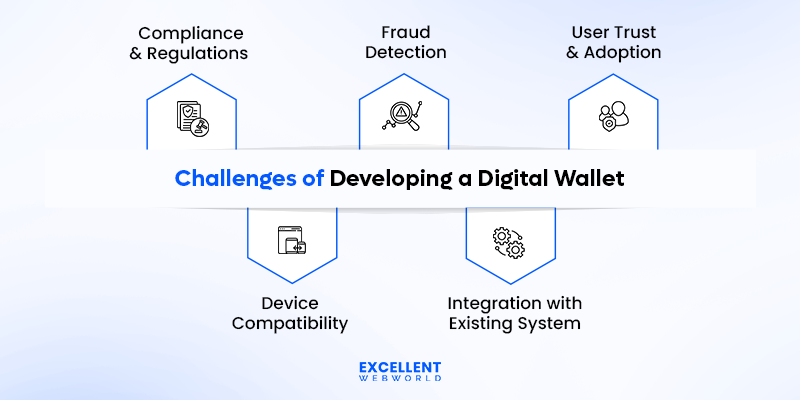
Compliance and Regulations
Every country has different rules for digital payments. You need specific licenses in the US, EU data protection laws, and anti-money laundering checks everywhere.
Pro Tip: Start with one marketplace first. Partner with compliance consultants who concentrate on fintech API use cases to navigate local requirements faster.
Device Compatibility
Your wallet must work on old Android phones, new iPhones, and everything in between. Different operating systems handle payments differently.
Pro Tip: Cloud-based solutions help here. Use cross-platform frameworks that sync user data across all devices seamlessly.
Fraud Detection and Risk Mitigation
Hackers target virtual wallets constantly. You want AI-powered fraud detection that catches suspicious activity without blocking legitimate customers.
Pro Tip: Implement machine learning algorithms that learn user behavior patterns. Real-time payment tracking helps identify unusual transactions instantly.
Integration with Existing Systems
Banks, payment processors, and merchant systems all speak different languages. Your wallet needs to connect with multiple APIs without breaking.
Pro Tip: Choose integration platforms that offer pre-built connectors. This saves months of custom development work.
User Trust and Adoption
People won’t use your wallet if they don’t trust it. Security breaches destroy reputation overnight.
Pro Tip: Focus on transparent security features. Show users exactly how their data stays protected through clear, simple explanations.
Why Choose Excellent Webworld for Digital Wallet Development?
Building your digital wallet doesn’t have to feel overwhelming. You need a partner who gets your startup journey.
At Excellent Webworld, an AI-powered app development company, we’ve helped 60+ fintech startups turn wallet ideas into working products. We know you’re juggling tight budgets and tighter deadlines.
Here’s what makes us different:
- AI-powered development that cuts your build time by 40%
- Cloud-first architecture that scales with your user growth
- Compliance expertise across the USA, UK, UAE, and India regulations
- MVP-focused approach – we build what matters first
We don’t just write code. We solve your real problems.
Worried about security? Our AI-driven testing catches vulnerabilities before launch. Confused about features? Our consultants help you pick must-haves over nice-to-haves.
You focus on growing your business. We handle the technical heavy lifting.
Ready to build a wallet your users will trust? Let’s talk about your vision.
FAQs About Digital Wallet App Development
Mobile wallet apps offer convenience by allowing users to make payments without carrying physical cards or cash. They provide businesses with faster transactions, reduced processing costs, and valuable customer data insights. Users enjoy features like loyalty programs, expense tracking, and quick peer-to-peer transfers.
Start with market research and defining your app’s features, then create wireframes and design the user interface. Develop the app using appropriate technologies, integrate payment gateways and security features, then test thoroughly. Finally, deploy to app stores and implement ongoing maintenance and updates.
A basic mobile wallet app typically takes 4-6 months to develop with a skilled team. More complex apps with advanced features like cryptocurrency support or extensive integrations can take 8-12 months. The timeline depends on features, team size, and regulatory compliance requirements.
For mobile development, use React Native, Flutter, or native iOS/Android development. Backend technologies include Node.js, Python, or Java with databases like PostgreSQL or MongoDB. Payment integration requires APIs from providers like Stripe, PayPal, or direct bank connections, plus blockchain technology for cryptocurrency features.
Essential features include user registration and verification, secure payment processing, and transaction history. Add features like QR code scanning, peer-to-peer transfers, bill payments, and loyalty card storage. Advanced features include budgeting tools, merchant locators, and multi-currency support.
Implement end-to-end encryption for all transactions and use two-factor authentication for user accounts. Follow PCI DSS compliance standards and conduct regular security audits and penetration testing. Use biometric authentication, secure API connections, and maintain updated security patches to protect against threats.

Article By


Paresh Sagar is the CEO of Excellent Webworld. He firmly believes in using technology to solve challenges. His dedication and attention to detail make him an expert in helping startups in different industries digitalize their businesses globally.