What is stopping you from gaining faster traction and stronger user trust?
Mobile app development for startups gives a direct path to your audience and cuts the delay between interest and action.
Companies like Uber, DoorDash, and Grab scaled with simple mobile flows that made access quick and reliable. Their growth shows how strong mobile execution supports early business momentum.
New trends shape startup mobile app development. AI features, smoother onboarding, subscription driven models, and rapid releases help you reach users with less effort.
You face real barriers. High acquisition costs. Slow product feedback. Low retention. These issues slow progress and increase early risk.
Mobile usage keeps increasing with strong annual spending growth across major categories, and users prefer direct mobile access over mobile web. This creates a strong opportunity for your startup to stand out.
If you want faster validation and a cleaner path to revenue, a mobile app helps you reach that goal.
SEE ALSO: How To Build An MVP App for startups?
Benefits of Integrating Mobile App Development for Startups and Brands
Adapting to the latest technologies and trends of mobile app development for startups will craft a curve ahead of other businesses.
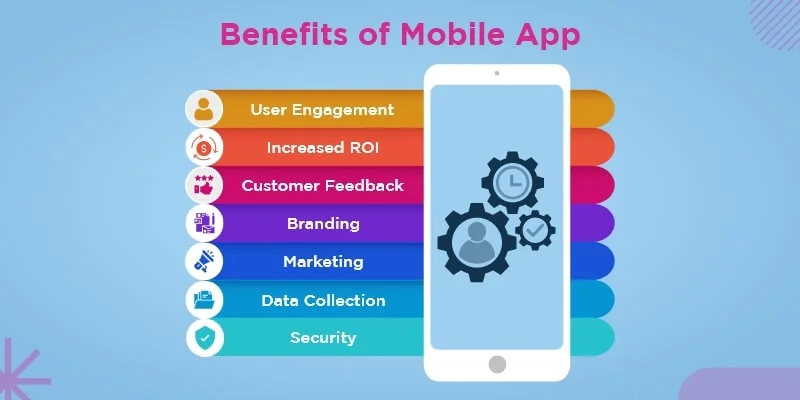 Whether it is a startup or regardless of the company’s size, app development has become a crucial tool for upscaling your business. While many think that investing in iOS or Android app development is costly, it helps startups and large-scale businesses to grow their customers, generate sales, and build or improve their brand.
Let’s dig into each advantage of startup mobile app development one by one:
User Engagement
Mobile apps are the best way to communicate with users, and it helps brands to retain their old customers and build a relationship with them to increase customer loyalty. Your app can send them notifications and give an option to the users to register their complaints to address them immediately.
This will boost engagement to your brand resulting in referrals and marketing.
- Users receive instant updates
- Support teams resolve complaints faster
- Loyalty programs work better on mobile
- Returning customers complete repeat actions faster
- Referral journeys stay simple
COO Insight When engagement rises by even 10 percent, repeat revenue increases. Your operational load reduces because mobile users follow defined flows. This leads to predictable service cycles and cleaner user data.
Outcome Higher customer lifetime value and stronger loyalty.
Increased ROI
“One of the biggest concerns of investment returns.”
Developing a mobile app for startups or any business provides the quickest and most convenient way for users to learn about the company’s products and services. Reaching out to customers directly will fetch you high returns and enhance the company’s overall revenue.
Find the best app developers for startups to build a robust mobile app.
- Sessions increased 55 percent
- Repeat orders increased 38 percent
- Support tickets dropped 22 percent
- App revenue crossed website revenue by month six
Research Snapshot
- Mobile users convert three times faster than mobile web users
- App users view more products in each session
- Retention on mobile apps is higher compared to websites
Takeaway Direct access creates a faster path to revenue and reduces acquisition cost.
Customer Feedback
Customers are the lifeline of any business. Every customer wants the company to cater to their issues immediately. With the help of mobile app development, it will become easy for you to get the necessary customer attention.
Features like feedback forms on the mobile app can help you improve the customer’s preferences. You can easily get to know about the flaws and what the customers expect from you. Thanks to digitization, you can get the right feedback and make necessary changes.
- In-app forms capture user expectations
- Ratings highlight friction points
- Heatmaps show areas users avoid
- Feature requests guide your roadmap
- Quick surveys help test ideas
Expert Insight Strong feedback loops prevent expensive mistakes. Early signals help you plan upgrades with clarity and protect development budgets from overruns.
Branding
You cannot deny the fact that mobile applications are booming today. People these days enjoy shopping for only those brands that have mobile applications for their convenience.
Building a mobile app for your startup is never too late. The audience will never understand or know your company unless you reach out to them through branding activities. Today, with the help of digital transformation, developing a mobile app is the best and easiest way to reach your target audience. It becomes easy for them to remember your products and services.
- Users remember your brand icon on their home screen
- Personalized content creates stronger recall
- Consistent app experience builds trust
- Faster support improves brand reputation
COO View Brand recall improves when users interact with a single source of truth. Your app becomes that source.
Marketing
Mobile applications are the best marketing tool to sell things online, and product reviews and ratings will provide the company with a competitive edge. Building a website is more complex and even people prefer the digital market over surfing websites.
Moreover, developing custom mobile app development for startups and brands may cost you a little more, but it is always a better option than website development. If you believe that custom mobile app development for startups can cost you more, it’s still a more suitable option than building a website. You can get a high ROI over a period as audiences prefer handy mobile apps over website surfing.
Therefore, implement your startup idea into a mobile app would be the best way to advertise your business against other competitors.
- Better control over user actions
- Higher success rates on referral programs
- Product reviews directly influence conversions
- Lower dependency on social ads
- Direct communication reduces marketing spend
Small Case Note A fitness startup in California used in-app challenges and referral links. Signups increased 27 percent within the first quarter.
Takeaway Apps make your marketing budget efficient and predictable.
Data Collection
Do you want to know your customers better? Would you like to receive information about their behavioral patterns regarding the services or products you offer?
A mobile app can assist you with the details related to the user’s actions, interests, inquiries, frequent visits, items to choose from, etc. This data can help you build a strong strategy to provide personalized services to customers. If you find any loopholes, bring the necessary changes to the business model.
- User actions
- Purchase intent
- Drop-off points
- Preferred categories
- Peak usage hours
Why Data Matters You design better features. You avoid guesswork. You adapt faster to market shifts.
Security
Providing two-factor authentication or multi-factor authentication will satisfy the users about data security. The must-have features and components based on security will help the users believe that your app is reliable and safe to use.
Let us give you real-life examples of well-known brands that have developed their mobile app for better customer reach.
- Two-factor authentication
- Role based access
- Secure APIs
- Encrypted user data
- Regular security audits
COO Note Security improves user confidence. Trust influences retention and long-term revenue.
Real-Life Examples of Brands Using Mobile Apps Effectively
- Starbucks uses mobile ordering and loyalty rewards for faster service
- Walmart improves store and online coordination through its mobile app
- Airbnb improves user trust through secure in-app communication
- Target gains stronger retention through personalized app recommendations
What Are The Types of Mobile App Development for Startups?
1. EdTech Apps
EdTech apps are designed to deliver structured learning through lessons, quizzes, and progress tracking. When building an EdTech app, you create guided modules that lead users step by step through each topic. This approach aligns well with mobile app development for startups aiming to launch scalable, engagement-driven learning platforms. By breaking content into short, focused steps, the app keeps learners active, motivated, and consistent.
- Examples: Duolingo, BYJU’S, Khan Academy.
- Price range: 18k to 300k+ USD.
- Pro tip: Start with one subject and expand after early adoption.
2. On-Demand Apps
On-demand apps support instant services. Users book rides, order food, and schedule tasks through quick actions. You work with features like live tracking, secure payments, and clear service listings. These apps help you reach users who want quick solutions. On-demand models help with app development for startups that need speed and simple operations. You shape the workflow to match your service style.
- Examples: Uber, DoorDash, Urban Company.
- Price range: 20k to 150k+ USD.
- Pro tip: Keep the booking process under three steps.
3. Fintech Apps
Fintech apps are built to handle payments, budgeting, and secure money transactions. When developing a fintech app, you prioritize clean dashboards, strong security layers, and clear user actions. These apps are designed for users who rely on stable, compliant financial tools. This makes fintech a strong fit for custom mobile app development for startups that need to manage core financial features while meeting strict regulatory and security requirements.
- Examples: PayPal, Revolut, Cash App.
- Price range: 18k to 150k+ USD.
- Pro tip: Add biometric login early to build user trust.
4. Social Media and Networking Apps
Social networking apps are built to help users create profiles, share content, and form communities. When developing a social networking app, you design engagement-driven features such as feeds, real-time chat, and notifications. You define how users discover each other, communicate, and interact over time. This makes social media app development a strong choice for startups focused on user growth, retention, and long-term platform activity.
- Examples: Instagram, Snapchat, LinkedIn.
- Price range: 25k to 300k+ USD.
- Pro tip: Launch with one strong interaction format such as short posts or photo updates.
5. E-Commerce Apps
E-commerce apps help your users browse products, place orders, and track deliveries. These apps support your early sales efforts and keep your workflows simple. You focus on clean navigation, fast load times, and easy checkout. E-commerce apps work well for mobile app development for startups and mobile app development for small businesses. You build a store that fits your brand. You choose custom mobile app development for startups when you want full control over features and user flows.
- Examples: Amazon, Etsy, Myntra.
- Price range: 20k to 200k+ USD.
- Pro tip: Keep the checkout screen clean with limited fields.
6. Healthcare Apps
Healthcare apps are built to help users book appointments, access medical records, and communicate with healthcare providers. When developing a healthcare app, you focus on clear navigation, secure data flows, and reliable performance. These solutions support mobile app development for small businesses in the medical field by improving patient access and operational efficiency. Simple layouts and well-designed features help maintain user trust and meet healthcare standards.
- Examples: Practo, Zocdoc, MyChart.
- Price range: 22k to 130k+ USD.
- Pro tip: Keep forms short so users move through each step without stress.
Important Note: It’s of utmost importance that you ensure your app follows the regional compliances and provides highest level of priority to safeguarding the highly sensitive customer data. A single loophole can lead to it getting banned or a massive data breach, which can hurt all your effort. Having helped 900+ apps we’ve build avoid such mess, we advise to be vigilant when it comes to choosing a mobile app development company. Your chosen tech partner needs to be someone who can help you bring any of your above ideas to life while ensuring it’s secure, compliant, and scale-proof for long term.
What is The Process of Mobile App Development for Startups?
Every mobile app development starts with a unique goal, but the process of mobile app development starts with almost the same. Following these steps will help you to plan, build, test, and release a mobile app for your startup.
Step-1: Define your app’s goal
You explain what you want to build. You note your target users, core features, and main outcomes. This step helps you avoid wasted work.
- Define the problem your app solves.
- Specify your target users.
- List top three features.
- Set one success metric.
Tips
- Keep the goal focused.
- Avoid adding too many features at the start.
Example: A fitness startup wants an app where users track daily workouts and share weekly progress.
Step-2: Create the plan
You map features, user flows, and screens. You pick your budget and timeline. You decide if you want MVP development for a quick start.
- Map user journeys.
- Set feature priorities.
- Pick the device list.
- Define timeline and cost.
Tips
- Start with the smallest version.
- Avoid unclear timelines.
Example: A founder plans a simple MVP with login, dashboard, and chat support in eight weeks.
Step-3: Design the screens
You build simple layouts and check how users move from one screen to another. Focus on clarity and ease. Strong design sets the tone for your product.
- Create wireframes before visuals.
- Check spacing and readability.
- Test the flow with a small user group.
- Keep each screen simple.
Tips
- Keep buttons easy to tap.
- Avoid visual clutter.
Example: A healthcare app uses large text, clean icons, and a short flow for appointment booking.
Step-4: Develop the features
You have to write code for each feature and connect the frontend and backend. You keep the build small and stable. This step shapes the core of the mobile app development process.
- Select the best app development platform.
- Set up the codebase.
- Build the core flows first.
- Connect APIs.
- Review code often.
Tips
- Keep builds small.
- Avoid unstable integrations.
Example: A delivery app team builds login, order placement, and tracking before reports.
Step-5: Test everything
You test each action. You fix errors before launch. You check performance, security, and device support. You make sure users get a smooth experience.
- Test on real devices.
- Run functional tests.
- Check load speed.
- Test security alerts.
Tips
- Test every small feature.
- Avoid skipping device testing.
Example: A fintech app runs tests on ten phones to check login time and transaction stability.
Step-6: Launch your app
You submit the app to the store. You follow store rules and prepare your listing. You monitor early feedback for improvements.
- Complete app store forms.
- Add screenshots.
- Write a short description.
- Set tracking tools.
Tips
- Respond to early reviews fast.
- Avoid unclear screenshots.
Example: A travel startup uploads high quality screenshots and a clear feature list for Android and iOS.
Step-7: Improve and update
You add new features. You refine slow parts. You respond to user needs with steady updates. This mindset helps with mobile app development for startups where product growth never stops.
- Track user behavior.
- Fix slow screens.
- Release updates often.
- Review support tickets.
Tips
- Focus on the highest impact fix.
- Avoid long gaps between updates.
Example: A learning app upgrades lesson loading time after user feedback.
How to Choose the Right Development Approach: In-House vs. Outsourcing?
Choosing the right approach for mobile app development for a startup is quite difficult. Whether its in-house or outsource app development. Both paths give you something and take something away.
In-house Mobile App development
If you want more control, closer teamwork, and a team that stays aligned long term, an in-house setup fits better. It has clear strengths, and yes, a few limits too. Once you see both sides, you understand where this hiring model works well and where it starts to struggle.
| Pros | Cons |
|---|---|
|
|
Outsource Mobile App Development
App development for a startup can be beneficial with an outsourcing approach, but it also comes with a few cons. Let’s break down the outsourcing pros and cons to help you decide when it’s the right move.
| Pros | Cons |
|---|---|
|
|
How To Estimate the Cost Of Mobile App Development For Startups?
Estimating the mobile app development cost for startups is not as simple as picking a number. You look at a mix of things, and each one pushes the cost up or down. Your app complexity, the time your team spends, the skills you need, plus the resources you’re willing to put in.
Some of these are easy to measure. Others take a bit of guessing. But they all matter.
When you understand the factors, plan your budget with far less stress. And your users end up with a smoother experience, which is the whole point anyway.
Complexity of the idea shifts the cost of developing a mobile app. An app with basic screens usually falls approximately between 18,000 and 35,000 USD.
But once you add advanced features like AI, the budget moves fast. Those apps often start around 35,000 USD and goes up to 145,000 USD or even higher.
App Functionalities
Your startup app’s features often decide how well you stand out in the market. Some features take more work than others, and that complexity affects your cost in a big way.
An MVP version usually costs between 18,000 and 45,000 USD. It comes with a basic user screen and a few core functions, enough to let people use the app without extra layers.
| App Feature | Function | Average Cost |
|---|---|---|
| User login |
|
USD 1000-USD 1,800 |
| User profile management |
|
USD 1500-USD 1,550 |
| Push notifications |
|
USD 1,200- USD 2,500 |
| Instant messaging |
|
USD 5,000- USD 7,500 |
Why Choose Excellent Webworld for Mobile App Development
Building a mobile app as a startup is exciting—sometimes chaotic, too. Without the right team, things slow down, features wobble, and deadlines just slip. You need people who actually get startup speed and know how to turn a rough idea into something stable enough to ship.
At Excellent Webworld, we’ve got developers, product folks, UI/UX designers, and QA engineers who’ve lived the startup grind. We focus on clean code, smooth interfaces, and architectures that don’t collapse when your user base suddenly grows.
What you get
- A clean, stable, and scalable app
- Fast load time and smooth performance
- Strong security from day one
- A clear development roadmap
- 48-hour onboarding
- Transparent communication
- Weekly progress reports
Our team has delivered 900+ apps across multiple industries. You get a product that works well, feels great to use, and can scale without breaking.
If you’re a startup with an app idea, book a free consultation. We’ll help you build it the right way and prepare it for growth.
FAQs
Mobile app startup is a newly established business focused on developing and marketing mobile applications. These startups aim to bring innovative solutions or services to mobile device users, leveraging technology to solve specific problems.
To create an app, define your idea and identify the key problem it solves. Conduct market research to understand your audience and analyze competitors. Next, make a plan outlining your app’s features, functionalities, and technology stack. Once your plan is ready, partner with a mobile app development company. Develop your app through iterative testing and feedback before launching it.
An app helps you reach them faster, sell faster, and build trust. It makes your idea real, something people can use, not just hear about. And if the app works well, it becomes a growth engine that attracts users, investors, and even early revenue.
In short: an app helps you move from “idea” to “impact.”
Startups are pushing for speed and smarter features.
- AI-powered personalization
- Faster development with low-code and vibe coding
- Clean, simple UI instead of heavy designs
- Cloud backends that scale automatically
- Strong security from day one
These trends help startups launch sooner and improve based on real user data—not guesswork.
The cost really depends on your idea’s size and complexity. A basic app development starts from 18k USD and goes up to 150k USD. Design, backend work, timelines—everything affects the number.

Article By


Paresh Sagar is the CEO of Excellent Webworld. He firmly believes in using technology to solve challenges. His dedication and attention to detail make him an expert in helping startups in different industries digitalize their businesses globally.