Launching an on-demand delivery app in 2026 is challenging because the market appears crowded, the development path is unclear, and most new apps fail to deliver the speed and ease users expect. These concerns are valid, especially when slow delivery, weak UX, and high churn can quickly kill growth.
The industry is shifting with the new-age benefits of on-demand services apps. AI-based routing, cloud logistics, and real-time tracking are now standard. Same-hour delivery and ultra-local shopping have changed what customers consider “normal.”
The global online delivery market is valued at USD 81.54 billion in 2024 and is projected to reach USD 225.57 billion by 2030. This growth makes 2026 a tipping point for new players entering with a clear niche and strong execution.
For founders and product teams, this means an opportunity to build on demand delivery app solutions that stand out for speed, personalization, and smart operations.
This blog offers a practical roadmap of “how to build an on-demand delivery app” in 2026. It answers a variety of queries like top on demand app delivery features, cost to build on demand delivery apps, common pitfalls to avoid on demand delivery app development, profitable on demand delivery app ideas, and more.
What Actually Makes an On-Demand Delivery App Development Successful
Success in on-demand delivery apps comes from simple fundamentals. Users choose the option that provides fast access, transparent pricing, consistent reliability, and firm trust.
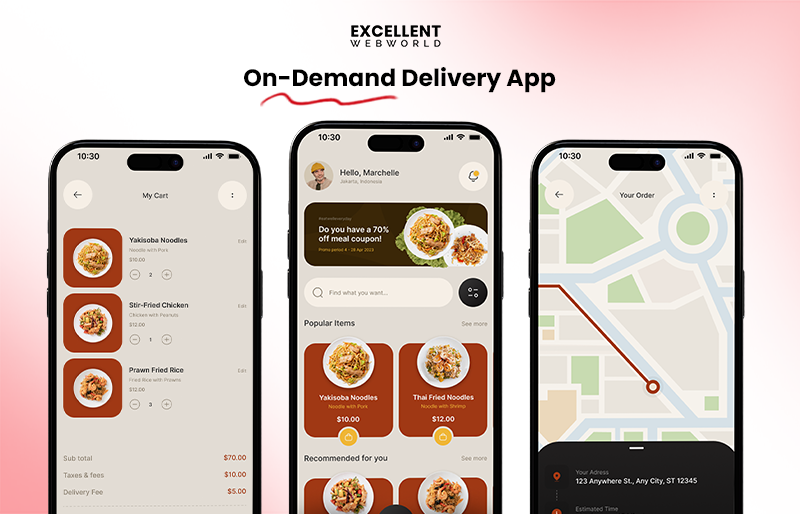
You win when these four elements stay stable. This is the real filter people use before they order, so you must keep it in mind when you build on-demand delivery app plans for 2026.
Three levers decide your outcome:
Most on demand delivery software fails because it misjudges these levers. They pick the wrong business model. They choose poor locations. They over-engineer technology. They run discounts until they face a burn-rate spiral. They also disrupt the demand-and-supply balance, slowing orders and causing partners to leave.
You stay focused on solving real problems. Users want speed, accuracy, and consistent communication. When you develop on-demand delivery app workflows, your decisions must support these goals. Strong routing, AI-led forecasting, and a simple operational flow reduce risk.
Weak retention stems from slow delivery, a confusing UX, and low trust. Strong retention comes from reliability. Your job is to make choices that strengthen reliability every day. It will help you decide how to make on demand delivery app systems that remain profitable and scalable.
How to Make On-Demand Delivery App in 2026 (6 Simple Steps)
You start strong by removing assumptions and focusing on real demand. You want users to see your product as the best on demand delivery app in your category, and that takes more than features. It takes proof that people will use your service, pay for convenience, trust your delivery speed, and return without discounts.
Here is the mobile app development process that you should follow for an on-demand delivery app:
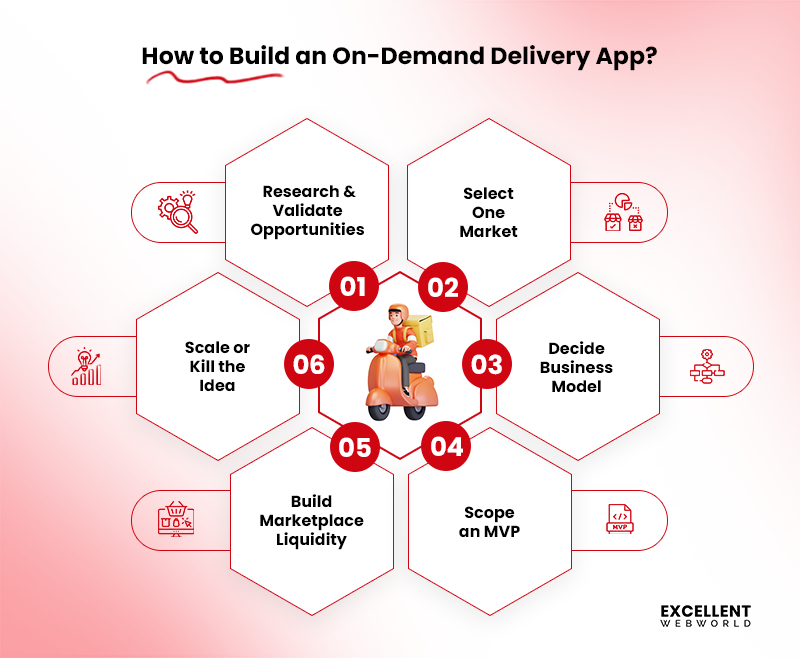
Step 1: Research and Validate On-Demand Delivery App Opportunities
You begin by validating whether the market needs your idea. Saturation does not matter if users feel an unmet need in a specific niche. You look for pain, urgency, and frequency. You study how fast users expect delivery, what pricing they accept, and what annoys them today.
Focus your research on these areas:
Use real interviews. Run small surveys in one city. Study search demand. Compare local density, spending power, and delivery distance patterns. Use AI development services to cluster user complaints and trends. This gives you a realistic outlook before you make on demand delivery app plans.
Your goal is to reduce uncertainty. You validate the user problem, the willingness to pay, and the operational complexity. You avoid building features without proof. You prevent a niche where demand is low, or margins collapse as volume grows. You stop thinking nationwide. You think local and specific.
Step 2: Select ONE Market to Launch
You select one city where user density, spending patterns, and operational feasibility align. Local selection matters more than a large TAM slide. You also check logistics constraints. Some cities offer faster routes and higher-order frequency. Some cities suffer from unit-level economics due to traffic, low order values, or complex zoning.
Compare each city using a simple scorecard:
Use cloud-based analytics to map hotspots. Use AI to simulate order volume and delivery delays. You choose the city that reduces your execution risk, not the city that looks popular. This provides a focused test environment for your on demand delivery app idea.
Step 3: Shape the Right Business Model for That Market
You shape your model based on margins, delivery costs, partner payouts, and expected order frequency. You do not copy another startup because each city behaves differently. You define how revenue enters the system and how costs leave it.
Work with these choices:
Each model impacts your cash flow, staffing, and operational load. You also define your pricing approach. You test whether users accept delivery fees or prefer membership-based benefits. You should also check how frequently users reorder, as this drives retention and reduces your acquisition costs.
Your business model must survive without heavy burn. You keep your structure small, optimize with AI-driven routing, and rely on cloud infrastructure that scales with order volume. This is the foundation for a healthy on-demand delivery app development.
Step 4: Scope an MVP That Tests the Riskiest Assumptions
Your MVP is not a feature showcase. Your MVP is a risk test. You build the smallest flow that tests demand, delivery speed, and repeat usage. You prioritize the problems that break the business early. You avoid complex features. You avoid building anything that does not solve a core problem.
Focus your MVP on these elements:
You also use AI and GenAI for ETA accuracy, demand clustering, and user support. Following the latest mobile app development trends, you use cloud services for quick deployment, real-time event processing, and elastic scaling. This reduces costs and development effort as you create on demand delivery app features for validation.
Your MVP scope should answer these questions:
If any answer is weak, your business structure needs to be adjusted. Your MVP exposes reality, not vision. Leverage our MVP development services to validate your on-demand app idea.
Step 5: Build Marketplace Liquidity for an On-Demand Delivery Application
You need balanced demand and supply. You do not start with heavy user acquisition because demand without supply breaks trust. You do not onboard too many partners early because high supply without demand increases churn among riders and vendors.
You build liquidity in phases:
Use AI-driven onboarding workflows. Use cloud tools for routing, delivery batching, and vendor performance tracking. You measure success through order completion rate, delivery accuracy, partner retention, and week-over-week growth. This prepares your on-demand delivery app solution for stable scaling.
Your first ninety days define your trajectory. You stay close to users and riders. You fix real delays. You refine payout structures. You clean your UX based on real user frustration. You treat delivery speed as a non-negotiable metric.
Step 6: Decide Whether to Scale or Kill the Idea
You decide based on numbers, not optimism. You scale only when unit economics show progress, not perfection. You run clear metrics to see if your single-city test is strong enough to expand.
You measure these areas:
If numbers move in the right direction, you scale. If numbers stay flat or decline, you fix gaps before expanding. Scaling a broken model increases losses and hurts your brand. You exit early if the model never reaches stability. This keeps you disciplined as you move from your first city to your next.
You apply your insights to design stronger features, faster routing, improved vendor workflows, and more accurate forecasting. You remove friction in user onboarding, delivery windows, and partner payouts. Based on this analysis, you create an on demand delivery app environment to support higher demand.
You build based on evidence. You scale based on progress. You improve based on feedback. This gives you the structure you need to turn your best on demand delivery app vision into a strong, defensible business in 2026.
50 On-Demand Delivery App Ideas Worth Building in 2026 (With Examples)
You face saturation, unclear demand, and high risk. Choosing the right idea matters more than selecting a feature set. If you choose a weak category, even the best on-demand delivery app will fail before launch.
You need ideas backed by data, not assumptions. You also need clarity on margins, logistics effort, and long-term viability. Many founders miss this step and spend months on an idea with no market pull.
We leverage 15+ years of experience as a top-rated on-demand app development company across food, grocery, courier, pharmacy, retail, and more to identify 50 high-potential ideas. Each idea includes demand depth, margin strength, and operational difficulty. This removes guesswork and helps you align with proven spending behavior.
The market matrix below visually breaks down these on-demand app opportunities. You also get region-wise signals for LATAM, Europe, the Middle East, and APAC.
| # | Idea | LATAM | Europe | Middle East | APAC | Opp. Score | Market Size (USD Bn) |
|---|---|---|---|---|---|---|---|
| 1 | Food delivery | Rappi, iFood | Deliveroo, Just Eat | Talabat, Careem Food | Swiggy, GrabFood |
7
|
’23: 220
’24: 242
’25: 266.2
’26-’30: 428.7
|
| 2 | Pizza delivery | TelePizza, Papa John’s LATAM | Domino’s UK | Freedom Pizza | Pizza-La, Domino’s India |
6.5
|
’23: 55
’24: 59.4
’25: 64.2
’26-’30: 94.3
|
| 3 | Alcohol delivery | Zé Delivery | Bevy, Gorillas | Drinkies | Boozy.ph |
7.5
|
’23: 30
’24: 34.5
’25: 39.7
’26-’30: 79.8
|
| 4 | Bottled water delivery | Bonafont Go | AquaFill UK | Mai Dubai App | Bisleri |
6
|
’23: 40
’24: 42
’25: 44.1
’26-’30: 56.3
|
| 5 | Milk delivery | La Vaquita | Milk & More | Al Rawabi | Country Delight |
6
|
’23: 35
’24: 36.8
’25: 38.6
’26-’30: 49.2
|
| 6 | Coffee delivery | Juan Valdez | Costa Coffee Delivery | Starbucks ME | Luckin Coffee |
7
|
’23: 25
’24: 28
’25: 31.4
’26-’30: 55.3
|
| 7 | Meal kit delivery | Foodology | HelloFresh | MealPlansMe | FreshMenu |
7.5
|
’23: 15
’24: 17.2
’25: 19.8
’26-’30: 39.9
|
| 8 | Cloud kitchen delivery | Rappi Turbo Kitchens | Deliveroo Editions | Kitopi | Rebel Foods |
8.5
|
’23: 60
’24: 72
’25: 86.4
’26-’30: 215
|
| 9 | Grocery delivery | Cornershop, JOKR | Getir, Gorillas | InstaShop | BigBasket, Zepto |
8.8
|
’23: 450
’24: 562.5
’25: 703.1
’26-’30: 2,145.8
|
| 10 | Meat delivery | Carnes Market | Gousto Butchery | Kibsons | Licious |
7.5
|
’23: 18
’24: 20.7
’25: 23.8
’26-’30: 47.9
|
| 11 | Flower delivery | Florería Rosalinda | Bloom & Wild | Floward | Ferns N Petals |
6.8
|
’23: 10
’24: 10.8
’25: 11.7
’26-’30: 17.1
|
| 12 | Retail delivery | MercadoLibre NOW | Amazon Fresh EU | Carrefour NOW | Shopee, Lazada |
8
|
’23: 150
’24: 177
’25: 208.9
’26-’30: 477.8
|
| 13 | Cannabis delivery (legal zones) | WeedApp LATAM | JustMary | Not allowed | Eaze AU |
9
|
’23: 5
’24: 6.8
’25: 9.1
’26-’30: 40.9
|
| 14 | Clothing delivery | Dafiti Now | Zara On-Demand | Namshi | Myntra |
7
|
’23: 25
’24: 28
’25: 31.4
’26-’30: 55.3
|
| 15 | Pharmacy delivery | Farmalisto | Pharmacy2U | 800Pharmacy | PharmEasy |
8.5
|
’23: 15
’24: 18
’25: 21.6
’26-’30: 53.7
|
| 16 | Home essentials quick commerce | Rappi Turbo | Gorillas | Talabat Mart | Blinkit, GrabMart |
8.5
|
’23: 70
’24: 85.4
’25: 104.2
’26-’30: 281.6
|
| 17 | Multi-retail marketplace | Rappi | Bolt Market | Careem Box | GoJek, Grab |
8
|
’23: 30
’24: 35.4
’25: 41.8
’26-’30: 95.6
|
| 18 | Courier delivery | Loggi | DPD | Aramex | Lalamove |
7
|
’23: 100
’24: 110
’25: 121
’26-’30: 194.9
|
| 19 | Parcel delivery | Correios Express | GLS | Emirates Post | Delhivery |
7
|
’23: 120
’24: 132
’25: 145.2
’26-’30: 233.8
|
| 20 | Hyperlocal delivery | Rappi Turbo | Glovo | Fodel | Dunzo |
8.5
|
’23: 40
’24: 50
’25: 62.5
’26-’30: 190.7
|
| 21 | Pickup/drop service | Envia.com | Packlink | Fetchr | Porter |
7.5
|
’23: 15
’24: 17.2
’25: 19.8
’26-’30: 39.9
|
| 22 | On-ground runner network | Mensajeros Urbanos | Gophr | Quiqup | PickMe |
8
|
’23: 10
’24: 12
’25: 14.4
’26-’30: 35.8
|
| 23 | Cargo delivery | CargoX | sennder | Trukker | Deliveree |
7.5
|
’23: 80
’24: 89.6
’25: 100.4
’26-’30: 176.9
|
| 24 | White-label courier | Melonn | SmartRoutes | Tookan ME | Shipday |
8.5
|
’23: 18
’24: 22
’25: 26.8
’26-’30: 72.4
|
| 25 | Multi-delivery super app | Rappi | Bolt | Careem | Gojek, Grab |
9
|
’23: 30
’24: 39
’25: 50.7
’26-’30: 188.2
|
| 26 | Medicine delivery | Farmacias del Ahorro | LloydsDirect | Aster Pharmacy | Netmeds |
8.5
|
’23: 15
’24: 18
’25: 21.6
’26-’30: 53.7
|
| 27 | Pharmacy delivery | Drogasil | Pharmacy2U | Nahdi | 1mg |
8.5
|
’23: 15
’24: 18
’25: 21.6
’26-’30: 53.7
|
| 28 | Medical cannabis delivery | Khiron Life | Lyphe UK | Not allowed | AU Medicinal Cannabis |
9.5
|
’23: 4
’24: 5.6
’25: 7.8
’26-’30: 42.2
|
| 29 | Medical equipment delivery | MediFácil | Medisave | Sehaaonline | HealthWarehouse |
8
|
’23: 10
’24: 11.8
’25: 13.9
’26-’30: 31.9
|
| 30 | Subscription refill | Farmalisto Auto | Echo Pharmacy UK | Life Pharmacy Auto | PillPack India |
8
|
’23: 8
’24: 9.4
’25: 11.1
’26-’30: 25.5
|
| 31 | 1-hour medicine delivery | Rappi Medicinas | Zapp | Talabat Pharmacy | Blinkit Medicines |
9.5
|
’23: 3
’24: 4.1
’25: 5.5
’26-’30: 24.5
|
| 32 | Fuel delivery | GasoApp | Fillip | CAFU | MyPetrolPump |
7.5
|
’23: 12
’24: 13.8
’25: 15.9
’26-’30: 31.9
|
| 33 | Gas cylinder delivery | GascoApp | GasUp | ADNOC | GoGas |
6.5
|
’23: 8
’24: 8.6
’25: 9.3
’26-’30: 13.7
|
| 34 | Diesel delivery | Repsol Express | Fuelmii | CAFU Diesel | Repos Energy |
7.8
|
’23: 15
’24: 17.2
’25: 19.8
’26-’30: 39.9
|
| 35 | Fuel + car service | GasoPlus | FuelService | CAFU Plus | Yoshi JP |
7.5
|
’23: 5
’24: 5.8
’25: 6.6
’26-’30: 13.3
|
| 36 | B2B fleet fuel delivery | Local LATAM fleets | Filld EU | CAFU Fleet | Repos Fleet |
8.5
|
’23: 10.5
’24: 12.6
’25: 15.1
’26-’30: 37.6
|
| 37 | Laundry delivery | Mr Jeff | Laundrapp | Washmen | Rinse |
6
|
’23: 15
’24: 15.8
’25: 16.5
’26-’30: 21.1
|
| 38 | Dry cleaning delivery | Mr Jeff Premium | ZipJet | Champion Cleaners | LaundroKart |
6
|
’23: 8
’24: 8.4
’25: 8.8
’26-’30: 11.3
|
| 39 | Ironing delivery | Jeff Express | IronApp EU | WashPlus | Urban Company |
6.2
|
’23: 5
’24: 5.4
’25: 5.8
’26-’30: 8.6
|
| 40 | Home cleaning supplies | Rappi Home | Ocado | Carrefour NOW | BigBasket NOW |
7.5
|
’23: 30
’24: 34.5
’25: 39.7
’26-’30: 79.8
|
| 41 | Tiffin/home meals | HomeFood LATAM | DietChef | Homey Kitchen | Zomato HomeChef |
7
|
’23: 8
’24: 8.8
’25: 9.7
’26-’30: 15.6
|
| 42 | Subscription laundry | Mr Jeff | Laundrapp Sub | Washmen Sub | Cleanly APAC |
6.5
|
’23: 5
’24: 5.5
’25: 6.1
’26-’30: 9.7
|
| 43 | White-label delivery | Melonn | Tookan EU | Zajil | Shipday |
8.5
|
’23: 18
’24: 22
’25: 26.8
’26-’30: 72.4
|
| 44 | On-demand delivery templates | SimpliRoute | CodeCanyon EU | Local ME devs | Miracuves |
7.5
|
’23: 2
’24: 2.3
’25: 2.6
’26-’30: 5.3
|
| 45 | Tracking/logistics SaaS | Beetrack | Onfleet EU | Transcorp | Pickrr |
8.8
|
’23: 18
’24: 22.5
’25: 28.1
’26-’30: 85.8
|
| 46 | Multi-category super app | Rappi | Bolt | Careem | Gojek, Grab |
9
|
’23: 35
’24: 45.5
’25: 59.1
’26-’30: 219.6
|
| 47 | Pet food delivery | Puppis App | Tails.com | Pet’s Delight | Heads Up For Tails |
7.8
|
’23: 20
’24: 23.6
’25: 27.8
’26-’30: 63.7
|
| 48 | Office supply delivery | OFi LATAM | Staples UK | OfficeOne | OfficeMate |
7
|
’23: 10
’24: 11
’25: 12.1
’26-’30: 19.5
|
| 49 | Recycling/junk pickup | Reciclar Ya | Clearabee | JunkBot | RecycleNow |
7.5
|
’23: 5
’24: 5.8
’25: 6.6
’26-’30: 13.3
|
| 50 | Cake/bakery delivery | Sr. Postre | Lola’s Cupcakes | CakeAway | CakeZone |
7
|
’23: 10
’24: 11.2
’25: 12.5
’26-’30: 22.1
|
This helps you decide where to launch rather than chasing noise. These insights support your on demand app delivery plans by providing data, AI adoption patterns, and cloud-readiness assessments.
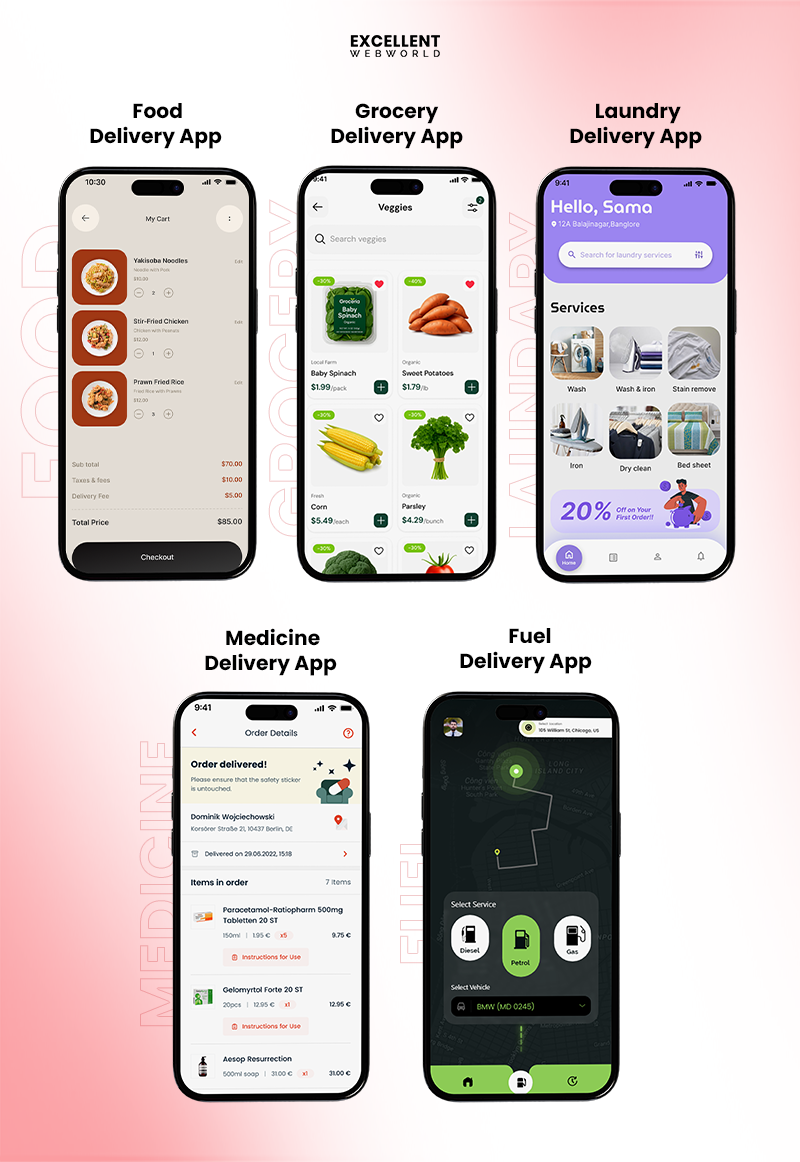
This approach gives you a clear view of the categories that deliver stronger outcomes when building a modern on demand delivery app solution .
How Much Does On-Demand Delivery App Development Cost?
You need a clear number before you commit to a build. The on demand delivery app development cost depends on how much you plan to build in the first release and how robust your logistics layer needs to be.
You run a multi-app product with customer, courier, merchant, and admin flows. You also manage routing, tracking, and cloud operations. These factors shape your budget.
Your cost depends on five key areas:
How Much Does It Cost to Build an MVP vs a Full On Demand Delivery Application?
You need to decide if you want validation or scale. An MVP helps you test demand. A complete build prepares you for higher-volume operations and greater operational control.
| Component | MVP Build (Validation Focus) | Full Platform (Scalable Product) |
|---|---|---|
| Core Apps | Basic customer and courier flows | Advanced UX, edge cases, multi-flows |
| Merchant/Admin Panel | Simple order controls | Full dashboards, catalogs, and settlements |
| Tracking | Standard status updates | Real-time GPS, AI routing |
| Payments | Single gateway | Multi gateway and wallet |
| Notifications | Basic push and SMS | Automated multi-channel |
| Analytics | Essential metrics | Deep BI and insights |
| Compliance | Minimum required | Region-ready compliance |
| Timeline | 8 to 12 weeks | 4 to 6 months |
| Estimated Cost (USD) | 30K to 60K | 90K to 180K |
If you don’t want to get into the hassle of these cost calculations, then contact a top-rated on demand app development company like us. We can provide with customization quotation as per your requirements.
For example:
Hidden Costs Founders Forget
Some costs appear only after launch and directly affect your margins. Founders miss these because they focus only on development and ignore operations.
Best Practices to Avoid Failure When Building an On-Demand Delivery Application
You face failure when you ignore market signals, user needs, and operational truth. These practices help you reduce risks, protect your budget, and build a delivery product that holds steady under real pressure.
How Excellent Webworld Helps You Build a Future-Proof On-Demand Delivery App
You want clarity, speed, and a roadmap that removes guesswork. Excellent Webworld gives you that edge with 15+ years of building real on-demand ecosystems, advanced Gen AI tools, cloud integration, and expert software development services.
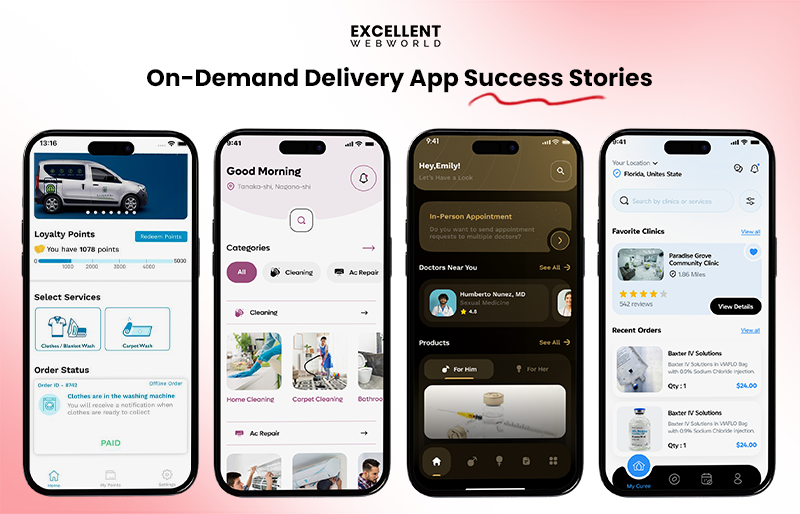
The results speak for themselves:
When you partner with Excellent Webworld, you’ll get:
Book a free 30-minute strategy session. with our specialist now to gain this level of clarity, execution, and future-ready support.
FAQs About On-Demand Delivery App Development:-
Building costs range from $25,000 to $300,000+. Basic MVPs start around $20,000-$35,000, while feature-rich custom apps cost $70,000-$200,000+. Factors include platform choice, features, design, and developer location.
Development takes 2 weeks to 12+ months. Simple MVPs using templates launch in weeks. Custom apps with basic features need 3-6 months. Complex apps with advanced tracking and payments require 6-12+ months.
Poor market fit is the leading cause of failure. Apps fail when they don’t solve real user problems, lack competitive differentiation, underestimate operational costs, or can’t acquire customers profitably in crowded markets.
Start with a niche. Focused apps build loyal users faster, require less capital, and face less competition. Once established with strong unit economics, expand services. Multi-service platforms demand massive funding upfront.
White-label suits tight budgets and quick launches with basic features. Custom apps offer unique branding, scalability, and competitive differentiation but cost more. Choose based on budget, timeline, and long-term vision.
Research market demand, competitor landscape, delivery costs, target customer willingness to pay, regulatory requirements, driver/partner availability, and profit margins. Validate that customers actually need your solution before building anything.

Article By


Paresh Sagar is the CEO of Excellent Webworld. He firmly believes in using technology to solve challenges. His dedication and attention to detail make him an expert in helping startups in different industries digitalize their businesses globally.