If you are a health-tech entrepreneur, product owner, clinic, or hospital looking to invest in improving patient relationships and growing your healthcare business, patient engagement software solution is the way to go. This article will answer all common queries related to it like:
And more.
Tired of losing patients due to outdated communication and chaotic workflows? Patient engagement software development is the way to keep them coming back. For hospitals, clinics, and other healthcare organizations, developing a patient engagement software is no longer a “nice-to-have” but a must-have.
Patient engagement software platforms have become the backbone of modern healthcare businesses. It helps healthcare providers improve communication, education, and engagement with patients throughout the treatment journey.
From first appointment scheduling and messaging to billing and post-treatment follow-ups, patient software solutions manage everything seamlessly. Those who adopted the PES solution are enjoying higher retention rates, improved operational efficiency, and stronger patient loyalty.
With 14+ years of experience, we have helped 100+ healthcare clients at Excellent Webworld with our software development expertise to deliver seamless digital experiences that users actually stick to. Our professionals with hands-on expertise build patient engagement software that’s not only compliant and scalable but also loved by users from day one.
Let’s explore how to be a part of healthcare software modernization by crafting a patient engagement solution that drives convenience and consistent growth.
Why Patient Engagement Software Matters More Than Ever in Healthcare
Patient expectations in healthcare have now completely changed. Waiting in long queues, fragmented communication, and manual follow-ups no longer work in a system that is already strained by staff shortages, and care demands are rising. Healthcare providers need a tool that reduces friction and keeps patients actively involved in their care.
This is where patient engagement software solutions and professional software development services work best.
Patient engagement software addresses this shift by simplifying routine tasks, enabling seamless communication, supporting care plans, and ensuring every interaction stays secure and connected. When patients are already informed and engaged, care delivery becomes more efficient. That is why patient engagement software adoption is no longer optional. It has become a core part of modern healthcare operations.
What Are the Best Patient Engagement Solutions Hospitals Can Build Today? [Top 8 Types]
Every healthcare business needs a different type of patient engagement software solution as per its goals and priorities. The various types include communication platforms, appointment systems, patient portals, telemedicine software, and more.
Explore the following patient engagement software development types, which help you choose what suits best for your healthcare business idea to reduce no-shows, improve communication, or simplify workloads.
Swipe Left to Explore Screens of Different Types of Patient Engagement Softwares
See how each screen of patient engagement software types looks and consists of different features to function successfully in real healthcare workflows.
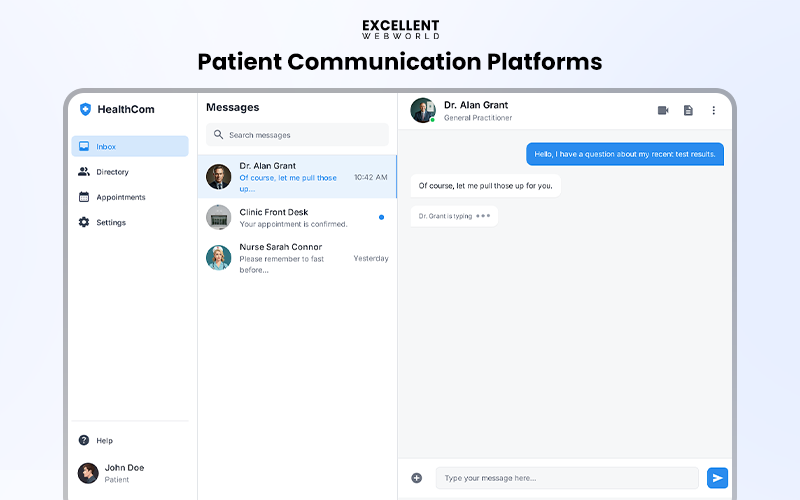
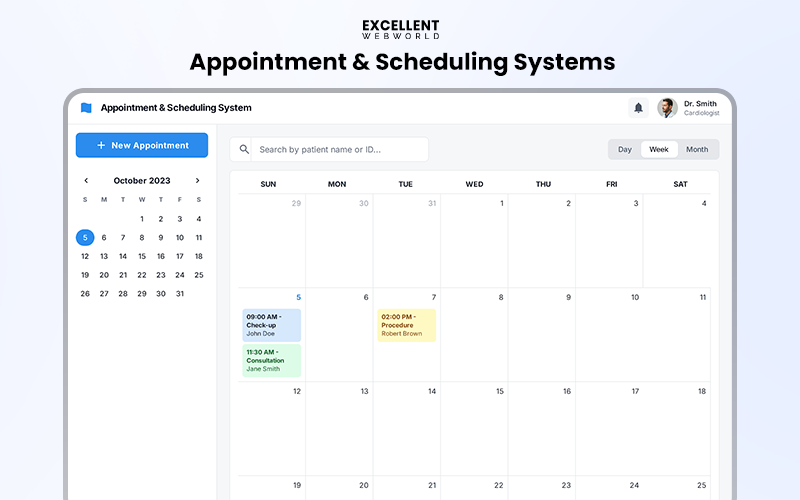
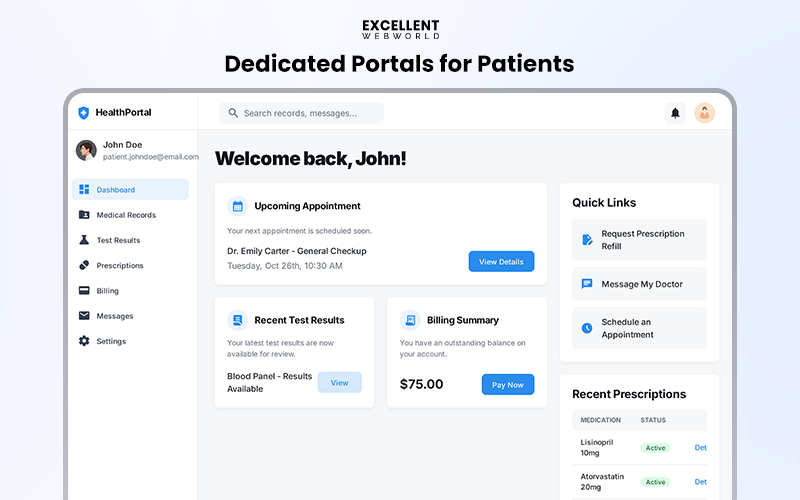
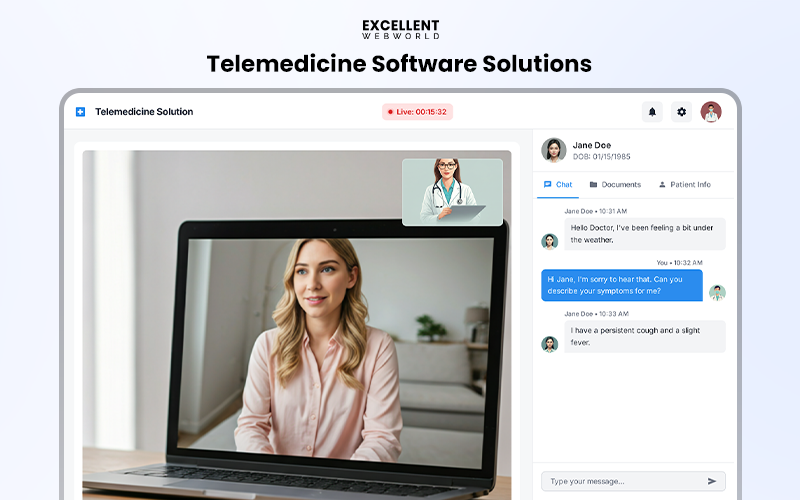
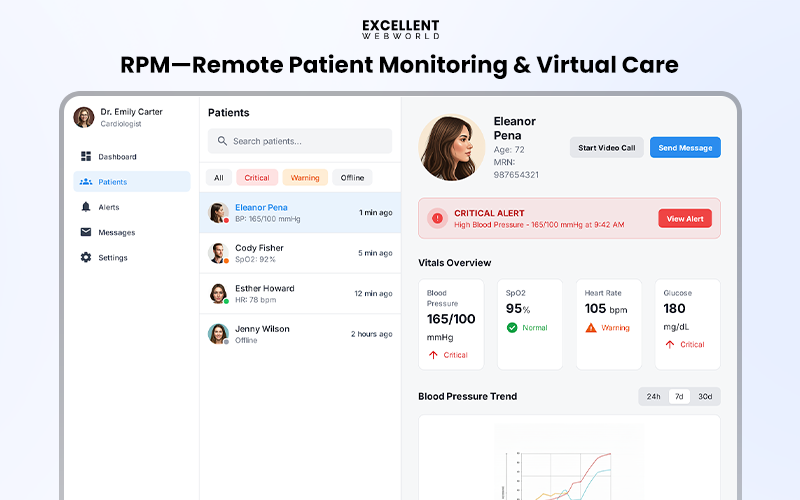
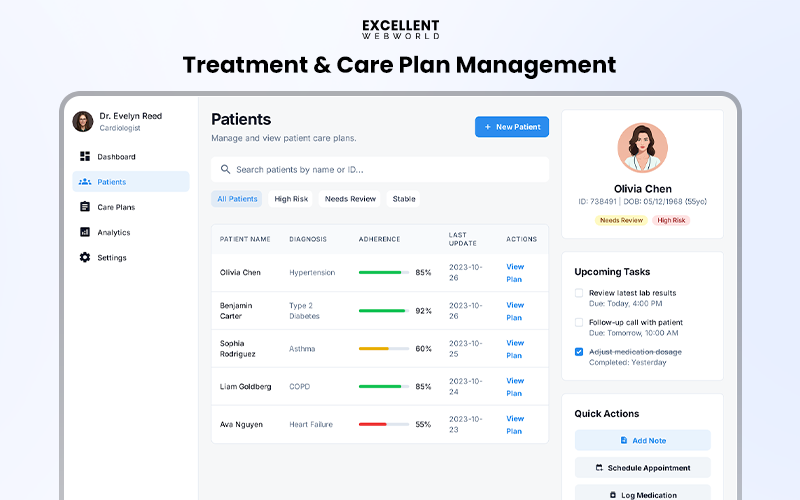
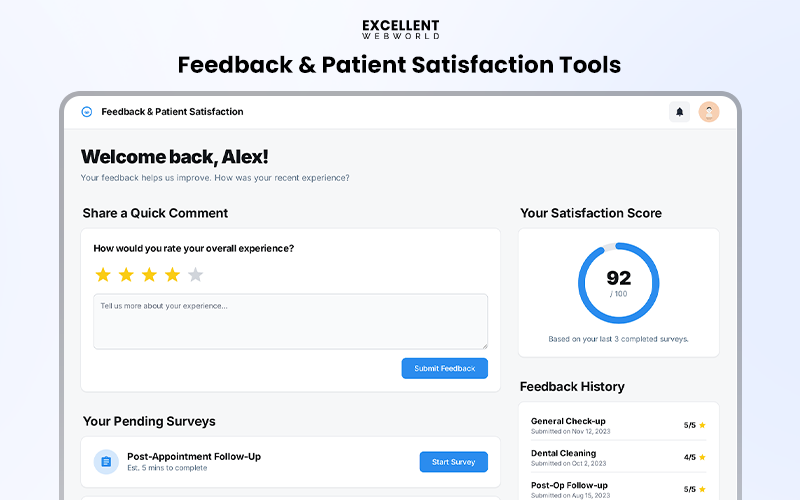
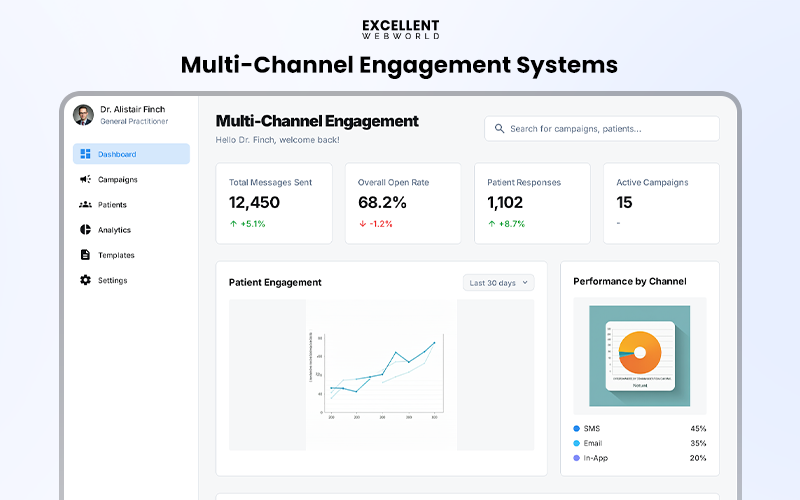
Here are the different UI flows of each patient engagement portal type that highlight how every solution functions in real healthcare use.
| Patient Engagement Software Type | How It Helps |
|---|---|
| Patient Communication Platforms | With this solution, hospitals can support secure messaging, calls, and video conversations so patients can reach their care person or team instantly. |
| Appointment & Scheduling Systems | This type of PES solution allows automated scheduling, reminders, waitlists, and real-time updates that reduce no-shows and eliminate manual follow-ups. |
| Patient Portals | The patient portals are developed to simplify data access for patients, including reports, prescriptions, bills, and visit summaries, anytime. |
| Telemedicine Software Solutions | Telemedicine app development enables virtual consultations that let patients meet doctors online through video calls, chat, or shared medical updates from anywhere. |
| RPM – Remote Patient Monitoring & Virtual Care Apps | This type of patient engagement software development tracks vitals, symptoms, or progress remotely for users. It helps doctors make timely decisions without physical visits. |
| Treatment & Care Plan Management Apps | Treatment and care apps guide patients with daily reminders, personalized care steps, and clear progress tracking on health. |
| Feedback & Patient Satisfaction Tools | These are the easy-to-use survey and rating tools that help hospitals and clinics measure satisfaction and make improvements in service quality. |
| Multi-Channel Engagement Systems | All-in-one platforms for patients as well as healthcare service providers for communication, education, reminders, virtual care, and monitoring to deliver a complete engagement experience. |
What Are the Easy Patient Engagement Software Development Steps for Hospitals, Clinics, & Health-Tech Entrepreneurs?
Patient engagement software solution development starts with understanding user needs, choosing the appropriate features, creating a simple and intuitive interface. Ensuring data privacy is also critical to a successful software development process.
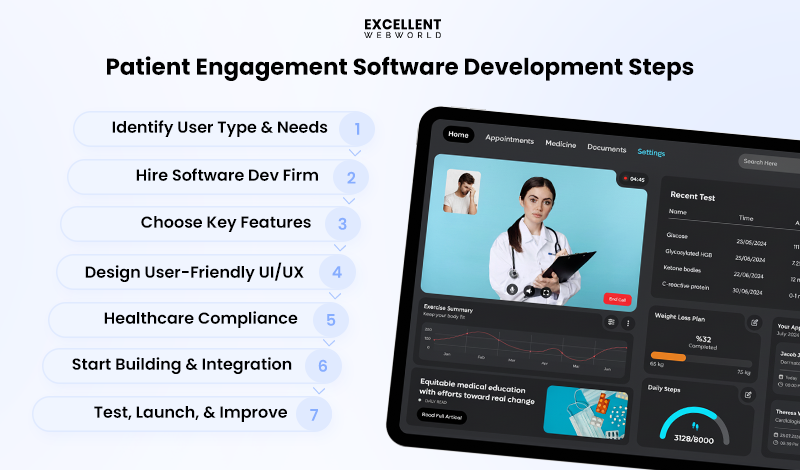
Check all these crucial steps in detail to deliver a smooth patient engagement experience to users.
Step 1: Identify Your User Type and Their Needs in the Healthcare Industry
Before investing a penny in software for patient engagement, you must clearly understand who will use your software or application among patients, doctors, nurses, and admin teams. Each group has different pain points and different priorities.
Patients want faster updates, doctors want disturbance control, and healthcare staff want relief from all the repetitive manual tasks. If you ignore and don’t properly focus on their real everyday struggles, the software may end up solving the wrong problems.
This first discovery stage in the patient engagement software development process helps you understand what actually causes delays, missed appointments, or patient dissatisfaction. In this research phase, you can also identify what features matter most: is it simple communication, fast data access, or easy appointment scheduling? If the understanding is clear on the pain point, product, and goals, then the medical device development journey ahead will be smoother.
Step 2: Hire the Right Healthcare Software Development Company
Choosing the right development partner is one of the most critical decisions in the development phases. The level of expertise, experience, and project handling skills of the company will decide how your patient engagement software journey takes shape.
A strong telemedicine app development company like Excellent Webworld understands healthcare workflows, patient behavior patterns, compliance rules, and real-world clinical challenges. They help you develop a healthcare product that isn’t just feature-rich but genuinely improves patient care and operational efficiency.
An experienced healthcare software developer team brings industry insights, technical expertise, and ready-to-use healthcare modules that reduce errors and save months of development time. They already know what interfaces work for old age seniors, what doctors prefer, and what hospital administrators need behind the scenes. Partnering with such experience for your patient engagement software solution ensures faster launch, safer architecture, and more dependable outcomes.
Pro Tip: Don’t just hire any team; hire dedicated software developers who already understand and have enough experience in the healthcare sector. It saves you weeks of explaining processes and reduces costly rework.
Step 3: Choose the Must-Have Features for Patient Engagement Software
For choosing the must-have features, you have to consult with your development partner. As the features set you choose, it decides what real values you deliver without clutter.
Make sure you are integrating the most common and must-have features, such as communication, scheduling, self-service, care plans, and remote monitoring. These features directly contribute to improving core pain points, which are maximizing patient satisfaction and reducing staff workload.
As a healthcare entrepreneur, your goal is not to build a “feature-heavy” software, but it’s to build a value-heavy one. Start simple, prioritize making useful features, and then scale smartly. This ensures you launch a patient engagement software solution that is fast, stays lean, and is built based on real engagement insights.
List of Must-Have Features in Patient Engagement Software:
Check following to explore feature’s checklist that helps in evaluating patient engagement software development for aligning it completely with your clinical and operational needs.
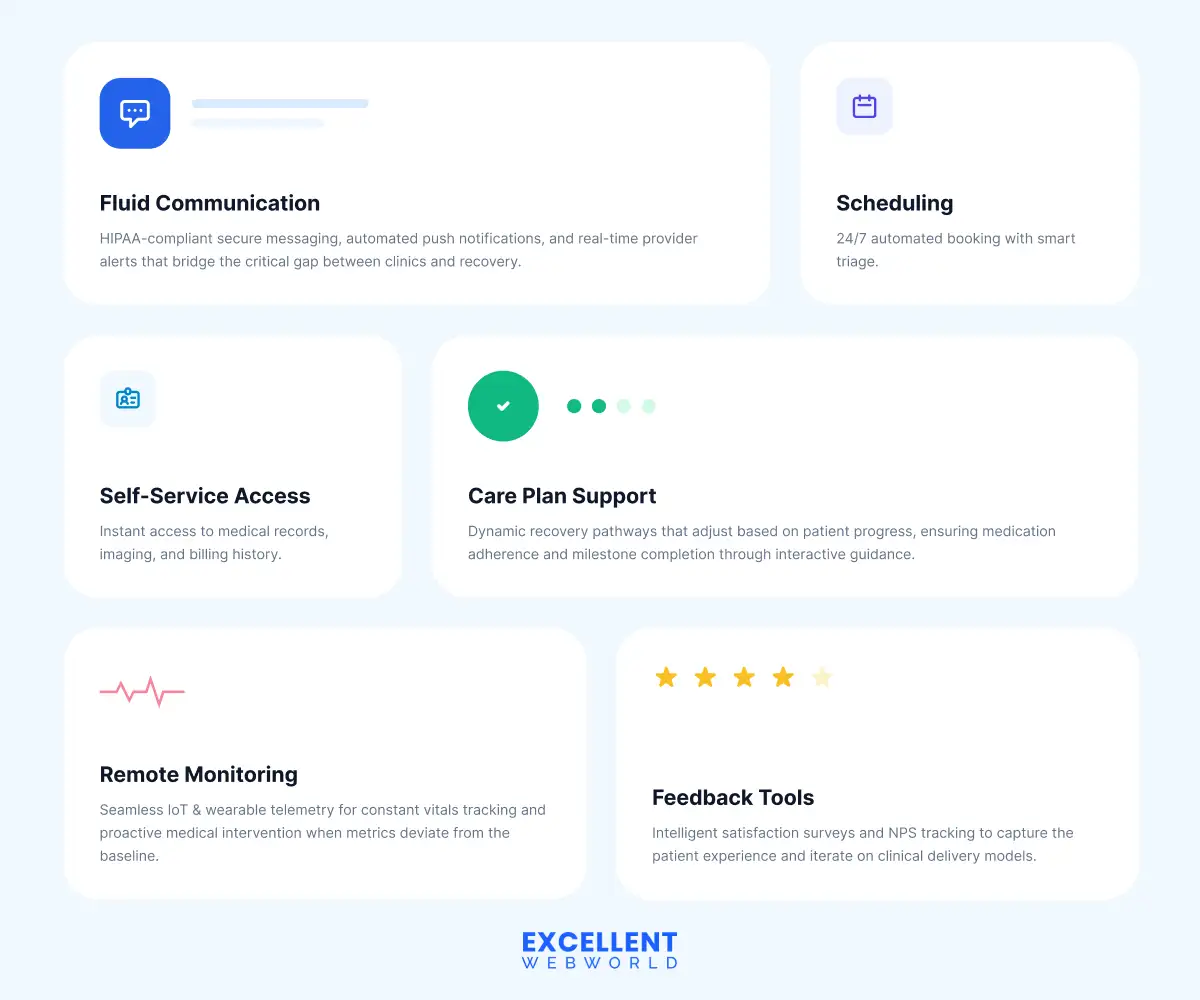
| Category | Features | Why It Matters |
|---|---|---|
| Communication | Keeps patients connected with their healthcare service provider instantly. | |
| Scheduling | Reduces patients’ no-shows and manual follow-ups burden. | |
| Self-Service Access | Increases transparency and convenience between patients and doctors. | |
| Care Plan Support | Improves treatment adherence with regular tracking and reminders. | |
| Remote Monitoring | Enables proactive patient care. | |
| Feedback Tools | Helps understand patient satisfaction and gives you a way to update your solution. |
Step 4: Design a Simple, User-Friendly Healthcare UI/UX
Keep in mind that not all your users are just tech-savvy patients; they are also elderly patients, busy doctors, and overworked staff.
A clean, intuitive interface that matches healthcare UX/UI design trends ensures everyone can complete tasks without confusion. A good design reduces customer issues and increases daily adoption.
Every screen should have one purpose and one clear next step. Don’t overwhelm the user. Make sure you are using familiar icons, simple navigation, readable text, and quick-action buttons.
Key UI Essentials for Healthcare Audience:
“People don’t stay for features; they stay for experiences.”
Step 5: Ensure Compliance for Data Security & Patient Privacy
Healthcare software deals with sensitive personal data such as a patient’s name, symptoms, medical history, bills, and prescriptions. Compliance is crucial to building trust and protecting your business legally.
In reality, encryption, secure access control, and proper data handling are not something that can be adjusted or managed; it’s a non-negotiable thing.
Different regions have different healthcare laws; some area requires HIPAA-compliant app development, and some ask for GDPR or NDHM integrations. To ensure your patient engagement software solution is safe, legally sound, and ready for large-scale adoption, you must comply with the right regulations from day one.
List of Popular Healthcare Compliance:
Explore key healthcare compliance standards that ensure secure, compliant, and trustworthy patient engagement solutions for your customers.
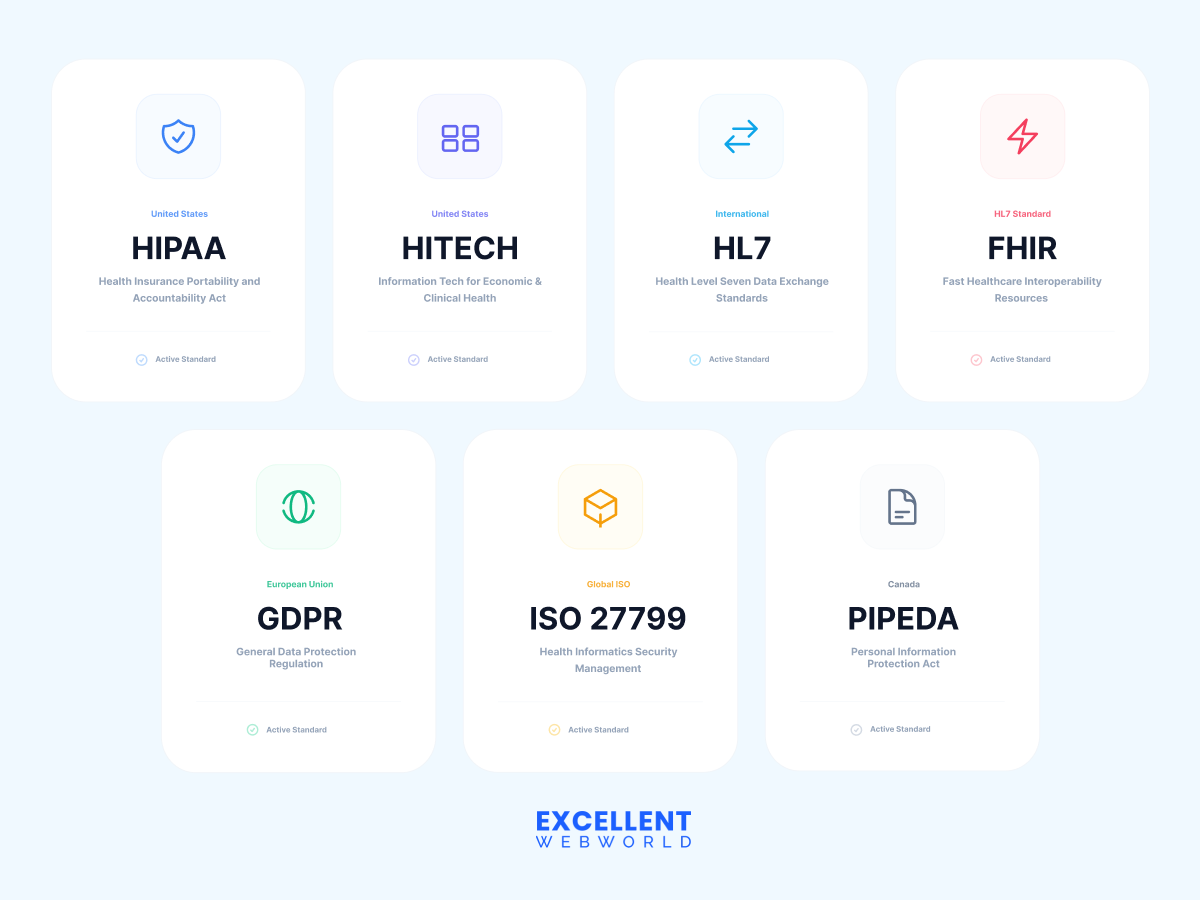
| Compliance Standard | Region | Why It Matters |
|---|---|---|
| HIPAA | USA | Integrated to ensure patient data confidentiality, prevent misuse, and avoid heavy penalties. |
| HITECH Act | USA | Helps healthcare software systems to be digitized safely and improves interoperability. |
| HL7 | Global | Integrated to enable seamless data exchange across healthcare apps and platforms. |
| FHIR | Global | Very important for building interoperable mobile and AI healthcare solutions. |
| GDPR | EU | It is mandatory for any healthcare app serving EU users to avoid severe fines. |
| ISO 27799 | Global | Helps in addressing any kind of healthcare-specific PHI risks. |
| PIPEDA | Canada | Integrated in healthcare software and apps to ensure safe handling of patient data in Canadian markets. |
Step 6: Build & Integrate the Healthcare Software Backend Smoothly
Begin healthcare app development for patient engagement with a strong backend that ensures the platform works in real-time.
The messages update instantly, appointments sync automatically, and patient data flows seamlessly with the system. Make sure the backend developed by your team can handle high volumes without compromising on speed, especially during busy hospital hours.
The patient engagement software development must support third-party integration seamlessly because hospitals already use systems like EHR, billing tools, and scheduling software. Your developed patient engagement software solution should work with them, not against them.
Smooth Backend Essentials:
Pro Tip: Avoid over-engineering in the first attempt. Prioritize building only what’s needed for strong performance. Software or app complexity grows naturally as the product scales with time.
Step 7: Test, Launch, & Improve Continuously
Testing is crucial to ensure that patient engagement software development is done properly. Any bugs and errors will be solved before launching it to the App Stores or making the software live on any site. Ask your development partner to allocate an experienced testing team to avoid emergency changes.
Launching is not the finish line; in fact, it’s the starting point of consistent monitoring and required improvement. After release, monitor how your real users, such as patients, doctors, and nurses, are using the platform: which features they love, which they ignore, and where drop-off happens. Analyzing this and taking their feedback, you can do meaningful upgrades to your patient engagement platform.
How Much Does it Cost to Develop Patient Engagement Software?
The cost of developing patient engagement software ranges from USD 20,000 to 150,000+ based on software complexity. Like every other software development cost estimation, the patient engagement platform price may vary depending on your precise requirements, desired features, and compliance integration. Here’s an in-depth breakdown of patient engagement software development costs as per the software complexity.
| Software Type | Estimated Cost | Development Time |
|---|---|---|
| MVP (Software Prototype) | USD 16,000 to 26,000 | 12 to 14 Weeks |
| Basic Software | USD 20,000 to 40,000 | 14 to 20 Weeks |
| Medium Complexity Software | USD 40,000 to 60,000 | 20 to 24 Weeks |
| High-Complexity Software | USD 60,000 to 80,000+ | 24 to 28 Weeks |
| AI-Powered Software | USD 70,000 to 150,000+ | 28 to 32 Weeks |
***Price range and development time may vary based on the software complexity and other factors such as development team location, feature requirements, and so on.
What Are the Top Examples of Patient Engagement Software Solutions?
There are many success stories in the patient engagement software development, which have crafted healthcare solutions to solve problems and generate notable revenue. Here are the top patient engagement platform examples that hospitals and clinics trust to solve real problems.
| Patient Engagement Software Examples | How It Works |
|---|---|
| TeleVox | TeleVox helps you reach patients before they forget their appointments. The automated messages through the app reduce no-shows and improve your HCAHPS scores without making your team work extra. |
| Phreesia | Phreesia accelerates check-ins and payments, allowing patients to complete their forms at home, which reduces waiting room crowding and front-table pressure. |
| NexHealth | NexHealth makes appointment scheduling simple. Patients can book consultations online while staff handles more critical tasks. It connects with your EHR system, ensuring that no information is lost. |
| Simbie AI | Simbie AI never misses a call. This voice AI handles scheduling and intake 24/7. It can integrate with EHRs like Cerner or Epic, keeping your existing workflows intact. |
| Oracle Health | Oracle Health manages patient records and telehealth visits. Families can coordinate care through a single platform. |
| Athenahealth | Athenahealth utilizes AI to expedite documentation. Doctors spend less time on paperwork and more time with patients due to the app. |
| Epic MyChart | Epic MyChart provides patients with easy access to their medical records. They can message doctors and request refills without needing to call your office. |
| CipherHealth | CipherHealth tracks patients before, during, and after visits. Real-time feedback with AI enables you to address problems promptly and effectively. |
| Kyruus Health | Kyruus Health simplifies check-ins with smart forms. Multiple EHR connections mean easy setup for your IT team. |
Custom Patient Engagement Software & Apps Developed By Excellent Webworld Experts
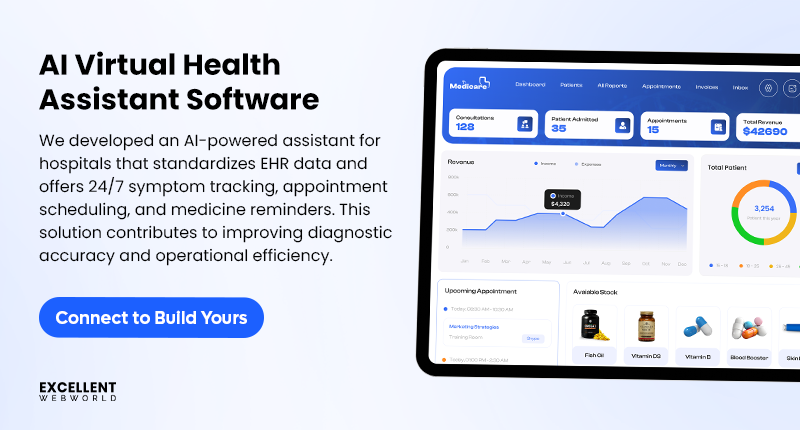
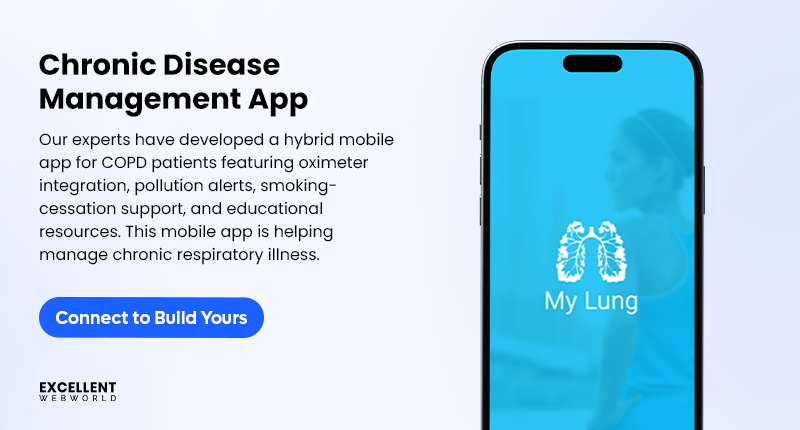
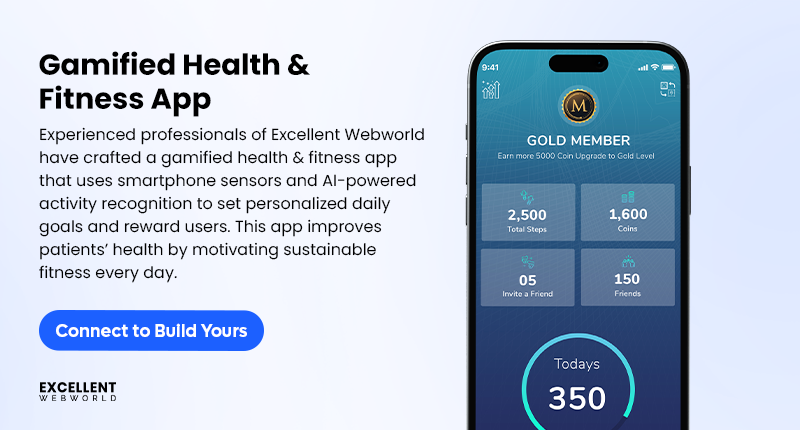
Check the following to explore post-implementation results from healthcare platforms developed by Excellent Webworld professionals, highlighting measurable benefits achieved in real-world usage. The chart shows you the key performance improvements observed after final deployment. Clearly demonstrating how patient engagement solutions crafted by our experts deliver consistent value and operational impact after implementation.
Backed by expert software development consulting, all these software solutions are built to improve communication, support self-care, enable real-time monitoring, and help providers deliver connected, efficient, and personalized care.
Final Thoughts: Patient Engagement Software Development Is Worth It
Building a patient engagement software or any other healthcare app is not just about moving towards the digital upgrade, but it’s a strategic advantage for healthcare businesses. From defining core features to ensuring airtight compliance, each step in the patient engagement software development process plays a crucial role. By following accurate steps, you can craft a secure, scalable, and trusted platform for both patients and providers.
If you’re looking for a tech partner that understands healthcare inside out and can match your business expectations, then Excellent Webworld should be your first choice. As a leading healthcare app development company, our team has deep expertise in HIPAA-compliant systems, telemedicine platforms, remote patient monitoring solutions, and AI-driven health apps. We help founders turn healthcare ideas into reliable and high-performing products. Partner with us to craft your dream seamlessly.
Frequently Asked Questions (FAQs)
Patient engagement software development is about building digital solutions that help patients and healthcare providers stay connected with each other. Features like reminders, messaging, appointments, telemedicine, and care-plan tracking help patients to contact doctors easily.
The patient engagement software solution development reduces no-show rates, improves patient satisfaction, cuts manual administrative work, and supports better health outcomes.
A basic patient engagement platform development takes 14 to 20 weeks, while a feature-rich, AI-powered, and integrated solution can take 24 to 32 weeks, depending on complexity and compliance needs.
Yes. Your patient engagement software must follow HIPAA, GDPR, HL7, and other healthcare data privacy and security standards to enable safety and avoid legal penalties.
The must-have features of a patient engagement system include appointment scheduling, secure messaging, telemedicine, reminders, patient records, analytics, and easy workflows for both patients and staff.

Article By


Mayur Panchal is the CTO of Excellent Webworld. With his skills and expertise, He stays updated with industry trends and utilizes his technical expertise to address problems faced by entrepreneurs and startup owners.